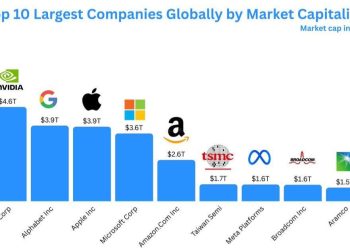
Apple Inc. (AAPL) stormed into the $4 trillion market cap club on October 28, 2025, becoming the third public company to shatter the barrier after Nvidia and Microsoft, with shares spiking 0.4% to $269.89 amid robust iPhone 17 demand and easing U.S.-China tariff fears. By December 5, the valuation stabilized at $4.12 trillion, up 3.2% monthly and 26.41% annually, trailing only Nvidia’s $5 trillion throne while outpacing Microsoft’s $4.03 trillion resurgence.
The ascent traces to September’s iPhone 17 launch, blending Apple Intelligence AI with 5G mmWave upgrades, outselling predecessors by 15% and injecting $1.4 trillion in value since April lows—a 56% stock rally. Wedbush’s Dan Ives hiked targets to $325, forecasting a “renaissance of iPhone growth” via consumer AI, with Q4 earnings eyed for September-December beats on services revenue up 12% to $25 billion. JPMorgan’s Samik Chatterjee echoes upside to $300, citing iPhone 17’s personalization edge.
Yet, laggard AI perceptions—7.5% YTD gains versus Nvidia’s 50%—tempered early momentum, though regulatory nods for EU sideloading and Vision Pro 2 teases fuel optimism. Alphabet lurks at $3.25 trillion, but Apple’s ecosystem moat—1.8 billion devices—positions it for $5 trillion by 2027, per Evercore ISI, as AR glasses and health AI unlock $500 billion markets.