Early Currency Optimism Faces Economic Reality Despite Government’s Renewed European Focus
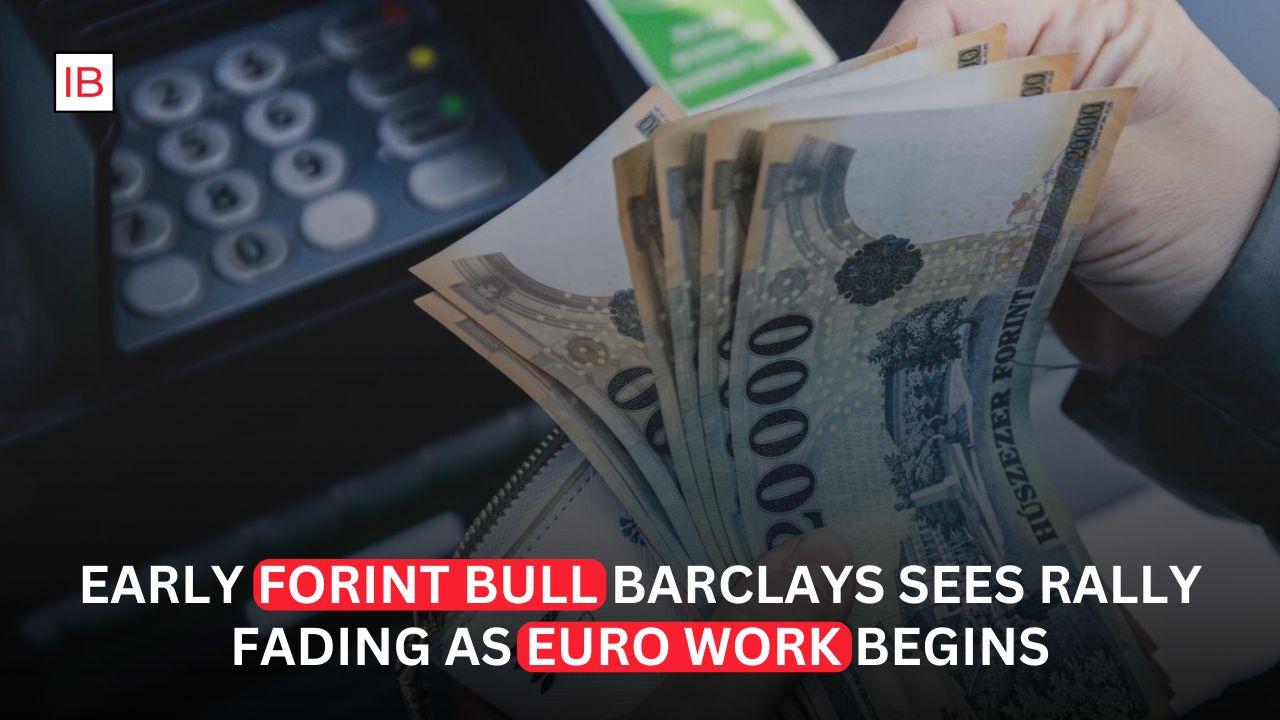
The Hungarian forint’s recent rally could lose momentum as investors shift their attention from short-term optimism to the significant economic challenges associated with Hungary’s renewed push toward eventual euro adoption, according to analysts at Barclays.
While the currency has strengthened following signs of improved relations between Budapest and the European Union, Barclays argues that the structural work required before Hungary can join the eurozone is likely to temper further gains.
Strong Start for the Forint
The Hungarian currency has been among Central Europe’s better-performing currencies in recent weeks.
Factors supporting the rally include:
- Improved investor sentiment toward Hungarian assets
- Expectations of closer cooperation with the European Union
- Stabilizing inflation trends
- Reduced political uncertainty following recent policy signals
These developments have encouraged foreign investors to return to Hungarian government bonds and local financial markets.
Barclays Warns the Easy Gains May Be Over
Despite the recent appreciation, Barclays believes much of the positive news has already been reflected in the exchange rate.
According to the bank:
- The forint’s initial rebound has been driven largely by sentiment.
- Further appreciation will require sustained economic reforms.
- Markets may become more cautious as the complexity of euro preparation becomes clearer.
Analysts describe the recent strength as an “early bull” phase that may prove difficult to sustain without additional policy progress.
Euro Adoption Remains a Long-Term Project
Although Hungarian officials have renewed discussion about closer European integration, adopting the euro would require meeting strict convergence criteria established by the European Union.
Hungary would need to demonstrate:
- Sustainable fiscal discipline
- Stable inflation
- Exchange-rate stability
- Long-term interest-rate convergence
- Compliance with broader economic governance standards
Meeting these requirements could take several years, making euro membership a medium- to long-term objective rather than an immediate policy change.
Investors Watching Policy Direction
Currency traders are expected to closely monitor:
- Hungarian fiscal policy
- National Bank of Hungary interest-rate decisions
- Progress in negotiations with European institutions
- Economic growth and inflation data
These factors are likely to have a greater influence on the forint than political statements alone.
Regional Currency Outlook
The forint’s performance is also linked to broader trends affecting Central and Eastern European currencies.
Analysts note that:
- Lower global interest-rate expectations have supported regional currencies.
- European economic recovery remains uneven.
- External risks, including geopolitical developments and energy prices, continue to influence investor sentiment.
As a result, Hungary’s currency remains sensitive to both domestic reforms and international market conditions.
Looking Ahead
Barclays expects the forint to remain relatively stable in the near term but believes further gains will depend on tangible progress toward economic reform rather than optimism surrounding eventual euro adoption.
While renewed engagement with Europe has improved market confidence, the path toward joining the eurozone remains lengthy and complex. Investors are therefore likely to focus increasingly on policy execution and macroeconomic fundamentals rather than political aspirations alone.