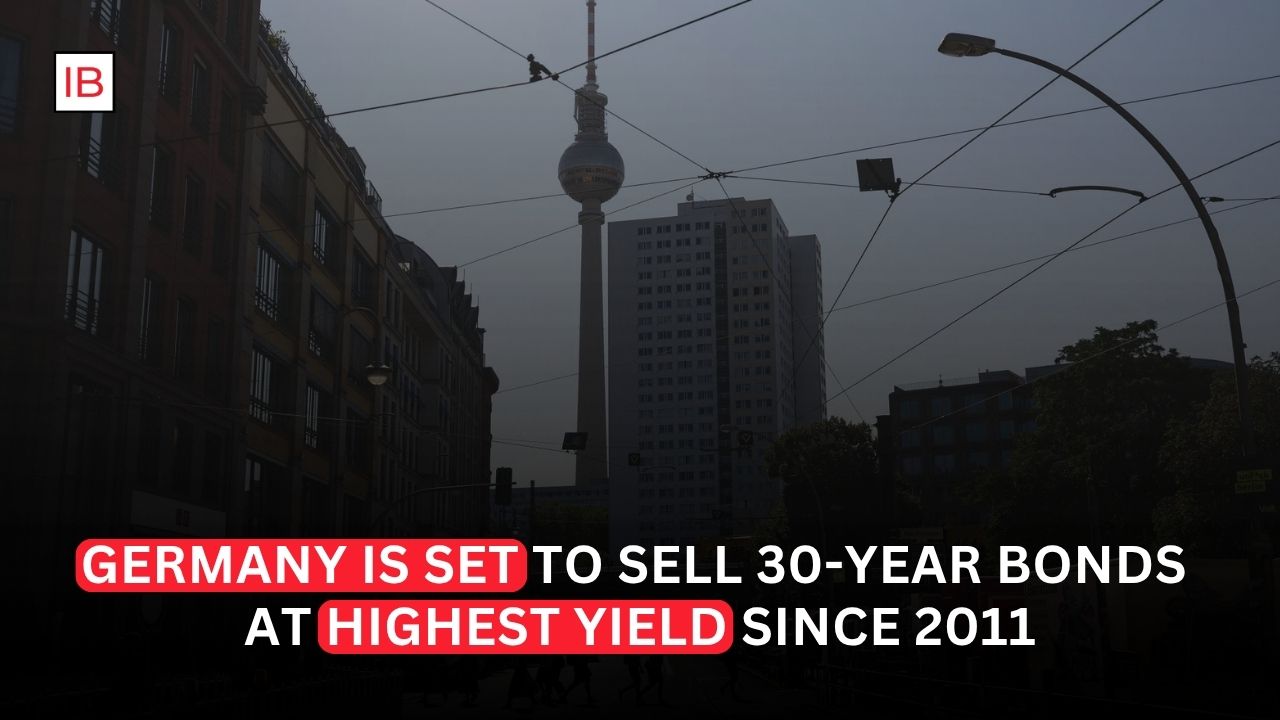
Germany is preparing to sell long-term government bonds at borrowing costs not seen in years, highlighting the growing pressure on sovereign debt markets as investors demand higher returns amid renewed inflation concerns, rising energy prices and geopolitical uncertainty.
The planned sale of 30-year German bonds comes as government borrowing costs across major economies have climbed sharply. Germany’s benchmark 10-year Bund yield recently reached its highest level since May 2011, while longer-term yields across Europe have also moved higher. The shift reflects a broader reassessment by investors of how much governments will need to pay to finance their debt in a world of higher inflation, increased spending and weaker demand for long-duration bonds.
The immediate backdrop is the worsening conflict involving the United States and Iran. Hopes for a lasting ceasefire have weakened, while Tehran has threatened to adopt a more offensive military posture. The uncertainty has pushed oil prices higher, with Brent crude trading around $91 a barrel. Higher energy prices are raising concerns that inflation could remain elevated for longer, forcing central banks to keep interest rates higher than investors previously expected.
That creates a particularly difficult environment for long-term bonds. When investors expect inflation and interest rates to remain high, they generally demand higher yields to hold securities with maturities stretching decades into the future. Bond prices move in the opposite direction to yields, so the rise in borrowing costs represents a significant decline in the market value of existing long-duration debt.
Germany has traditionally occupied a special position in European bond markets because German government debt is regarded as one of the safest assets in the euro area. The Bund market also serves as a benchmark for pricing other euro-zone government bonds. When German yields rise, borrowing costs can increase across the region, affecting countries with weaker fiscal positions even more severely.
The latest move therefore matters beyond Germany’s own finances. France’s 30-year government bond yield has climbed to its highest level since 2008, while the country’s 10-year yield has reached its highest level in many years. The simultaneous increase in borrowing costs across major European economies shows that the pressure is not limited to one government or one country’s fiscal policy.
Investors are also confronting a broader change in the global bond market. Long-term government yields have been rising in the United States, Japan and Europe at the same time. The U.S. 30-year Treasury yield climbed above 5.3% on Tuesday, reaching its highest level since 2007, while Japan’s 10-year government bond yield reached a three-decade high.
Several forces are contributing to the selloff. Inflation is one concern, particularly as the Middle East conflict threatens energy supplies and shipping routes. Government borrowing requirements are another. Major economies are running large fiscal deficits and issuing substantial amounts of debt, forcing investors to absorb more supply.
The competition for capital is also changing. Companies, particularly large technology firms investing heavily in artificial intelligence infrastructure, are issuing significant amounts of corporate debt. That creates another source of demand for investors’ money at a time when governments are also seeking financing. Investors can therefore demand more attractive yields before committing funds to long-term sovereign bonds.
For Germany, the rise in long-term yields comes at a particularly important moment. The country is moving toward greater government spending, including increased investment in defense and infrastructure. Higher borrowing costs make those plans more expensive to finance and could eventually place additional pressure on Germany’s budget.
The issue is not that Germany suddenly faces the same fiscal risks as heavily indebted countries. Its debt position remains relatively strong by international standards. Instead, the market is adjusting to a structural environment in which extremely low interest rates can no longer be assumed.
For investors, the upcoming German bond sale will provide a useful test of demand for long-duration European government debt. A strong auction could indicate that investors are willing to absorb higher yields and continue holding German bonds despite the recent market selloff. A weak result could reinforce concerns that governments will have to offer progressively higher returns to attract buyers.
The distinction is important because rising yields can create a feedback loop. Higher yields increase government interest costs, which can widen budget deficits and require additional borrowing. Greater borrowing can then increase bond supply, potentially forcing yields even higher if demand does not keep pace.
At the same time, higher yields can eventually become attractive enough to bring buyers back into the market. Pension funds, insurers and other long-term investors need fixed-income assets, and substantially higher yields can improve the appeal of government bonds compared with the ultra-low returns available during the previous decade.
The European Central Bank is also facing a more complicated policy environment. Higher oil prices threaten to push inflation upward, while elevated bond yields are already tightening financial conditions. If economic growth weakens at the same time, policymakers could face the difficult choice between supporting activity and preventing another inflationary surge.
For now, the German bond market is reflecting the same forces affecting sovereign debt around the world: geopolitical risk, higher energy prices, persistent inflation concerns, large government financing needs and a changing balance between bond supply and demand.
The upcoming 30-year German bond sale will therefore be watched closely. Its outcome will provide another indication of how much investors now require to lend money to governments for decades. If yields continue moving higher, the consequences will extend well beyond Germany’s bond market, raising borrowing costs for governments, companies and households across Europe.
The era in which investors could rely on permanently low long-term interest rates appears increasingly distant. Germany’s rising borrowing costs are another sign that global bond markets are entering a period in which inflation, fiscal spending and geopolitical shocks will play a much larger role in determining the price of money.