Warren Buffett’s Conglomerate Resumes Share Repurchases as It Deploys Capital
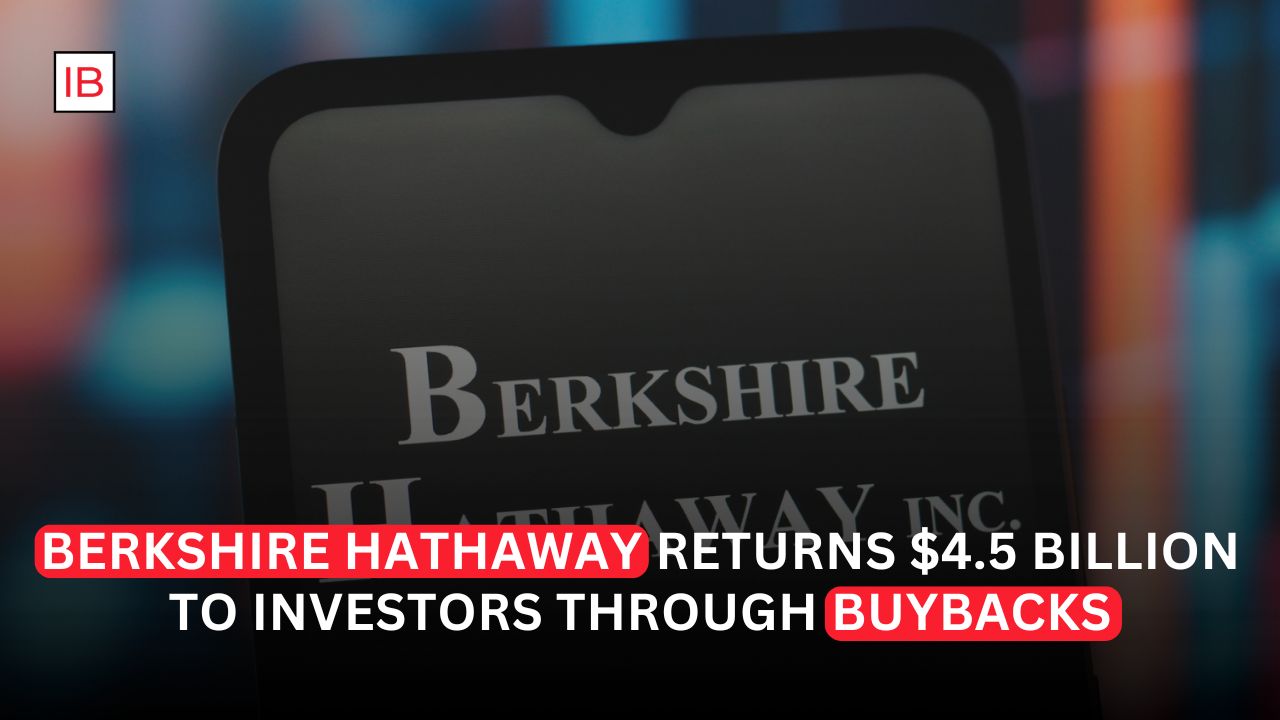
Berkshire Hathaway has repurchased about $4.5 billion of its own shares, signaling that the company is once again finding opportunities to deploy part of its enormous cash reserves into its own stock.
The buyback represents an important decision for the conglomerate because Berkshire has historically maintained a highly disciplined approach to share repurchases. Rather than automatically returning money to shareholders, the company has generally favored buybacks when management believes the stock is trading below its estimate of intrinsic value.
The latest purchases therefore provide investors with another indication of how Berkshire’s management views the company’s valuation.
Buybacks Return as a Capital-Allocation Tool
Share repurchases reduce the number of outstanding shares, meaning each remaining share represents a larger ownership stake in the company.
For Berkshire, the decision is particularly significant because the company has accumulated substantial liquidity over the years.
Instead of using all of that capital for acquisitions, Berkshire can return money to shareholders through repurchases when attractive takeover opportunities are limited.
The $4.5 billion purchase suggests that management sees value in using at least part of its cash position to buy Berkshire shares.
Berkshire Has a Unique Approach to Capital
Berkshire Hathaway is different from most publicly traded companies because it operates as a collection of businesses rather than a single industry-focused corporation.
Its portfolio includes major operations and investments across areas such as:
- Insurance.
- Railroads.
- Energy.
- Manufacturing.
- Consumer products.
- Financial services.
- Public equities.
This diversification produces significant cash flow that management can allocate across acquisitions, investments, capital spending and share repurchases.
Cash Reserves Remain Important
Berkshire has long maintained a large cash and short-term investment position.
The company views liquidity as a strategic advantage.
Large cash reserves allow Berkshire to move quickly when financial markets become distressed or when attractive acquisition opportunities emerge.
However, holding cash also creates a capital-allocation challenge.
If management cannot find sufficiently attractive acquisitions or investments, returning some capital to shareholders can become a more appealing option.
Why Buybacks Matter to Investors
Investors often pay close attention to Berkshire’s repurchase activity because management has historically been selective.
A buyback can indicate that executives believe the company’s shares are undervalued relative to their underlying businesses and investments.
If shares are repurchased below intrinsic value, the transaction can increase the value attributable to continuing shareholders.
But if a company buys its shares at excessive valuations, the opposite can occur.
That makes the timing and price of Berkshire’s repurchases particularly important.
Buffett’s Capital-Allocation Philosophy
Warren Buffett has spent decades emphasizing disciplined capital allocation.
Berkshire generally seeks to invest money where it believes the potential return justifies the risk.
That philosophy has helped the company build a reputation for avoiding unnecessary financial engineering.
Repurchasing shares can therefore be viewed as another form of investment.
If Berkshire’s management believes its own stock offers an attractive risk-adjusted return compared with other opportunities, buying the shares can be a rational use of capital.
Acquisitions Remain a Key Option
Despite the buyback, Berkshire is unlikely to abandon its preference for major acquisitions when suitable opportunities emerge.
The company has historically looked for businesses with characteristics such as:
- Strong competitive advantages.
- Reliable cash generation.
- Capable management.
- Predictable economics.
- Attractive long-term returns.
The challenge is finding businesses large enough to meaningfully affect Berkshire while also being available at reasonable prices.
Market Conditions Influence the Strategy
Valuations across financial markets influence Berkshire’s capital-allocation decisions.
When asset prices are high, Berkshire may find fewer opportunities that meet its investment standards.
When markets experience sharp declines, the company can potentially deploy its cash more aggressively.
The latest buyback therefore comes at a time when investors are closely watching valuations and determining whether major companies offer attractive long-term returns.
Shareholders Gain a Larger Claim
A repurchase of $4.5 billion reduces Berkshire’s outstanding share count.
If the company generates the same amount of future earnings with fewer shares outstanding, earnings attributable to each remaining share can increase.
This can provide a long-term benefit to shareholders, particularly if the repurchases are made below intrinsic value.
The effect is different from a traditional dividend because shareholders who continue holding their shares retain their ownership while the total share count declines.
A Signal About Berkshire’s Valuation
Perhaps the most important message from the repurchases is what they say about management’s assessment of Berkshire’s stock.
The company has historically been reluctant to buy shares when it believes they are fully valued.
Consequently, investors may interpret the latest purchases as a sign that Berkshire sees sufficient value in its stock to justify deploying billions of dollars.
However, the precise valuation assumptions behind the purchases are not necessarily disclosed in real time.
Looking Ahead
Berkshire Hathaway’s $4.5 billion share repurchase highlights the company’s continued focus on disciplined capital allocation.
The decision demonstrates that Berkshire is willing to use its substantial liquidity for buybacks when management sees value in its own shares.
For investors, the move is significant not simply because of the size of the transaction, but because Berkshire’s repurchase decisions have historically reflected management’s views about the relationship between market price and intrinsic value.
The company still has the financial flexibility to pursue acquisitions, make new investments or conduct additional buybacks in the future.
As Berkshire continues managing one of the world’s largest corporate pools of capital, investors will be watching closely to see whether the latest purchases mark the beginning of a broader return to aggressive capital deployment or remain a selective use of excess cash.