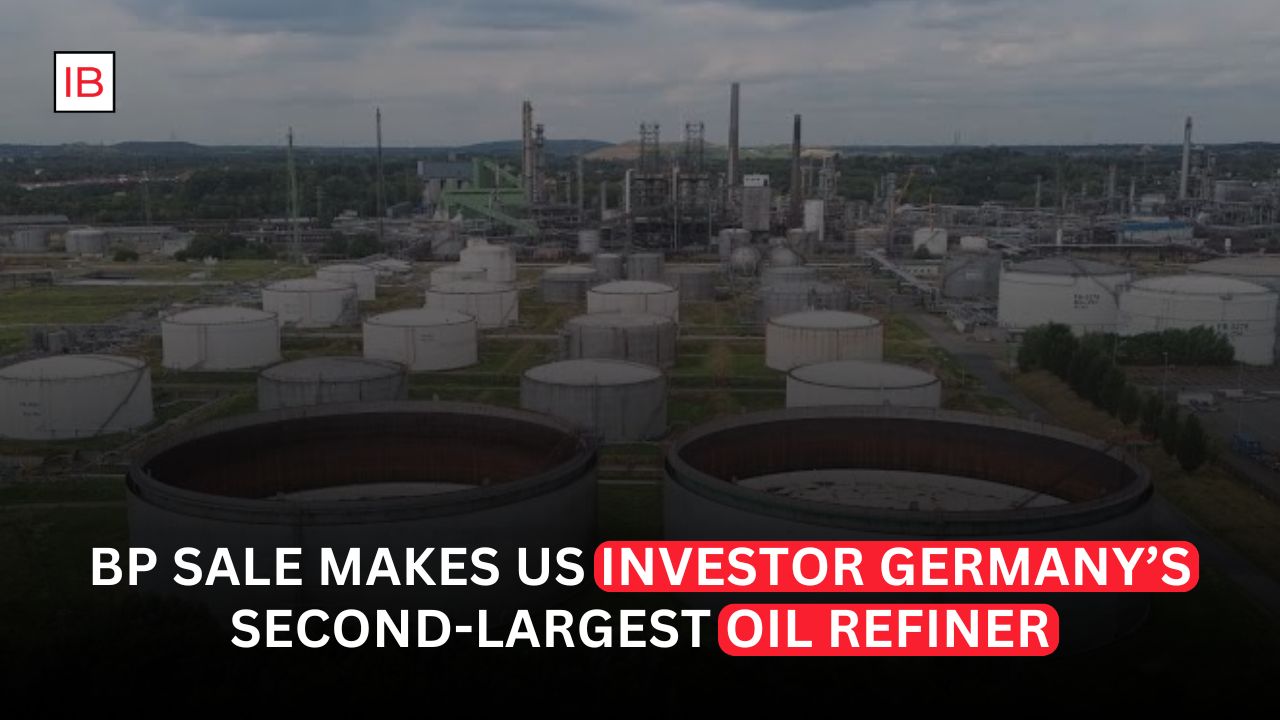
BP has completed the sale of its Gelsenkirchen refinery in Germany to Klesch Group, a deal that instantly transforms the American-founded investment firm into Germany’s second-largest oil refiner and marks another step in BP’s sweeping effort to simplify its global downstream business.
The Deal’s Key Terms
The transaction, finalized on August 3, transferred full ownership of the 265,000-barrel-per-day Gelsenkirchen refinery and its associated assets to Klesch Group, including the integrated Horst and Scholven sites, the Bottrop tank farm, subsidiary DHC Solvent Chemie GmbH, interests in logistics joint ventures, and marketing businesses tied to petrochemicals and unbranded fuels produced at the facility. The refinery processes approximately 12 million tonnes of crude oil annually, producing gasoline, diesel, jet fuel, heating oil, and more than 50 other products used primarily by the chemical industry. More than 1,700 employees working at the refinery and its associated businesses transferred to Klesch as part of the deal. Financial terms of the transaction were not disclosed.
Klesch’s New Standing in Germany
With the Gelsenkirchen acquisition, Klesch Group now owns and operates three European refineries: Gelsenkirchen, the 90,400-barrel-per-day Heide refinery in Germany, acquired from Shell in 2010, and the 110,000-barrel-per-day Kalundborg refinery in Denmark, acquired from Equinor in 2022. Combined, Klesch’s two German facilities give the firm, founded in 1990 by chairman A. Gary Klesch and employing roughly 1,000 people, substantial refining capacity within the country, positioning it as Germany’s second-largest independent refiner behind only the market leader.
Why BP Wanted Out
The sale reflects BP’s broader strategy of disciplined capital allocation and portfolio simplification under continued pressure to improve financial performance. Richard Harding, BP’s interim Executive Vice President of Downstream, said the deal strengthens the company’s balance sheet and simplifies its portfolio, allowing BP to concentrate capital on assets and markets where it can be most competitive. The transaction is expected to lower BP’s underlying operating expenditure by roughly $1 billion, with the sale itself structured to be free cash flow accretive based on historical performance.
Patrick Wendeler, BP’s head of country for Germany, said Gelsenkirchen plays an important role supplying western Germany with fuels and petrochemicals, adding that Klesch’s refining experience and established German presence positioned it well to take the facility into its next chapter. BP said it will continue serving German customers through its remaining operations, including its Aral retail fuel network.
A Shrinking Global Refining Footprint
The Gelsenkirchen sale continues a dramatic contraction of BP’s refining empire over the past two decades. The company operated or held interests in around 15 refineries worldwide back in 2006, a figure that fell to ten sites by 2016 and now stands at just five following this latest divestment. BP’s remaining portfolio consists of the Cherry Point and Whiting refineries in the United States, along with Castellón in Spain, Lingen in Germany, and Rotterdam in the Netherlands, with only Whiting and Rotterdam processing 400,000 barrels per day or more.
Part of a Larger Restructuring Push
The refinery sale fits within BP’s broader plan to divest roughly $20 billion in assets, reduce debt, and redirect investment toward areas the company believes offer stronger returns. That effort has allowed BP to raise its long-term structural cost reduction target to a range of $6.5 billion to $7.5 billion by 2027. The strategic shift follows a broader reassessment of BP’s earlier push into renewable energy, with the company pivoting back toward prioritizing its core oil and gas operations alongside capital discipline and shareholder returns. As part of that same review, BP has also signaled plans to sell its North Sea assets, suggesting further portfolio changes may still be ahead.
What Comes Next
With BP’s refining footprint now trimmed to five facilities and Klesch Group cementing its position as a major refiner within Germany, the deal illustrates the broader consolidation reshaping Europe’s downstream oil sector as legacy majors continue retreating from refining in favor of leaner, more focused portfolios. How BP’s remaining five refineries perform under this narrower footprint, and whether Klesch pursues further acquisitions to expand its own growing European refining presence, will likely shape the next phase of both companies’ strategies in the sector.