Sometimes, it’s not the technology that fails but the people using it. One electric vehicle charging company is addressing the issue of “charger hogs” who linger too long at charging stations by experimenting with measures to encourage efficient use.
Recently, I drove a new Chevrolet Blazer EV from New York City to Bristol, Pennsylvania. The trip should have taken about 90 minutes, but since I didn’t start with a full battery, I planned for a quick charging stop on the way back. Unfortunately, it took us four hours to get home, largely due to waiting in line for electric vehicle chargers. Many drivers stayed at the chargers longer than necessary, filling their batteries beyond 80%, which is inefficient at fast chargers designed for quick top-offs.
Fast chargers are not meant to completely fill an EV’s battery. Instead, they rapidly charge up to 80%, after which charging speeds slow significantly to protect the battery. This slowdown means it can take as long or longer to charge from 80% to full as it does to reach 80%. As a result, other EV drivers, including myself, had to wait behind cars that were nearly full.
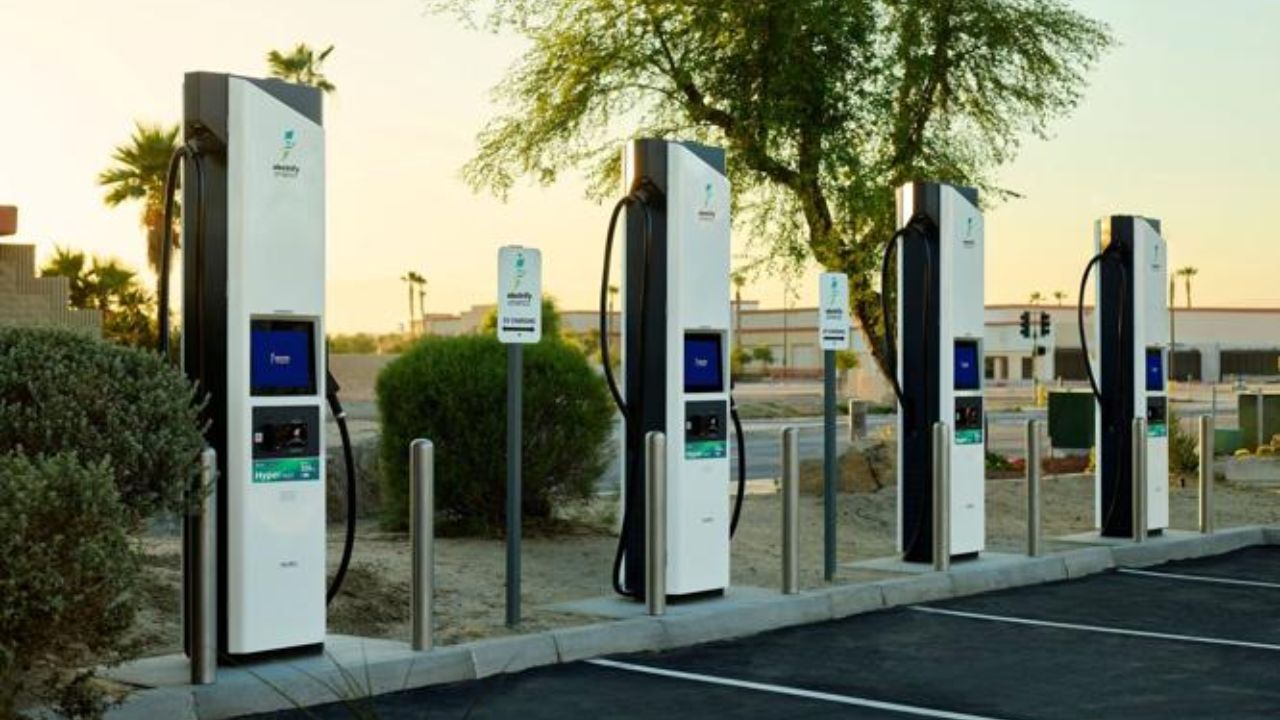
Recognizing this issue, a major EV charging company is testing a solution at ten of its busiest fast charging stations in California. Once a car’s battery reaches 85% charge, the station will automatically stop charging, and drivers will be prompted to unplug or face additional idle-time fees. This policy aims to ensure faster turnover at chargers and a better experience for all EV drivers.
This approach mirrors a similar measure by Tesla, which automatically limits charging to 80% at heavily used Supercharger stations to reduce congestion. However, unlike Tesla, this charging company’s limit cannot be overridden by the driver.
The issue of charger access has been a long-standing concern among EV owners, becoming more critical as the number of EVs on the road continues to grow. The increasing demand for public fast charging has outpaced the availability of chargers, leading to frustration among drivers. Many drivers, accustomed to “filling up” their gas vehicles, may not realize the inefficiencies of charging beyond 80% at fast chargers, contributing to the problem.
Both the charging company and its competitors are rapidly expanding their networks to keep up with growing demand. Increasing the number of chargers could help reduce the need for drivers to linger at charging stations.
Moreover, the company’s free charging agreements with automakers like Mercedes-Benz and Hyundai may inadvertently encourage longer charging sessions, as there is no financial incentive for drivers to unplug. This situation is similar to diners taking advantage of endless food offers, frustrating others waiting.
In some cases, drivers may need to charge to 100%, such as during long trips or when driving EVs with limited range. For these reasons, the company likely won’t implement a strict charging cap at all locations, especially those near major highways.
With access to extensive real-time data on charger usage, charging companies can adopt more nuanced approaches, such as varying pricing based on demand. For now, the focus is on keeping policies straightforward so drivers understand what to expect.
Ultimately, the goal is for EV drivers to be more considerate and efficient, ensuring a better experience for everyone on the road.