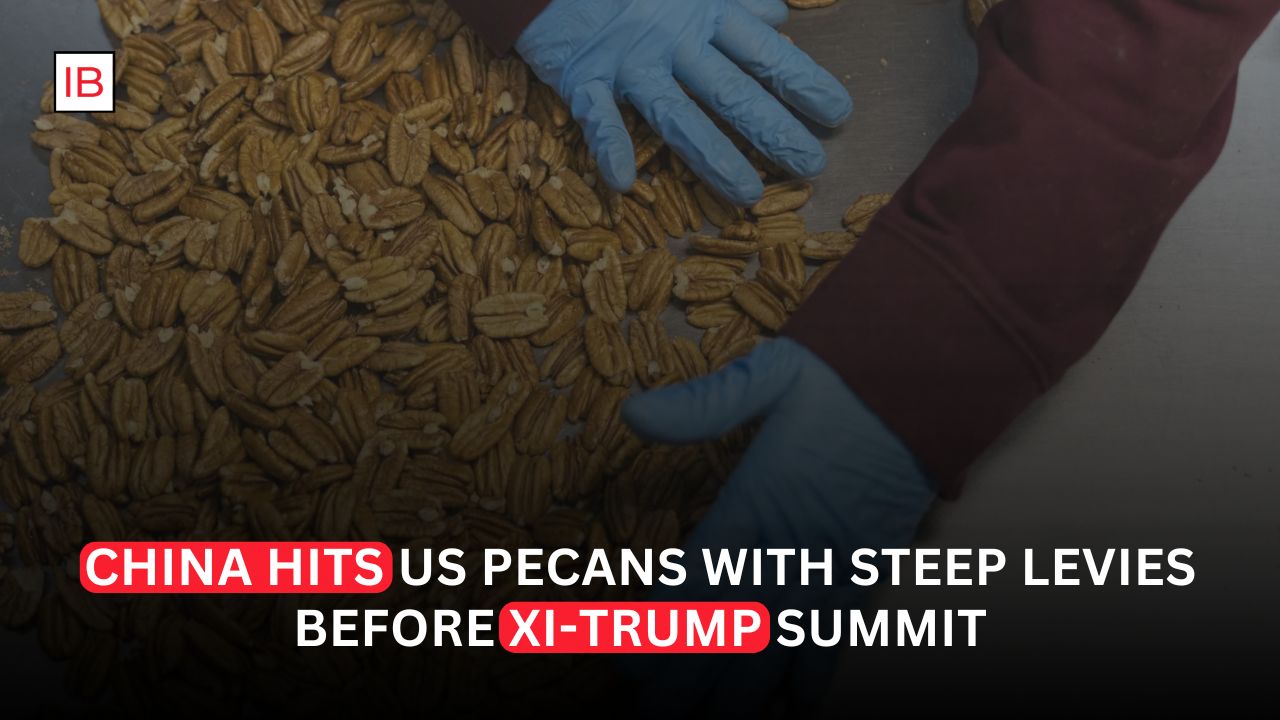
Beijing is imposing steep tariffs on US pecans as trade tensions with Washington remain unresolved, adding pressure on American farmers just as President Donald Trump and Chinese President Xi Jinping prepare for another high-level meeting.
China’s decision to target US pecans highlights how agricultural products remain an important pressure point in the broader economic relationship between the world’s two largest economies. The move comes at a sensitive moment, with both governments seeking to manage trade disputes while preparing for further talks between Trump and Xi.
The latest action is particularly significant for American pecan growers because China is an important overseas market for the crop. Any sharp increase in import costs can make US-grown pecans less competitive against supplies from other producing countries.
Tariffs Add Pressure on US Farmers
For American farmers, China’s measures create another layer of uncertainty in an already complicated agricultural trade environment.
Pecan growers have previously been affected by Chinese trade restrictions during periods of tension between Washington and Beijing. Agricultural products are often vulnerable during trade disputes because governments can target them relatively quickly, while farmers and exporters have limited ability to redirect large volumes of produce to alternative markets.
China’s earlier anti-dumping investigation into US and Mexican pecans also demonstrated the sensitivity surrounding the product. Beijing said preliminary evidence indicated that pecans from the two countries were being sold below normal value and were causing harm to China’s domestic industry.
The new levies therefore add to concerns among US growers that access to the Chinese market could become increasingly unpredictable.
Timing Is Important
The timing of the tariff move is particularly notable because it comes before another expected meeting between Trump and Xi.
Both leaders have repeatedly sought to stabilize their economic relationship, but negotiations remain complicated by disagreements over tariffs, technology restrictions, agricultural trade and supply-chain policies.
The United States has pushed for greater access for American products in China, while Beijing has objected to what it considers unilateral protectionist measures from Washington.
Agricultural trade has become one of the areas where both sides have previously attempted to find common ground. China has committed at various points to expanding purchases of American farm products, while US officials have emphasized the importance of those purchases for American producers.
The latest pecan tariffs show how quickly progress in one area can be overshadowed by new trade measures elsewhere.
Pecans Are a Politically Sensitive Product
Pecans may be a relatively small part of overall US-China trade, but their political importance is greater than their dollar value suggests.
American pecan production is concentrated among farmers and agricultural businesses that depend heavily on stable export markets. When China imposes tariffs or other restrictions, growers can face lower prices and weaker demand.
Agricultural products have repeatedly become targets during trade conflicts because their economic impact is concentrated among specific groups of producers.
During earlier US-China trade disputes, China targeted a range of American farm products, including soybeans and tree nuts. Such measures created pressure on US farmers while allowing Beijing to demonstrate its ability to respond to American trade policies.
The pecan industry is therefore watching the latest developments closely.
China Has Other Sources of Pecans
Another factor working against US producers is the availability of alternative suppliers.
Mexico is also a significant pecan producer, and China has previously examined pecan imports from both Mexico and the United States. This means Chinese buyers can potentially shift sourcing when tariffs make American products more expensive.
That creates a difficult situation for US farmers. Even if Chinese consumers continue demanding pecans, importers may have an incentive to purchase from countries facing lower tariffs or fewer trade restrictions.
American growers could consequently lose market share even if overall Chinese demand remains stable.
Trade Tensions Extend Beyond Agriculture
The pecan dispute is part of a much larger US-China economic confrontation.
The two countries continue to compete over advanced technology, artificial intelligence, semiconductor exports, critical minerals and strategic supply chains. Washington has imposed restrictions affecting Chinese companies and technologies, while Beijing has responded with its own export controls, sanctions and trade measures.
These disputes make agricultural trade more vulnerable because negotiations in one sector can be affected by developments in completely different areas.
For businesses, this creates an environment in which commercial planning becomes more difficult. Importers and exporters must consider not only market demand and prices but also the possibility of sudden government action.
Trump and Xi Face a Difficult Agenda
The upcoming summit will give both leaders an opportunity to address these issues directly.
Trump is likely to seek greater Chinese purchases of American goods and stronger commitments on trade. Agricultural exports are expected to remain an important part of the discussion because purchases from US farmers can provide a visible demonstration of improved commercial relations.
Xi, meanwhile, faces pressure to protect Chinese industries while maintaining access to international markets and avoiding an escalation that could damage China’s economy.
The two governments have previously announced agreements involving agricultural products. China has also approved various US agricultural goods for import during periods of improved relations, including pecans, almonds, walnuts, pistachios and other nuts.
The latest tariffs demonstrate how fragile those arrangements can be.
Farmers Need Stable Export Markets
The biggest concern for US pecan growers is not necessarily one individual tariff decision. It is the uncertainty created when trade policy changes repeatedly.
Farmers plan production months or years in advance. Orchards require substantial investment and cannot easily be adjusted when export demand changes suddenly.
If Chinese buyers reduce purchases, American growers may need to find customers elsewhere. That can push more supply into the domestic market, potentially putting downward pressure on prices.
Alternative markets may exist, but establishing new distribution networks and consumer demand takes time.
This makes agricultural producers particularly vulnerable to prolonged trade disputes.
China Also Faces Trade-Offs
Beijing’s decision is not without potential costs.
China’s consumers and food companies may ultimately face higher prices if US pecans become more expensive or less available. Importers may need to switch suppliers, while businesses could face additional costs associated with finding alternative sources.
China therefore has to balance its trade-policy objectives against domestic demand.
The same calculation applies to other agricultural products. Retaliatory tariffs can put pressure on foreign producers, but they can also raise costs for domestic consumers and companies.
Broader Implications for US-China Relations
The pecan tariffs are unlikely to determine the overall direction of US-China relations by themselves. Their importance comes from what they reveal about the broader relationship.
Even while Washington and Beijing work toward high-level diplomatic meetings, individual industries remain exposed to policy changes.
That makes the latest move a reminder that a summit does not necessarily mean trade tensions have been resolved. Negotiations can produce agreements in one area while disagreements continue elsewhere.
For investors and businesses, the key issue will be whether the two governments can establish a more predictable framework for trade.
Looking Ahead
China’s decision to impose steep levies on US pecans puts additional pressure on American agricultural producers while adding another issue to the agenda ahead of the next Trump-Xi meeting.
The measure could encourage US growers to diversify export markets, while Chinese importers may increasingly seek alternative suppliers. But the larger significance lies in the signal it sends about the continuing fragility of US-China trade relations.
If Trump and Xi can reach agreements that improve agricultural market access and reduce the use of retaliatory trade measures, American farmers could regain greater certainty about exports to China. If negotiations fail to produce meaningful progress, agriculture may remain one of the easiest areas for both governments to use as economic leverage.
For US pecan growers, the immediate challenge is therefore not simply the cost of China’s new tariffs. It is the uncertainty over whether access to one of their important international markets can remain reliable in an increasingly competitive and politically sensitive global trading system.