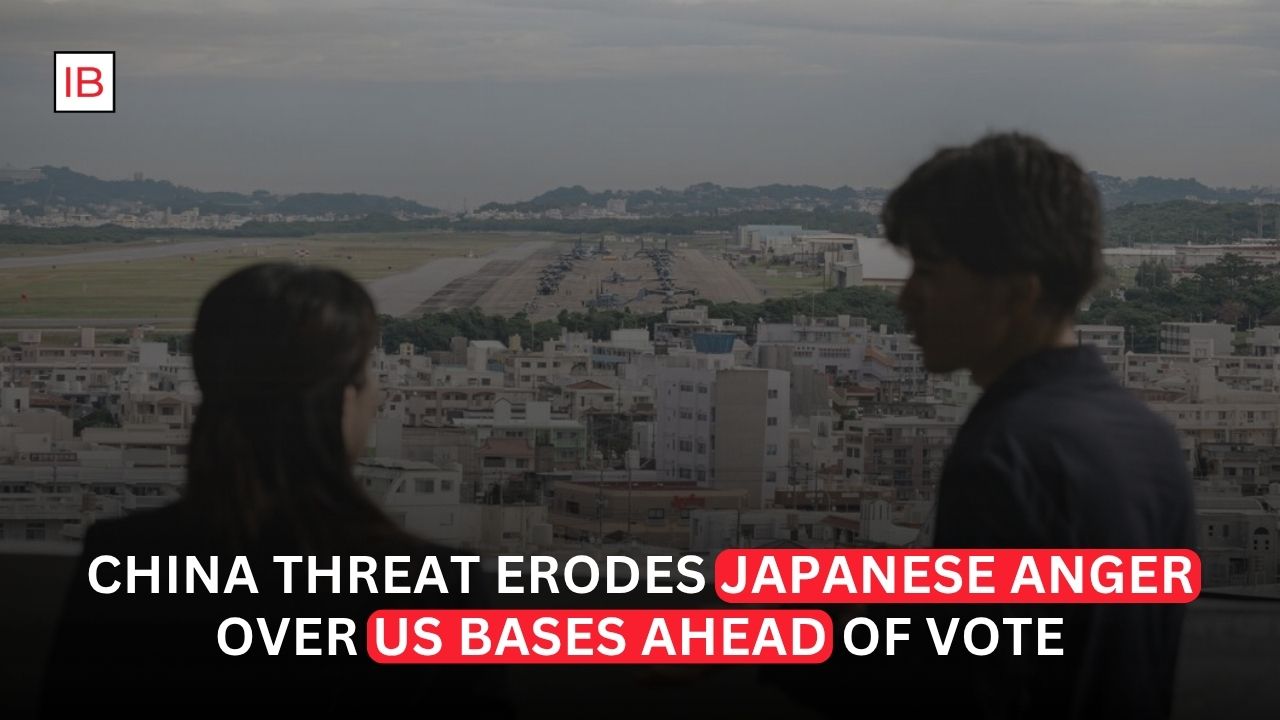
Japan’s long-running political argument over the presence of US military bases is being reshaped by a growing sense of danger from China, with security concerns increasingly competing with the anti-base sentiment that has defined politics in Okinawa for decades.
The shift is particularly visible ahead of Okinawa’s gubernatorial election on Sept. 13, where incumbent Governor Denny Tamaki is seeking a third term against Genta Koja, a former Naha vice mayor backed by Japan’s ruling Liberal Democratic Party. The election has traditionally been dominated by disputes over the US military presence, but voters are increasingly focused on economic conditions, prices and jobs.
A recent poll found that almost 47% of Okinawan respondents considered the economy, employment and measures to combat rising prices their most important electoral issues. Only 16.6% identified US bases and security as their top concern. That represents a significant change for a prefecture where opposition to the American military presence has been one of the most powerful political forces for generations.
China’s growing military power is nevertheless changing the context in which Okinawans view the US presence. The prefecture sits close to Taiwan and mainland China and occupies a strategically important position along the First Island Chain. That geography makes Okinawa central to any potential conflict involving Taiwan or the wider East China Sea.
Japan’s broader political debate has also shifted. Security policy, once one of the country’s most divisive issues, has become less controversial as concerns about China have grown. Japan has expanded defense spending and is preparing to increase its military capabilities, while opposition parties have become less willing to challenge the government’s overall direction on national security.
That does not mean Okinawans have abandoned their concerns about US bases. The dispute surrounding Marine Corps Air Station Futenma remains deeply sensitive. The Japanese government wants to move the facility from the densely populated city of Ginowan to a new site at Henoko, while Tamaki has consistently opposed the relocation and argued that Futenma should be closed without building the replacement facility.
Koja takes the opposite approach, supporting the Henoko relocation and favoring closer cooperation with Tokyo. A victory for him could make it easier for the central government to advance the relocation project, while another Tamaki term would probably preserve Okinawa’s resistance and prolong the dispute.
Yet the political environment around the bases is no longer what it was a decade ago. China’s increasingly assertive military posture has made the US-Japan alliance more important to many voters and policymakers. Japan has identified China as its most significant strategic concern, citing the changing military balance in the Western Pacific and growing missile threats to Japanese territory and military facilities.
That security calculation is particularly powerful in Okinawa because the prefecture is both highly exposed to regional tensions and home to a disproportionate share of US military facilities in Japan. The same bases that generate resentment among local residents also provide infrastructure for the US-Japan alliance and could become critical in a Taiwan conflict.
The result is a complicated political balancing act. Okinawans can remain frustrated by aircraft noise, land use, accidents and the burden of hosting US forces while simultaneously recognizing that the regional security environment has become more dangerous.
The debate has also been affected by the changing relationship between Okinawa and Tokyo. Koja has argued that the prefecture should work more closely with the central government rather than continually confronting it. Tamaki, meanwhile, has maintained his opposition to Tokyo’s handling of the base issue. Japanese media have reported that the relocation dispute has faded into the background as the election has increasingly focused on relations with the central government and economic issues.
China’s growing influence has added another layer to the contest. Beijing has sought to emphasize Okinawa’s historical links with China and has used criticism of the US military presence as part of its regional messaging. That has made Okinawa’s political debate relevant beyond Japan’s domestic politics, particularly as tensions around Taiwan increase.
For Washington, the election will therefore be watched closely even if US bases are not the dominant campaign issue. Okinawa remains one of the most strategically important locations in the US military network in the Indo-Pacific. For Tokyo, the challenge is to strengthen deterrence against China without deepening the local resentment that has surrounded the American military presence for decades.
The changing political mood suggests that China’s rise is gradually altering that equation. Opposition to US bases has not disappeared, but the perceived need for security cooperation is becoming harder to separate from the realities of Japan’s neighborhood.