Anti-Corruption Campaign Deepens as Beijing Intensifies Oversight of the Financial Sector
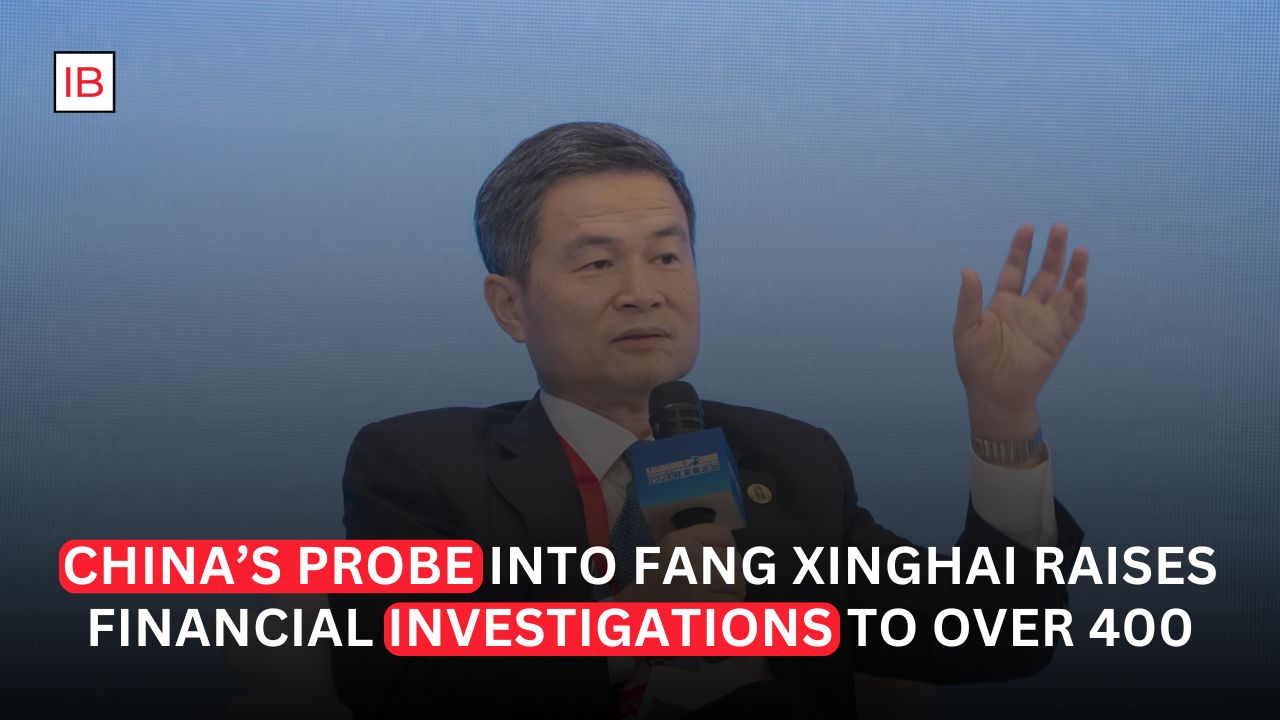
China’s anti-corruption campaign has reached another significant milestone after authorities launched an investigation into former securities regulator Fang Xinghai, pushing the number of financial-sector officials and executives investigated or disciplined to more than 400 since 2021. The latest probe highlights Beijing’s continuing effort to strengthen political oversight of the country’s vast financial system while reinforcing discipline across banks, securities firms, insurance companies, and regulatory agencies.
Fang, the former vice chairman of the China Securities Regulatory Commission (CSRC), is being investigated for alleged “serious violations of discipline and law,” a phrase commonly used by Chinese authorities when announcing corruption investigations. His case has attracted widespread attention because Fang was regarded as one of China’s most internationally recognized financial policymakers and played a central role in opening the country’s capital markets to foreign investors.
A High-Profile Financial Reformer Under Investigation
During his time at the CSRC, Fang Xinghai helped oversee major reforms designed to modernize China’s financial markets.
His career included leadership roles involving:
- Expanding foreign access to China’s stock and bond markets.
- Promoting new financial derivatives.
- Strengthening capital market reforms.
- Representing China at major international financial forums.
- Supporting greater integration with global investors.
Before joining the securities regulator, Fang also worked at the World Bank, the Shanghai Stock Exchange, and several senior government financial policy institutions, earning a reputation as one of China’s most internationally connected financial officials.
Financial Sector Crackdown Continues
Fang’s investigation forms part of President Xi Jinping’s long-running anti-corruption campaign, which has increasingly focused on China’s financial industry.
According to data compiled from official disciplinary announcements, more than 400 financial-sector officials and executives have been investigated or disciplined since 2021. Around 50 cases have been announced in 2026 alone, showing that authorities continue to prioritize oversight of one of the world’s largest financial systems despite a slower pace than in previous years.
Officials targeted during the campaign have come from:
- State-owned commercial banks.
- Securities firms.
- Insurance companies.
- Financial regulators.
- Asset management companies.
- Policy banks.
Oversight Shifts Toward Regulators
Analysts note that the anti-corruption campaign has evolved over time.
Earlier investigations largely concentrated on executives running major state-owned financial institutions. More recently, authorities have increasingly turned their attention toward regulators responsible for supervising the financial system.
Fang’s investigation follows recent action involving several other senior officials, including:
- Former CSRC Chairman Yi Huiman.
- Former National Financial Regulatory Administration Vice Minister Zhou Liang.
- Other senior banking supervisors and disciplinary officials.
The shift suggests Beijing is placing greater emphasis on accountability among those responsible for overseeing China’s financial markets rather than focusing solely on executives within financial institutions.
Xi Jinping Strengthens Control
President Xi Jinping has repeatedly described finance as the “lifeblood” of China’s economy while emphasizing that financial security is closely linked to national security.
To strengthen oversight, Beijing has:
- Centralized regulatory authority.
- Expanded Communist Party supervision within financial institutions.
- Established additional disciplinary bodies focused on finance.
- Increased anti-corruption investigations throughout the sector.
Officials argue that tighter supervision is necessary to reduce financial risks following years of aggressive lending, property market instability, and growing local government debt.
Concerns Among International Investors
Fang’s investigation has generated concern among some international market participants because of his longstanding reputation as an advocate for financial reform.
Many foreign investors viewed him as an important bridge between Chinese regulators and global financial institutions.
Some analysts believe his departure could:
- Reduce direct communication with international investors.
- Slow market liberalization efforts.
- Increase uncertainty regarding future financial reforms.
- Reinforce perceptions of tighter political control over economic policymaking.
At the same time, Chinese authorities maintain that the campaign supports long-term financial stability by improving governance and reducing corruption.
Banking Sector Faces New Challenges
The investigations come as China’s financial industry confronts a difficult operating environment.
Banks continue dealing with:
- Weak credit demand.
- Pressure on profit margins.
- Property sector stress.
- Rising consumer loan defaults.
- Slower economic growth.
Beijing hopes stronger governance and tighter supervision will help financial institutions better manage these risks while supporting broader economic stability.
Looking Ahead
The investigation into Fang Xinghai marks another important chapter in China’s sweeping effort to reshape its financial sector under President Xi Jinping. By pushing the total number of financial officials investigated or disciplined beyond 400, the campaign demonstrates Beijing’s continuing determination to tighten political oversight across one of the world’s largest banking and capital market systems.
While Chinese authorities argue that the campaign strengthens financial discipline and reduces systemic risk, the investigation of one of the country’s best-known market reformers has also raised questions about the future direction of financial liberalization. As Beijing balances economic modernization with stronger political control, global investors will continue watching closely to see how China’s regulatory environment evolves and what impact these leadership changes may have on the country’s financial markets and international investment climate.