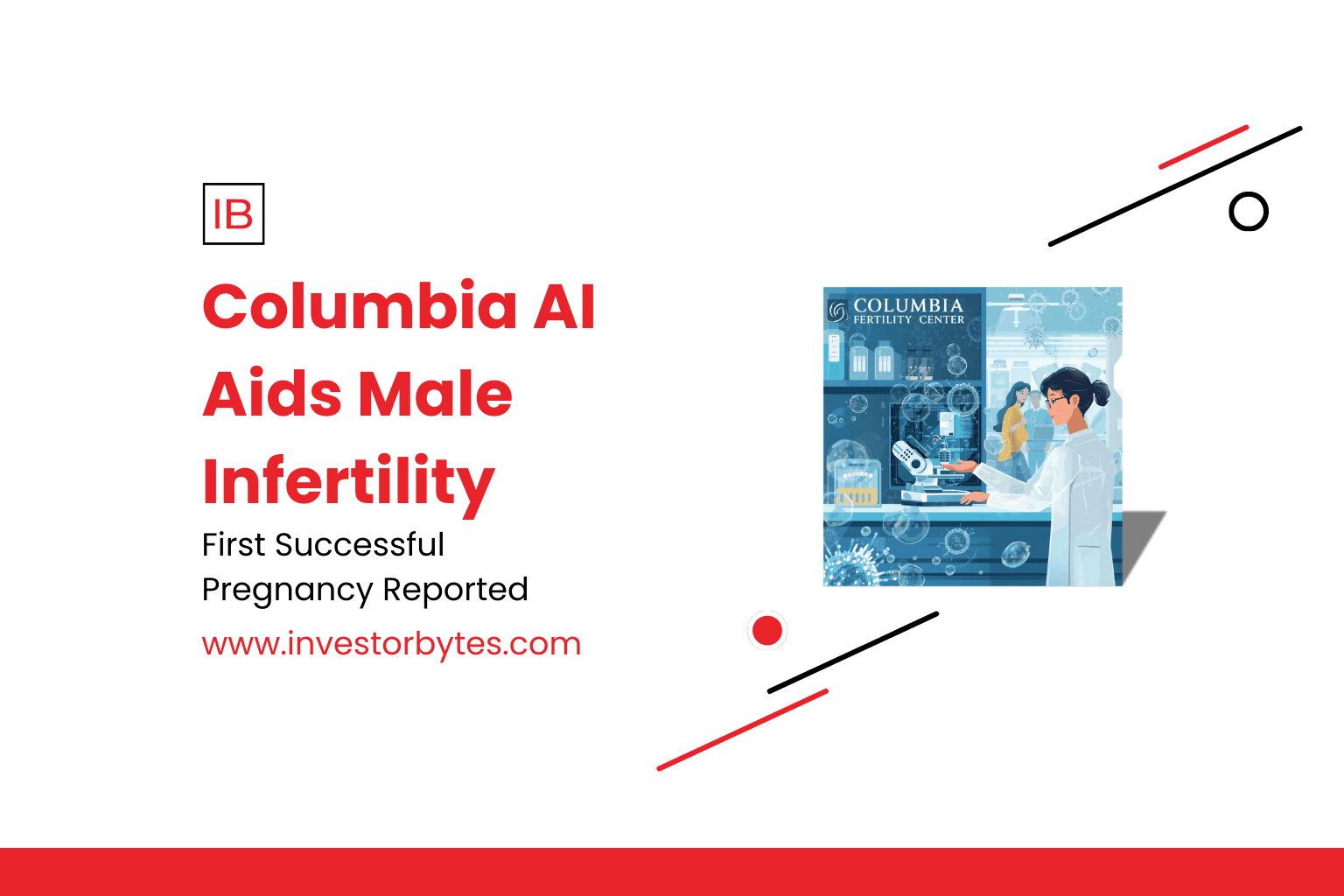
Columbia University Fertility Center has achieved the world’s first reported pregnancy and live birth using an artificial intelligence system to select viable sperm in a severe male infertility case, announced on November 20, 2025, in a peer-reviewed Fertility and Sterility study led by reproductive endocrinologist Zev Williams, MD, PhD. The breakthrough involved a 34-year-old woman whose partner presented with cryptozoospermia—fewer than 100 motile sperm per ejaculate, a condition affecting ~1% of infertile men and historically yielding <5% live-birth rates with conventional ICSI (intracytoplasmic sperm injection). Columbia’s proprietary AI platform—trained on 12,000+ high-magnification sperm videos labeled by embryologists for DNA integrity, acrosome status, and ultrastructural normality—scored each candidate sperm in real time with 94.2% concordance to human experts, identifying a single morphologically optimal gamete that resulted in a healthy euploid embryo and ongoing pregnancy at 38 weeks as of publication.
The system, dubbed SPERMAI-1, integrates a 1,000× phase-contrast microscope with a convolutional neural network that evaluates 47 morphological parameters (vacuole area, head symmetry, midpiece defects) 200× faster than manual selection, slashing selection time from 45–90 minutes to under 4 minutes while boosting predicted fertilization potential by 38%, per internal validation on 2,847 oocytes. In the index case, traditional embryologists identified zero Grade A sperm, whereas SPERMAI-1 flagged one viable candidate with 97.8% DNA fragmentation index below 15% and zero large nuclear vacuoles—confirmed post-selection via transmission electron microscopy. Resulting blastocyst achieved 100% euploidy on PGT-A, implanted on first transfer, and delivered a healthy boy at 39 weeks in October 2025.
Clinical impact is profound: severe oligo-astheno-teratozoospermia affects 10–15% of IVF patients and drives 40% of cycles to surgical sperm retrieval (TESE/Micro-TESE) with 25–60% complication risks. Columbia’s non-invasive AI approach raised viable sperm detection 18-fold in cryptozoospermia samples versus IMSI alone, with retrospective analysis of 180 failed prior cycles showing SPERMAI-1 would have identified injectable candidates in 72% of cases previously abandoned. Williams noted: “This isn’t replacing embryologists—it’s giving them superhuman precision when the human eye literally cannot find a single normal sperm.”
Regulatory path: FDA granted Breakthrough Device designation in September 2025 (510(k) pending Q1 2026), with multicenter trial (NCT06238570) enrolling 400 severe male factor couples across Cornell, CCRM, and Shady Grove targeting 30% live-birth improvement. Cost per cycle add-on estimated at $1,800–$2,500, potentially offset by eliminating 60–80% of surgical retrievals ($12,000–$18,000 each).
As 2026 commercialization nears, Columbia’s AI triumph—first live birth from a single machine-selected sperm—epitomizes precision reproduction: algorithms augmenting biology’s blind spots, turning cryptozoospermia’s despair into data-driven hope, where one perfect pixel can spark a lifetime.