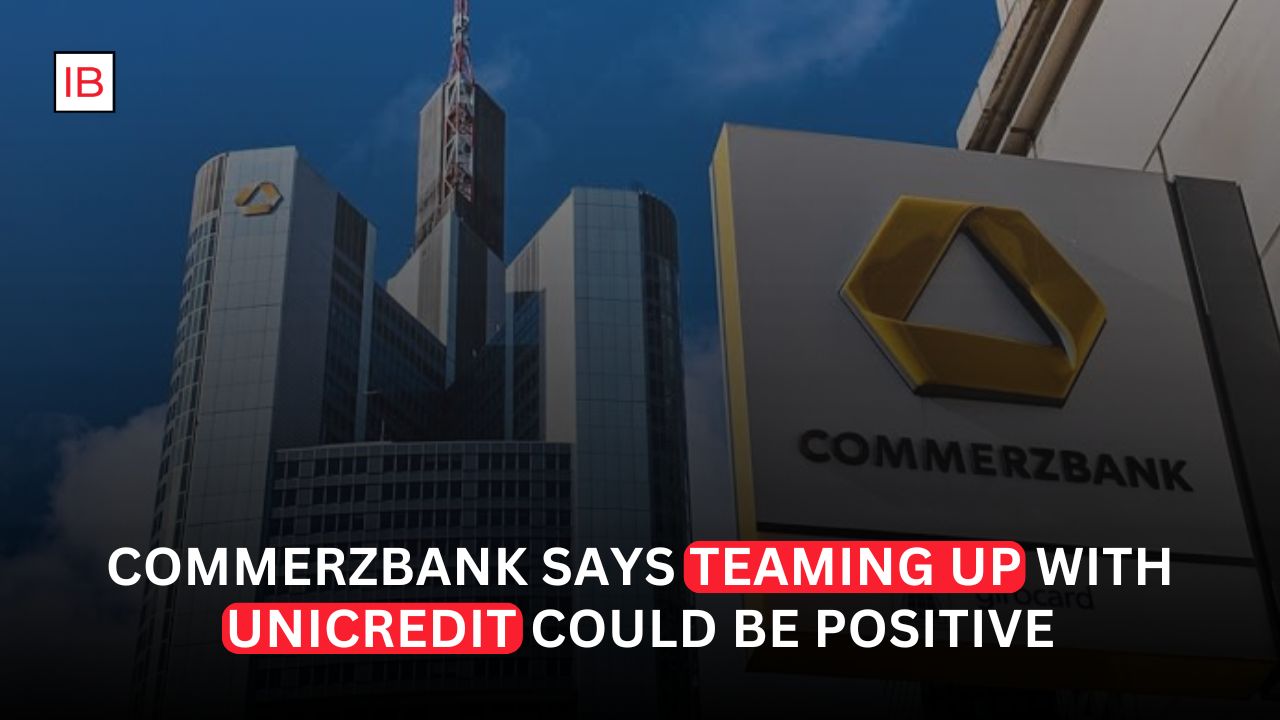
Commerzbank acknowledged for the first time that a combination with UniCredit could create value for stakeholders, a notable softening in tone from the German lender as it published second-quarter results Thursday and continues fielding one of Europe’s most closely watched hostile takeover campaigns.
A Shift in Language
The statement marks a departure from Commerzbank’s previous, more categorically defensive posture toward UniCredit’s advances. For much of the past two years, Commerzbank’s leadership emphasized “independence and profitable growth” as its core strategic message, resisting any suggestion that combining with the Italian lender would benefit German shareholders, employees, or customers. The acknowledgment that a combination could create value reflects growing recognition within Commerzbank’s leadership that UniCredit’s steadily increasing ownership stake has fundamentally altered the dynamics of the standoff, even as the bank continues stressing that any path forward must be constructive rather than imposed.
UniCredit’s Steadily Tightening Grip
UniCredit’s position in Commerzbank has grown substantially since the Italian bank first built a stake in September 2024, expanding from an initial 9% holding to roughly 30% by March 2026, a threshold that triggered a mandatory full takeover offer under German law. By early July, UniCredit disclosed it had reached approximately 48% ownership of Commerzbank’s shares, following a formal tender offer launched in May, even though by the end of the additional acceptance period on July 3, only about 17.6% of shares had actually been tendered, with most of that total originating from banks and parties connected to UniCredit rather than independent institutional or retail investors.
Orcel’s Vision for the Combined Bank
UniCredit CEO Andrea Orcel has laid out an ambitious framework for what a combination could look like, describing his “Unlocked” proposal as capable of delivering “significant cross-border value” and refocusing Commerzbank on its core markets of Germany and Poland. UniCredit has projected the plan could add 600 million euros in additional net profit by 2028, building toward roughly 5.1 billion euros in overall projected earnings. Orcel has outlined two potential paths depending on the level of control UniCredit ultimately secures: one in which Commerzbank would be kept “completely separate and distinct” for roughly 18 months before deeper integration, and another in which a more fully transformed Commerzbank would eventually be combined with UniCredit’s German subsidiary, HypoVereinsbank.
Following UniCredit’s own record first-half 2026 results, announced in July, the bank raised its expected pre-merger value creation estimate from 800 million euros to 1.2 billion euros in annual pre-tax benefits, representing 60% of its total targeted synergies from the deal, underscoring how central the Commerzbank transaction has become to UniCredit’s broader growth strategy.
A Reversal in Political Tone
The shift in Commerzbank’s messaging has coincided with a notable change in the German government’s posture as well. Germany’s Finance Ministry, Commerzbank’s second-largest shareholder, said in late July that it was “now up to the two banks to talk to each other,” a comment widely interpreted as a reversal of the government’s earlier opposition to the deal, even as officials maintained they remained critical of what they characterized as UniCredit’s “aggressive approach.” Commerzbank’s deputy chair and works council head, Sascha Uebel, separately called on both parties to “act like adults” as the standoff has dragged on.
Regulatory and Political Hurdles Remain
Any eventual combination would still require extensive regulatory scrutiny before it could proceed. The European Central Bank and Germany’s financial regulator, BaFin, would need to examine capital levels, governance structures, and risk controls, while competition authorities would assess market overlap between Commerzbank and UniCredit’s existing German operations through HypoVereinsbank. German federal and state officials, along with labor unions representing Commerzbank’s workforce, are likely to press for commitments on job security, branch retention, and continued lending support for the small and mid-sized businesses that have traditionally relied on Commerzbank’s local relationships.
What Comes Next
With Orcel having previously suggested a full acquisition could potentially be completed by the fourth quarter of 2026, and with both sides now signaling greater openness to constructive dialogue following months of public friction, the coming months are likely to prove decisive in determining whether Europe’s most closely watched banking standoff finally moves toward resolution. Whether Commerzbank’s acknowledgment that a combination could create value translates into genuine cooperative negotiations, or remains a largely rhetorical shift while the underlying battle for control continues, will likely become clearer as both banks navigate the regulatory and political hurdles still standing in the way of a full transaction.