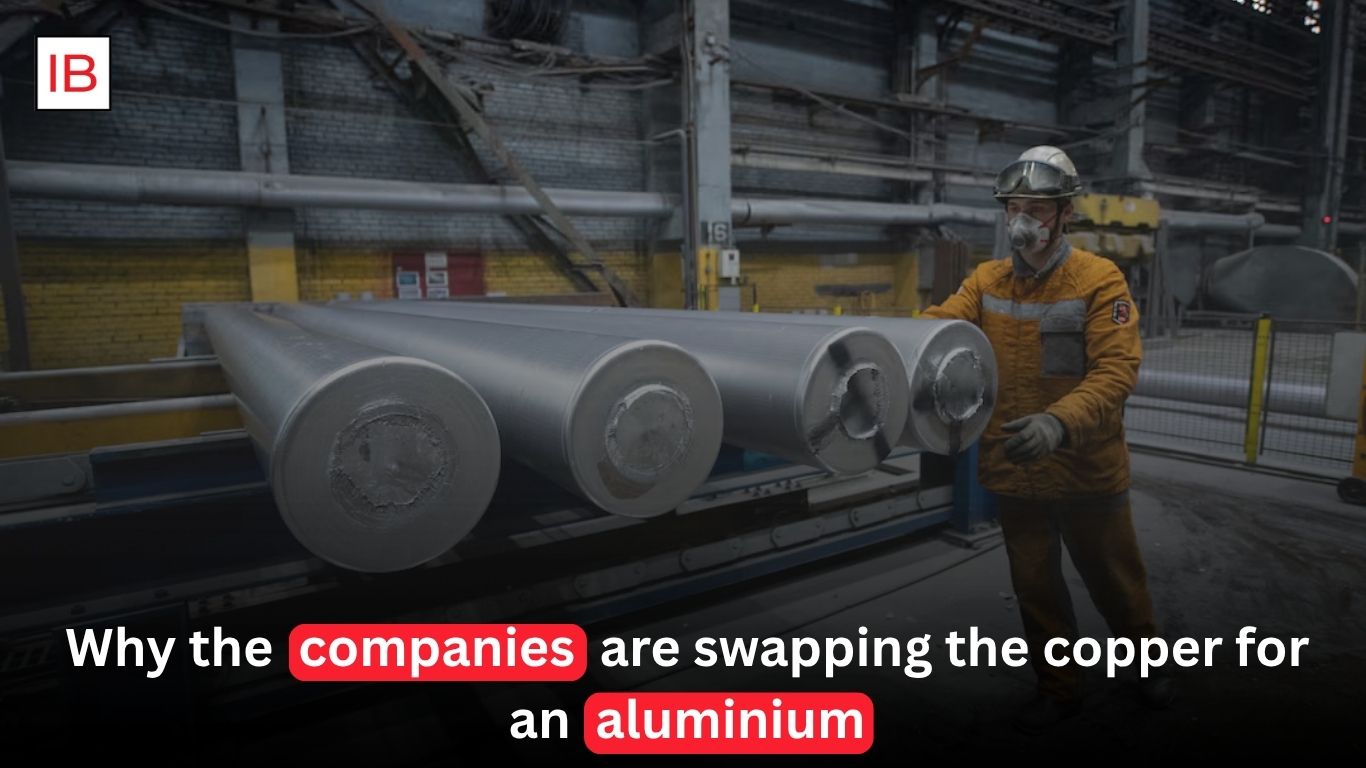
Rising copper prices and growing global demand are pushing manufacturers to switch to aluminium, a cheaper and lighter alternative that is increasingly being used in electric vehicles, power grids, and industrial equipment.
Manufacturers across the automotive, energy, and industrial sectors are accelerating the shift from copper to aluminium as record copper prices make the metal increasingly expensive. The transition, once limited to a handful of industries, is now gaining momentum as companies seek to reduce production costs while maintaining performance.
The move comes amid strong global demand for copper driven by electric vehicles, renewable energy projects, artificial intelligence data centers, and expanding power grids. With supply struggling to keep pace, copper prices have climbed sharply, making aluminium an increasingly attractive substitute despite its lower electrical conductivity.
Record Copper Prices Drive Industry Shift
Copper has long been the preferred material for electrical wiring due to its superior conductivity and durability. However, soaring prices have forced manufacturers to reconsider their material choices.
Industry analysts note that switching becomes financially attractive when the price of copper rises to more than 3.5 times the cost of aluminium. Earlier this year, that ratio exceeded 4.3, making aluminium significantly more economical for many applications.
Although aluminium conducts only about 61% as efficiently as copper, engineers can compensate by using slightly larger cables while still achieving meaningful cost savings.
Automakers Lead the Transition
The automotive industry has emerged as one of the biggest adopters of aluminium wiring.
Manufacturers including Ferrari, BMW, Tesla, Stellantis, and several Chinese electric vehicle makers have begun replacing copper wiring with aluminium in selected vehicle models. Besides reducing material costs, aluminium offers another major advantage—it is considerably lighter than copper.
Reducing vehicle weight improves battery efficiency, increases driving range for electric vehicles, and enhances overall fuel economy for conventional cars. Ferrari has reported wiring weight reductions of up to 20% after adopting aluminium in some of its newest models.
Power Grid Investments Increase Demand
The electricity sector is also embracing aluminium as governments invest heavily in modernizing power infrastructure.
Global spending on electricity grids is expected to reach trillions of dollars over the coming decades as countries expand renewable energy, upgrade aging transmission networks, and improve energy security.
Major cable manufacturers such as Nexans and Prysmian report rising demand for aluminium conductors, while utilities in several countries have begun replacing older copper transmission lines with aluminium alternatives to reduce costs and improve efficiency.
AI and Green Energy Intensify Copper Shortages
Demand for copper continues to rise rapidly due to several long-term global trends.
Electric vehicles require significantly more copper than traditional gasoline-powered cars, while wind farms, solar installations, battery storage systems, and AI data centers all depend heavily on the metal for electrical infrastructure.
At the same time, new mining projects have struggled to keep pace with demand because of permitting delays, declining ore quality, and limited investment in new production. These supply constraints have contributed to persistent upward pressure on copper prices.
Aluminium Offers Cost and Weight Advantages
Although aluminium cannot fully replace copper in every application, it provides several important benefits.
The metal is roughly one-quarter the price of copper and weighs significantly less, making it particularly attractive in industries where reducing weight improves efficiency. Modern engineering techniques have also improved aluminium’s reliability, addressing many of the durability concerns that limited its use in previous decades.
As manufacturing technologies continue to advance, companies are finding more applications where aluminium can deliver similar performance at a substantially lower cost.
Copper Will Remain Essential
Despite the growing shift toward aluminium, experts do not expect copper to lose its importance.
Copper remains the preferred material for applications requiring maximum electrical conductivity, compact wiring, and high-performance electronic systems. Many advanced technologies—including semiconductors, renewable energy equipment, telecommunications infrastructure, and data centers—will continue relying heavily on copper for the foreseeable future.
Instead of replacing copper entirely, manufacturers are increasingly adopting a hybrid approach, using aluminium where cost and weight are priorities while reserving copper for applications where superior electrical performance is essential.
Industry Shift Expected to Continue
The transition from copper to aluminium is expected to accelerate as manufacturers face rising material costs and growing pressure to improve efficiency.
Analysts estimate that aluminium substitution could affect around 2% of global copper demand in 2026, with that figure potentially rising to 6% by 2030 if copper prices remain elevated and supply constraints persist.
As industries continue investing in electric mobility, renewable energy, and artificial intelligence infrastructure, both metals are expected to play critical roles. However, the growing adoption of aluminium signals a significant shift in manufacturing strategies aimed at balancing performance with long-term cost efficiency.