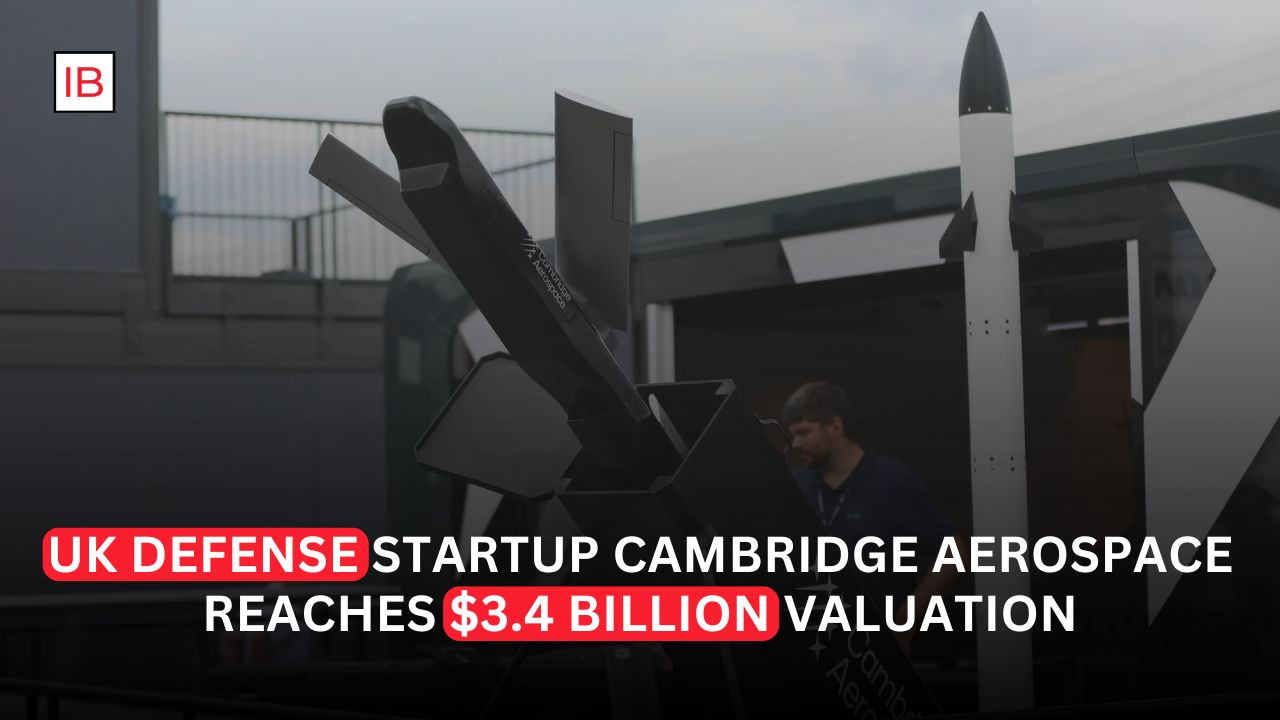
Fresh Funding Highlights Growing Investor Appetite for Defense Technology
Defense startup Cambridge Aerospace has been valued at about $3.4 billion in a new financing round backed by investors associated with Anduril Industries, highlighting the growing flow of private capital into next-generation defense technology.
The valuation reflects the increasing interest in companies developing advanced systems for military and national-security applications. Investors are betting that rising defense spending and demand for new technologies could create significant opportunities for startups operating at the intersection of aerospace, software, and defense.
Investor Interest Grows
The new valuation represents a significant milestone for Cambridge Aerospace and demonstrates the willingness of investors to place large bets on emerging defense companies.
Investors connected to Anduril, one of the most closely watched defense startups in the United States, are participating in the financing.
Their involvement could provide Cambridge Aerospace with both capital and access to investors familiar with the challenges of building technology for government and military customers.
Defense Startups Attract More Capital
Defense technology has become an increasingly attractive investment area.
Governments around the world are increasing spending on military modernization, while conflicts and geopolitical tensions are accelerating demand for new capabilities.
Startups are attempting to bring technologies developed in the commercial sector into defense applications, including:
- Artificial intelligence.
- Autonomous systems.
- Advanced sensors.
- Robotics.
- Aerospace technology.
- Software platforms.
- Unmanned systems.
The growing investment suggests that venture capital and private investors increasingly see defense technology as a major long-term market.
Anduril’s Influence
Anduril has played an important role in changing perceptions of defense startups.
The company has attracted significant private investment by focusing on software-driven defense systems, autonomous technologies and modern approaches to military procurement.
Its success has helped demonstrate that defense companies can potentially grow more like technology businesses while still serving government customers.
Investors connected to Anduril are now backing other startups, potentially helping create a broader ecosystem of defense-focused technology companies.
Why the $3.4 Billion Valuation Matters
A valuation of $3.4 billion places Cambridge Aerospace among the more highly valued private companies in the defense technology sector.
Such a valuation reflects expectations about future growth rather than simply current revenue.
Investors are effectively betting that the company’s technology can generate substantial demand from government agencies and potentially other customers.
The valuation also gives the company greater financial flexibility as it expands research, development and production.
Government Demand Is a Major Driver
Defense startups face a unique market structure because government agencies are often their most important customers.
Government contracts can be large and long-term, but winning them can take considerable time.
Companies must demonstrate that their systems meet strict requirements related to:
- Reliability.
- Security.
- Performance.
- Cost.
- Operational effectiveness.
Startups that successfully navigate this process can gain access to significant sources of revenue.
Competition Is Increasing
The defense technology sector is becoming increasingly competitive.
Established defense contractors already have deep relationships with governments and extensive manufacturing capabilities.
At the same time, new startups are attempting to compete through faster development cycles and newer technologies.
This competition could encourage greater innovation across the industry.
AI Is Reshaping Defense Technology
Artificial intelligence is becoming particularly important in defense.
Military organizations are exploring AI for areas such as data analysis, intelligence processing, logistics and autonomous systems.
Companies capable of integrating AI into defense platforms could therefore have significant growth opportunities.
However, the technology also raises questions about cybersecurity, reliability and human oversight.
Geopolitical Tensions Support Spending
Rising geopolitical tensions are another factor supporting investment in defense technology.
Governments increasingly want domestic and allied supply chains for critical military capabilities.
That can create opportunities for startups developing technologies that reduce dependence on traditional suppliers or provide capabilities that existing systems cannot easily deliver.
Risks Remain
Despite the strong investor interest, defense startups face substantial risks.
Government procurement processes can be unpredictable, while contracts can be delayed or canceled.
Companies also face high research and development costs and intense competition.
A high private-market valuation can create additional pressure because investors will expect rapid growth to justify the price.
Looking Ahead
Cambridge Aerospace’s $3.4 billion valuation highlights the growing role of private capital in the defense industry.
Investors associated with Anduril are helping reinforce a trend in which technology startups are attracting billions of dollars to develop systems for military and national-security applications.
The combination of rising defense budgets, geopolitical uncertainty and rapid advances in AI and autonomous technology could continue to drive investment into the sector.
For Cambridge Aerospace, the challenge will now be turning investor expectations into commercial contracts, technological breakthroughs and scalable production.
If the company succeeds, its new valuation could prove to be an early indicator of a much larger defense technology business. If growth falls short, however, the high valuation could become difficult to justify.
The financing nevertheless demonstrates that investors increasingly view defense technology as a major component of the next generation of the global technology industry.