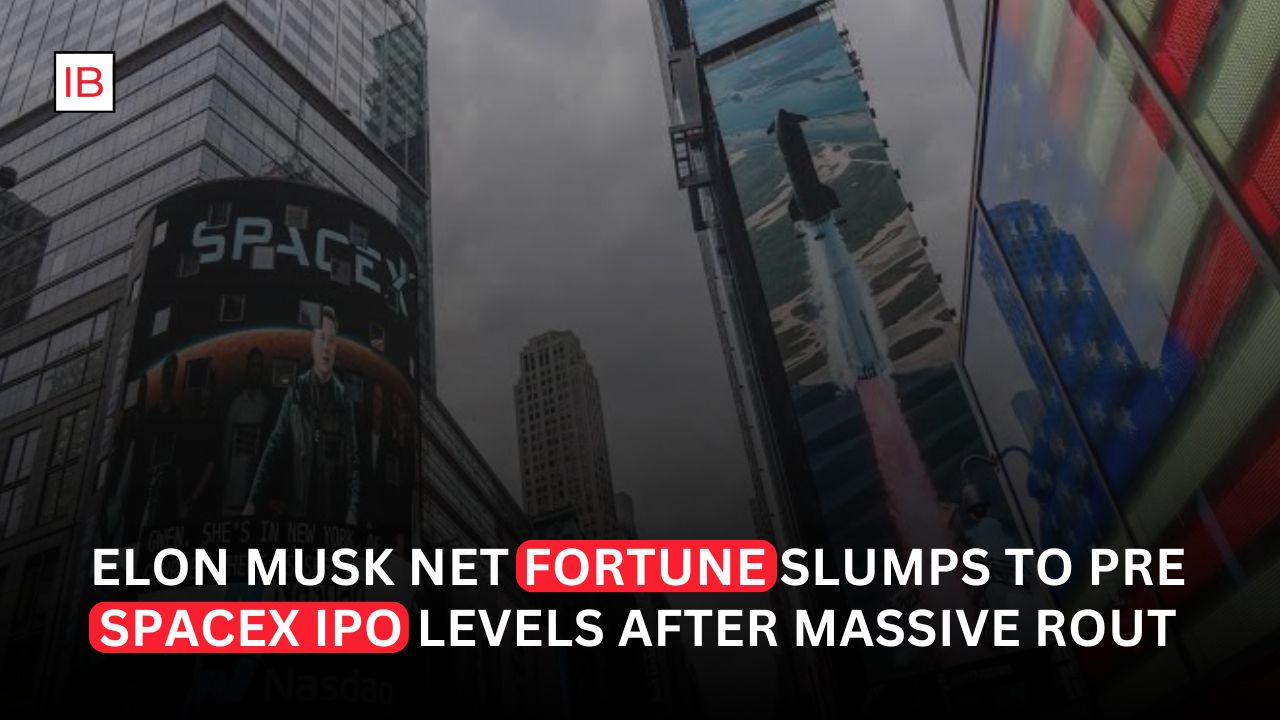
Elon Musk’s fortune has now fallen below where it stood before SpaceX’s initial public offering priced last month, according to the Billionaires Index, wiping out well over $600 billion in wealth in barely five weeks and marking the largest decline ever recorded on rankings.
From Trillionaire to “Former” Trillionaire
Musk’s wealth peaked at approximately $1.33 trillion to $1.45 trillion on June 16, shortly after SpaceX’s record-breaking $85.7 billion IPO briefly pushed the company’s market capitalization above $2.6 trillion and made Musk the world’s first trillionaire. That single trading session alone had added roughly $188 billion to his fortune as SpaceX shares surged following their Nasdaq debut.
The subsequent collapse has been just as dramatic. By late July, Musk’s net worth had fallen to roughly $684 billion to $725 billion depending on the exact snapshot, a decline exceeding $600 billion, and according to Bloomberg, larger than any wealth swing ever recorded for a single individual on its billionaires list. Musk himself acknowledged the reversal with characteristic humor, posting simply on social media: “(Former) Trillionaire.”
What Drove the Collapse
The primary driver behind the plunge has been SpaceX’s stock itself, which has declined more than 40% to 50% since its June 16 peak of around $225 per share. Shares briefly dipped below their original $135 IPO price in late July, a symbolic threshold that effectively erased all of the post-listing enthusiasm that had characterized the company’s debut. A delayed and later aborted Starship launch attempt on July 16 contributed to the slide, rattling investor confidence even as the rocket maker’s broader ambitions in AI infrastructure and satellite connectivity remained intact.
Tesla’s stock also played a meaningful role in the overall decline. The automaker reported second-quarter revenue of $28.24 billion, beating estimates by more than 7%, alongside record deliveries of 480,126 vehicles, but profitability metrics fell short of what investors had been expecting, adding further pressure to Musk’s overall net worth given his roughly 11% stake in the company. Separately, Forbes noted that around $116 billion of the total decline stemmed from the removal of certain Tesla stock options following new vesting conditions Musk had agreed to with the automaker.
A Broader Market Reassessment
Analysts have pointed to a wider cooling in enthusiasm for AI and space-technology valuations as a contributing factor beyond company-specific news. Short sellers reportedly profited substantially from the decline, with retail trading forums estimating roughly $15.5 billion in gains booked during SpaceX’s steepest drops. Even so, Wall Street sentiment toward the company has remained mixed rather than uniformly bearish, with some analysts, including those at Raymond James, maintaining bullish price targets that would imply a valuation well above $10 trillion if realized, while others at Morgan Stanley have questioned whether shares below the $100 threshold would signal investors see essentially no value in SpaceX’s AI-related business ambitions.
Still the World’s Richest Person
Despite the historic drawdown, Musk has retained his position as the world’s wealthiest individual throughout the entire episode, maintaining a substantial lead over the next-richest people on the list, Google co-founders Larry Page and Sergey Brin, whose fortunes stood at roughly $268 billion and $247 billion respectively during the same stretch. Musk has held the title of world’s richest person continuously since May 2024, a streak that has remained unbroken even as the scale of his paper wealth has swung by hundreds of billions of dollars within a matter of weeks.
Why This Matters
The episode illustrates just how volatile concentrated, stock-based fortunes can be, even for the wealthiest people on the planet. Musk’s net worth has never consisted of liquid cash sitting in a bank account; instead, it reflects the fluctuating market value of his substantial holdings in SpaceX and Tesla, both of which are prone to sharp swings based on earnings results, launch outcomes, and shifting investor sentiment toward high-growth technology and space companies.
What Comes Next
With SpaceX having successfully completed a Starship launch from its Starbase facility in South Texas in recent days, some stability may be returning to the stock, though it has not yet been enough to meaningfully reverse the broader decline. Whether Musk’s fortune can climb back toward its trillionaire-era highs will likely depend on continued execution from SpaceX on both its rocket program and its ambitions in AI and connectivity, alongside Tesla’s ability to convert strong delivery numbers into stronger profitability in the quarters ahead.