Europe has long talked about financial integration, but the conversation has acquired a new edge. Pressure from Washington, Moscow and Beijing has turned EU financial sovereignty from an abstract ambition into a strategic priority. Yet as an in-depth World Finance report makes clear, the biggest obstacles to deeper integration are not foreign rivals but the bloc’s own member states, which support unity in principle while guarding control of their banks, savings and debt markets.
The tension was laid bare in 2024 when Italy’s UniCredit built a substantial stake in Germany’s Commerzbank. Berlin denounced the move as hostile, partly because Commerzbank plays a central role in financing German industry, and Commerzbank rejected the approach. European Central Bank officials warned that such resistance undermines the very idea of a single banking market.
Why EU financial sovereignty became urgent
Several shocks have sharpened the debate. Brexit removed the City of London, the EU’s only truly global financial centre, leaving the bloc to rely on Frankfurt, Paris, Dublin, Amsterdam and Milan, none of which rivals New York or Hong Kong. Russia’s invasion of Ukraine led to Russian banks being cut off from the Brussels-based SWIFT network and to Russian assets in Europe being frozen, measures that also highlighted how closely the EU is tied to US financial architecture.
Donald Trump’s return to the White House added further urgency. Higher tariffs on European goods, Vice President JD Vance’s combative speech in Munich and pressure on Denmark over Greenland have all fuelled doubts about American reliability. Some policymakers now question whether the Federal Reserve would still act as the world’s lender of last resort, through dollar swap lines, under a more nationalist US administration.
Two influential reports shaped the response. Former ECB president Mario Draghi warned that the EU risks falling behind its competitors unless it speeds up financial integration, while former Italian prime minister Enrico Letta called for completing the single market by removing cross-border investment barriers and strengthening common institutions. Both identified fragmented capital markets and limited risk-sharing as key weaknesses that will make it hard to fund the green transition, digital innovation and defence. Holger Schmieding, chief economist at Berenberg, notes that Draghi’s report shaped the debate but few of its recommendations have been enacted.
Unlocking Europe’s idle savings
An estimated €14trn of European household wealth sits in bank deposits, earning little and doing little to finance growth. Meanwhile, American investment banks capture around 40% of investment banking fees in Europe, and US asset managers such as BlackRock, Vanguard and State Street are expanding across the continent while maintaining a home bias towards US assets.
The European Commission has relaunched its capital markets union under a new name, the Savings and Investment Union. Proposals include tax incentives for retail investors, changes to capital requirements for banks and insurers, pension reforms and a more harmonised rulebook for equities and bonds. Larger economies also back giving the Paris-based European Securities and Markets Authority direct oversight of major cross-border infrastructure, including clearing houses, securities depositories and big crypto-asset service providers. Sceptics remain. Carsten Brzeski of ING Research argues the plans harmonise markets without completing the union, and that national differences in taxing capital gains and wealth remain a major barrier.
The unfinished banking union
Launched in 2012 during the eurozone debt crisis, the banking union has made banks safer, according to Ignazio Angeloni of the Leibniz Institute for Financial Research SAFE and a former ECB supervisory board member, who points to the absence of significant eurozone banking crises since. But deposit and loan markets remain largely national. The missing piece is a common European deposit insurance scheme, which Germany and the Netherlands have resisted for fear of underwriting banking systems with historically higher bad loans.
Brussels also wants cross-border mergers to improve profitability in an overbanked market. Draghi has proposed a country-blind supervisory approach that treats cross-border activity like domestic business. Smaller states fear losing control of their banking sectors, and many governments still favour national champions. Angeloni warns that even Europe’s largest banks lack the scale to compete with US and Asian giants.
The digital euro and the payments question
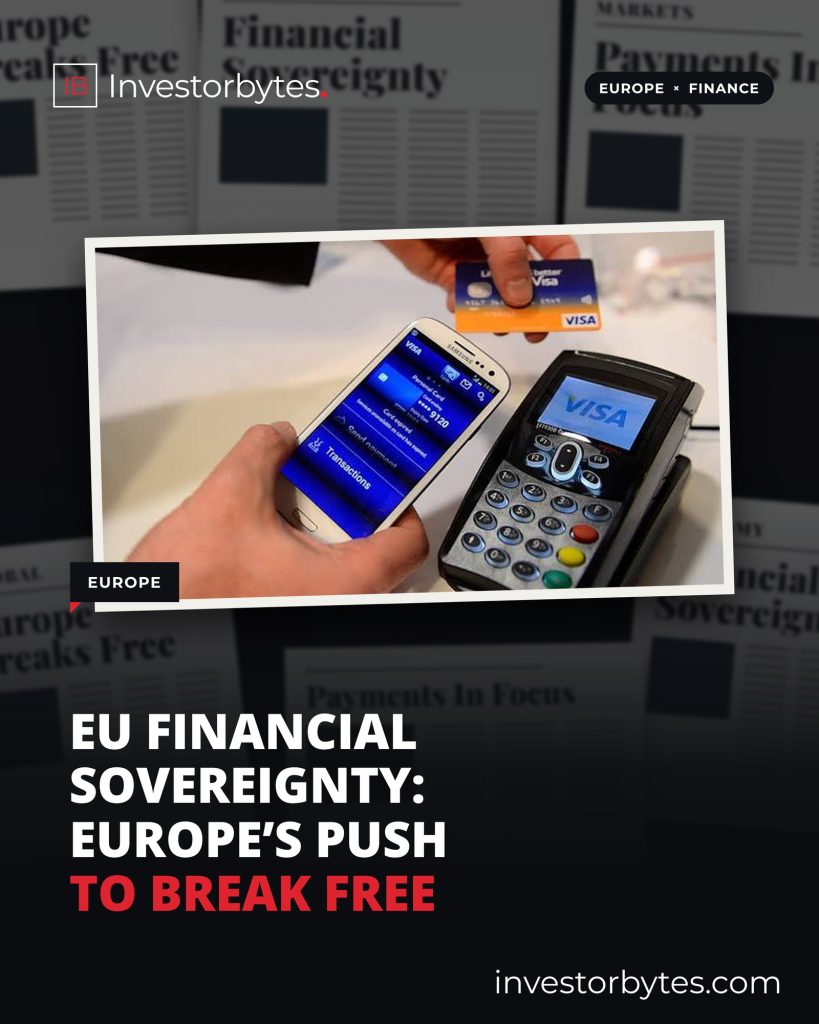
Much of Europe’s card spending runs through Visa and Mastercard, its banks depend heavily on Amazon Web Services, Microsoft Azure and Google Cloud, and Chinese platforms such as Alipay and WeChat Pay are expanding. The digital euro, with a pilot expected next year and full issuance planned before the end of the decade subject to political approval, is intended to provide a public, state-backed alternative to US card networks, big tech platforms and stablecoins.
Matteo Bursi of the Istituto Affari Internazionali says US hostility helped unblock the legislation, and Rebecca Christie of Bruegel argues that central bank money should remain the anchor of the euro. Banks, however, fear deposit outflows, and privacy campaigners remain wary. Bursi adds that holding limits and the absence of interest could keep take-up low, and warns against expecting a major boost to the euro’s global role without a deeper safe asset.
Common debt and the safe asset gap
That safe asset is the crux of EU financial sovereignty. The US Treasury market is worth around $40trn, while European government debt is split across national markets. The pandemic recovery fund proved that investors will absorb large volumes of joint EU bonds, but frugal northern states remain wary. Schmieding supports joint borrowing only for genuinely new common tasks such as defence or aid to Ukraine, while Nicolas Véron of the Peterson Institute argues true Eurobonds require a fiscal union and treaty change. Improving debt positions and ratings in Spain, Italy, Portugal and Greece may, however, be softening resistance.
Conclusion
Optimists see a virtuous cycle in which a stronger banking union, deeper capital markets, a common safe asset and a digital euro reinforce one another. Crises have historically pushed Europe forward, and many Commission proposals need only a qualified majority. But as Brzeski notes, integration demands that national preferences and some national sovereignty give way. Whether member states accept that trade-off will decide if EU financial sovereignty becomes reality or remains a slogan.