Football Governing Body Backs Brazilian Official as Political Storm Over World Cup Officiating Deepens
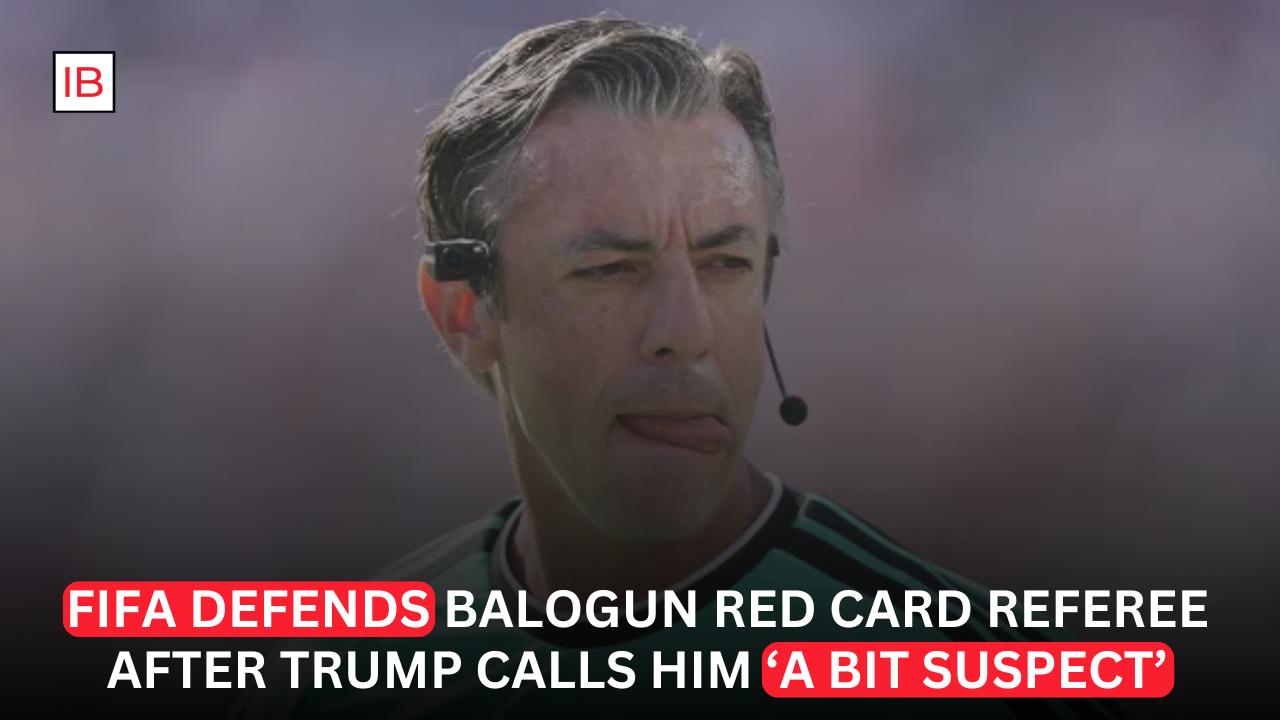
FIFA has publicly defended Brazilian referee Raphael Claus after U.S. President Donald Trump questioned the official’s integrity, describing him as “a bit suspect” following the red card shown to U.S. striker Folarin Balogun earlier in the FIFA World Cup 2026.
The governing body issued a strong statement backing Claus, insisting it has “full confidence” in the referee and reaffirming its commitment to protecting match officials from public attacks.
Trump’s Remarks Follow Balogun Controversy
Trump criticized Claus after Balogun was sent off during the United States’ Round of 32 victory over Bosnia and Herzegovina.
The dismissal came after:
- A VAR review
- Claus ruled Balogun had made dangerous contact with Bosnia defender Tarik Muharemović
- The red card automatically triggered a one-match suspension under FIFA regulations
Trump later questioned the referee’s judgment and integrity without presenting evidence, saying the official appeared “a bit suspect.”
FIFA Issues Strong Defense of Raphael Claus
Responding to the criticism, FIFA said:
- Raphael Claus remains one of its elite international referees.
- The organization has complete confidence in his professionalism.
- Referees deserve respect regardless of controversial decisions.
FIFA President Gianni Infantino and refereeing committee chairman Pierluigi Collina both publicly supported Claus, emphasizing that officials perform under enormous pressure and should not become targets of political attacks.
Balogun Suspension Already Sparked Wider Debate
The referee controversy comes after FIFA separately suspended Balogun’s automatic one-match ban, allowing him to play against Belgium despite the red card.
That unprecedented decision generated criticism from:
- Belgium’s football federation
- UEFA officials
- Former players and managers
- Football governance experts
Many questioned whether the reversal undermined the integrity of tournament disciplinary rules.
Political and Sporting Tensions Collide
The episode has become one of the most controversial stories of the 2026 World Cup, highlighting the unusual intersection of politics and international football.
Critics argue the sequence of events has raised concerns about:
- Political pressure on sporting institutions
- Consistency in FIFA disciplinary decisions
- Independence of referees
- Public confidence in World Cup governance
FIFA has maintained that disciplinary decisions were made independently and not influenced by outside political figures.
Claus Remains Silent
In keeping with FIFA policy, Raphael Claus has not commented publicly on either the red card or Trump’s criticism.
Tournament regulations prohibit referees from giving media interviews during the competition, leaving FIFA officials to respond on their behalf.
Looking Ahead
Although the United States has since been eliminated from the World Cup, the Balogun incident continues to dominate discussion around officiating standards and FIFA governance.
By publicly backing Raphael Claus, FIFA is seeking to reinforce confidence in its referees while resisting what many observers see as unprecedented political scrutiny of World Cup officiating. The broader debate over Balogun’s suspension and the relationship between politics and football is likely to continue long after the tournament concludes.