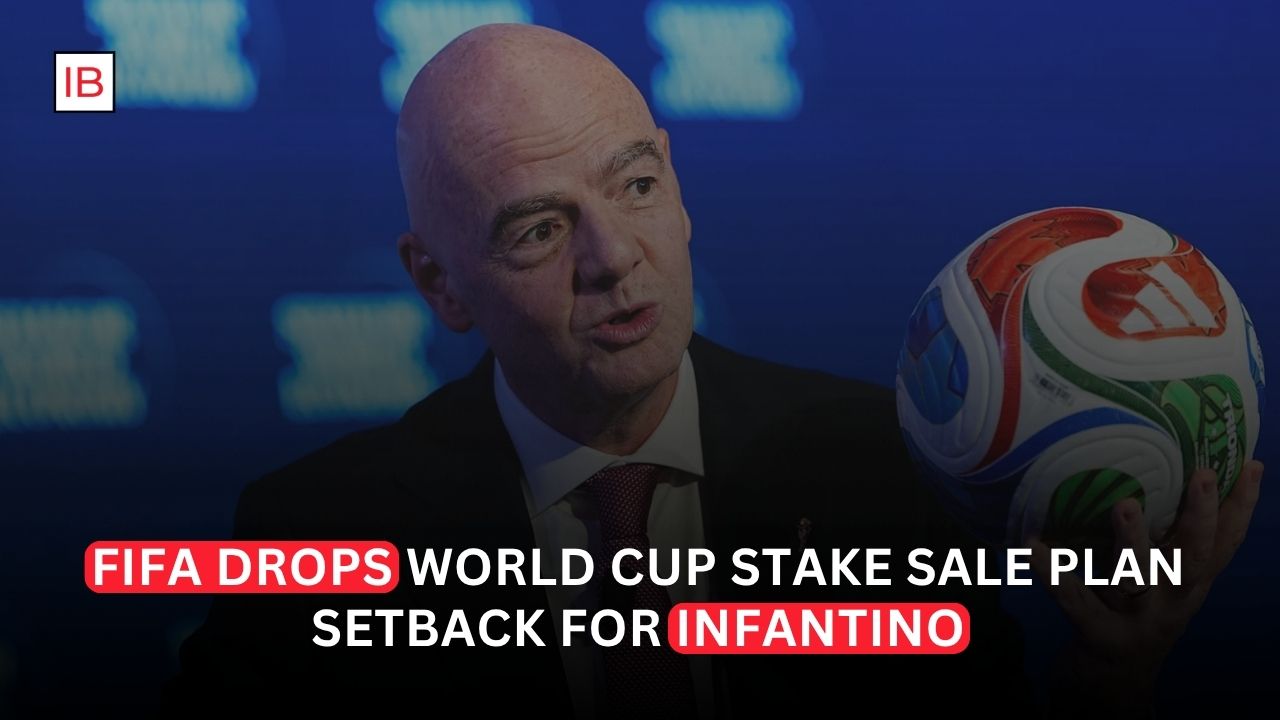
FIFA President Gianni Infantino has abandoned a controversial plan to sell a minority stake in the World Cup and other FIFA competitions to private investors, bowing to intense and swift opposition from key regional football bodies, top clubs, and even senior officials within FIFA itself.
A Rapid Collapse
The proposal, unveiled just days earlier on Tuesday, sought to create a new commercial entity to house media rights for FIFA’s tournaments, including the World Cup and Club World Cup, valued at roughly $20 billion. Infantino had aimed to bring in as much as $4.2 billion in outside capital by selling a 20% stake in that entity to private investors, including a firm led by Joshua Kushner, brother of Jared Kushner. By Friday evening, facing what had become a near-total rejection across global football, Infantino reversed course entirely.
“Having listened carefully to all the views, it has become clear that the project has created divisions of a nature that, regardless of the level of support, are no longer in the interest of the objective set out in the first place,” Infantino said in a statement. “Our purpose has always been – and will always be – to unite and improve. As a result, this proposal will not proceed.”
A Boycott Threat From Europe
The most decisive pressure came from Europe. UEFA, the continent’s governing football body, took the unprecedented step of vowing to boycott World Cup participation entirely should FIFA push ahead with the plan, a threat that placed enormous pressure on Infantino given Europe’s outsized commercial and competitive importance to the tournament. Opposition also came from other major confederations, including CONCACAF and the AFC, turning what began as scattered criticism into what amounted to a near-global rejection of the proposal.
Dissent From Within FIFA’s Own Ranks
Adding to the pressure, criticism emerged from inside FIFA itself just hours before Infantino’s reversal. Carlos Cordeiro, a former Goldman Sachs banker serving as a presidential adviser, resigned from his post in protest, stating, “I cannot stand by while FIFA considers selling a stake in the World Cup,” and urged other senior staff to speak out publicly against the plan. FIFA Chief Operating Officer Kevin Lamour, a longtime Infantino colleague from both FIFA and UEFA, went further, telling the Associated Press that FIFA staff had been deceived by Infantino’s lack of openness while the sale was being planned over recent months, writing that “it is the project of one person” and that it must not proceed.
What Was on the Table
Under the now-abandoned proposal, each of FIFA’s 211 member federations, which technically already own the nonprofit governing body under Swiss law, would have received $20 million each, building on an earlier promise of $12 million in additional funding for the four-year cycle that just concluded. Members would also have been able to apply for further funding of up to $20 million for long-term projects such as stadiums and training centers. The proposal followed a World Cup that had generated approximately $15 billion in revenue, the most in the tournament’s history, with roughly half of that estimated to be profit.
A Political Setback for Infantino
The episode marks a rare and significant defeat for a FIFA president who has generally built his tenure on pushing through ambitious, often controversial changes despite resistance. Infantino had reportedly left New York last week carrying pledges of election support from roughly 200 of FIFA’s 211 voting member federations, underscoring how quickly and broadly sentiment shifted once the specifics of the private equity plan became public. Notably, even President Trump said Friday he had not spoken with Infantino about the stake sale plan, distancing the White House from a proposal that had drawn scrutiny partly due to the involvement of Joshua Kushner’s investment firm.
Infantino’s traditional base of support in Africa, home to 54 of FIFA’s 211 voting members, had remained largely neutral throughout the controversy despite the financial incentives on offer, while South America’s CONMEBOL said only that it would evaluate the proposal “with the rigour it demands” before the plan was ultimately scrapped altogether.
What Comes Next
With the stake sale plan now shelved, attention turns to how Infantino manages the fallout from a rare and public setback to his authority, and whether the episode will affect his standing ahead of future FIFA leadership elections. FIFA’s next major competition, the Women’s Under-20 World Cup, begins in September, offering an early test of whether the organization can move past the controversy or whether questions about transparency and governance within Infantino’s leadership continue to linger.