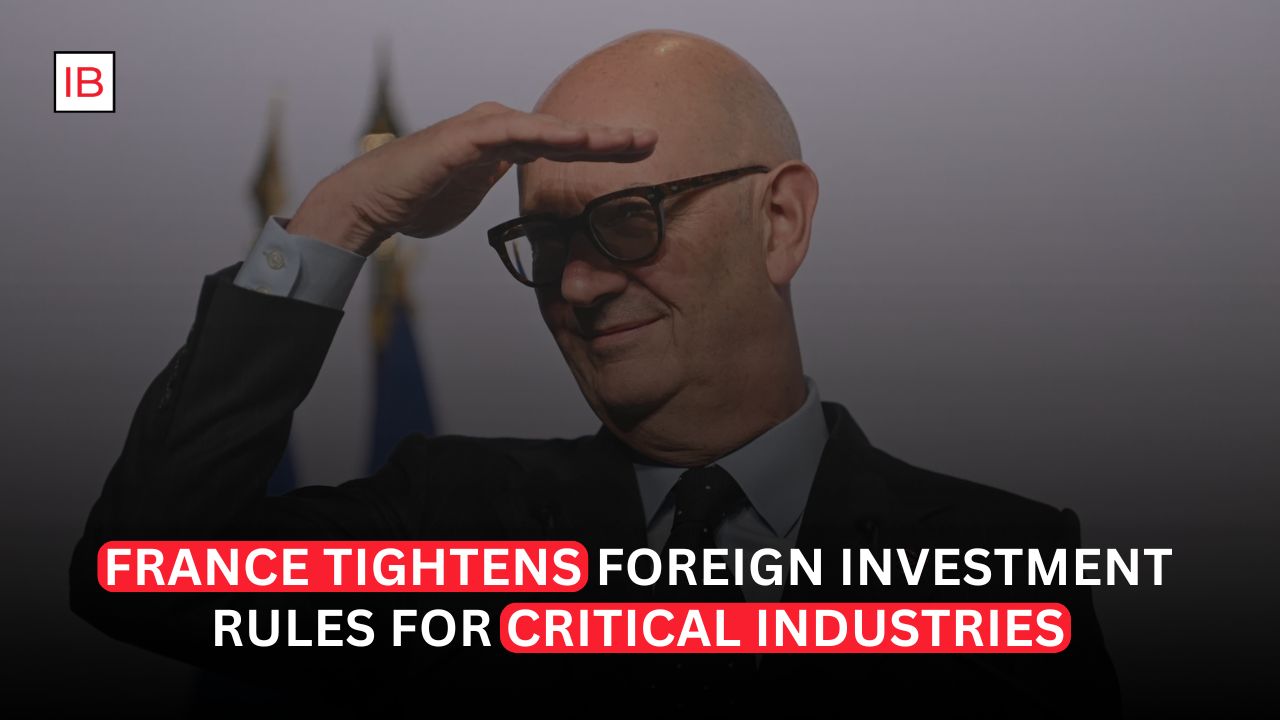
France has issued a sweeping new decree tightening government oversight of foreign investment in strategically sensitive companies, lowering the threshold that triggers mandatory review and expanding the range of industries considered critical to national security.
What the New Rules Actually Change
Prime Minister Sébastien Lecornu signed the decree on Sunday, reducing the ownership threshold that triggers government review of non-European investment in listed French companies from 25% down to just 10%. Under the new framework, any acquisition by a non-European investor of a 10% or larger stake in a listed French company operating in a sensitive sector will now require prior government approval, regardless of whether that company is listed on a French exchange or a foreign one. To avoid unduly hampering companies’ ability to raise capital on financial markets, France’s Finance Ministry will be required to issue an initial decision within 10 days of receiving an investment request, determining whether the transaction warrants a more detailed, in-depth review.
A Rapidly Expanding List of Protected Sectors
The tightened rules extend well beyond traditional defense-related industries. Coverage now includes essential infrastructure and services spanning energy, water, transport, telecommunications, and healthcare, alongside food security, critical raw materials, and media outlets focused on political and general-interest news. Low-carbon technologies, energy storage, and biotechnology have also been formally brought within the scope of the screening system, reflecting Paris’s broader effort to safeguard industries considered central to France’s future economic and technological independence. Artificial intelligence, quantum computing, semiconductors, robotics, and cybersecurity-related research and development activities remain covered as well, continuing a pattern of expansion that has steadily broadened France’s foreign investment regime over the past several years.
Why Now
The government has explicitly linked the tightened rules to heightened geopolitical tensions and a broader European shift toward treating investment flows, supply chains, and advanced technologies as matters of national sovereignty rather than purely commercial concerns. France’s screening regime has already handled a growing caseload in recent years, with the Finance Ministry instructing 392 cases in 2024 alone, up sharply from 309 in 2023 and 325 in 2022, reflecting both the expanding scope of covered activities and heightened sensitivity around foreign ownership of strategic assets.
One case that appears to have influenced the political appetite for tighter rules was the 2024 sale of a controlling stake in Sanofi’s consumer health unit, Opella, maker of the widely used painkiller Doliprane, to a U.S. investment fund, a deal that drew considerable domestic criticism over concerns about foreign control of a household pharmaceutical brand.
Part of a Broader Global Pattern
France’s move mirrors a wider trend playing out across major Western economies. The United States and the European Union have both expanded their own investment screening frameworks in recent years, responding to concerns tied to China’s growing economic influence, the fallout from Russia’s war in Ukraine, and broader worries about unwanted technology transfer to strategic rivals. France’s own foreign investment regime has grown considerably over the past decade, having initially covered only a narrow set of activities like gambling, private security, national defense, and explosives before steadily expanding to cover critical raw materials, prison security, and a widening array of advanced technologies.
Notably, despite the tightening rules, France has continued attracting substantial foreign capital, with a record 53 projects totaling 40.8 billion euros in foreign investment announced at the 2025 edition of the Choose France summit, suggesting the stricter screening regime has not meaningfully deterred overall investment interest even as individual sensitive transactions face greater scrutiny.
Precedent for Blocked Deals
France’s willingness to actually block transactions under its existing framework offers a preview of how the tightened rules might be applied going forward. U.S. industrial group Flowserve was previously prohibited from acquiring two French subsidiaries of Canadian company Velan, which manufactures industrial valves used in French nuclear submarines, aircraft carriers, and nuclear power plants, illustrating how seriously French authorities treat foreign ownership of assets tied to national defense infrastructure.
What Comes Next
With the new rules set to take effect later in August, foreign investors eyeing stakes in French companies across an increasingly broad range of sectors will need to navigate a considerably lower threshold for mandatory government review. How the expanded framework affects the pace of cross-border dealmaking involving French companies, and whether other European nations follow with similarly tightened rules of their own, will likely become clearer as the decree moves from policy announcement to practical enforcement in the months ahead.