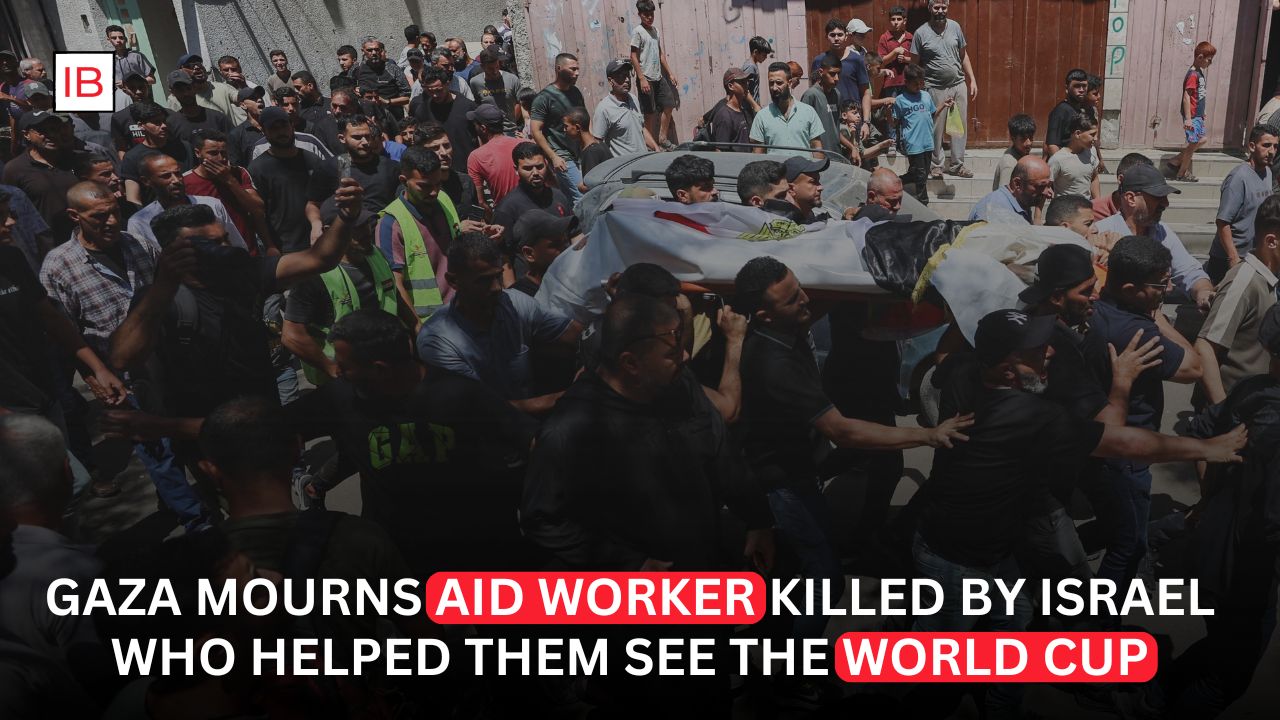
Mohammed al-Wahidi Remembered for Bringing Moments of Joy During War
Palestinians in Gaza are mourning the death of Mohammed al-Wahidi, an aid worker known for organizing public FIFA World Cup 2026 screenings that gave residents moments of relief and connection during a devastating period of conflict.
Al-Wahidi was killed in an Israeli airstrike in Gaza City’s Sabra neighbourhood along with three other people, including two young siblings, according to Palestinian medical sources. The strike occurred shortly before an Egypt vs Argentina World Cup match, an event that many Palestinians had gathered to watch.
Aid Worker Became Symbol of Hope
Al-Wahidi worked as a humanitarian figure in Gaza and was associated with efforts to support displaced and war-affected communities.
During the 2026 World Cup, he helped organize screenings that allowed people to gather and watch matches together despite difficult conditions.
His efforts were remembered for providing:
- Community gatherings
- Moments of entertainment
- Emotional support
- A sense of normal life during conflict
For many residents, football became a rare opportunity to experience collective joy amid ongoing hardship.
World Cup Screenings Offered Escape From Conflict
The 2026 FIFA World Cup created moments of unity across Gaza, where residents gathered in public spaces to follow major matches.
Despite damaged infrastructure and limited resources, communities organized screenings using:
- Generators for electricity
- Temporary viewing areas
- Community-supported events
- Shared public spaces
Matches involving Arab teams, including Egypt and Morocco, attracted particular attention among Palestinian fans.
Strike Occurred Before Major Football Match
According to reports, Al-Wahidi was killed while travelling by taxi in Gaza City shortly before the Egypt-Argentina match.
The attack also killed:
- Two children, aged 8 and 10
- Ahmed Jehad Rajab Doghmosh
The circumstances surrounding the strike remain disputed. Palestinian officials described the victims as civilians, while Israel said the operation targeted a Hamas militant and that civilian casualties were not intended.
Football Brings Communities Together During Crisis
The World Cup became more than a sporting event for many people in Gaza.
For residents facing displacement and destruction, football provided:
- A shared cultural experience
- A temporary escape from daily struggles
- A way for families and communities to reconnect
Organizers like Al-Wahidi played an important role in creating these moments of togetherness.
Humanitarian Workers Face Growing Risks
The death of Al-Wahidi highlights the dangers faced by humanitarian workers operating in conflict zones.
Aid organizations have repeatedly raised concerns about the safety of workers delivering assistance and supporting communities during periods of violence.
Humanitarian operations in Gaza continue facing challenges including:
- Security threats
- Restricted movement
- Infrastructure damage
- Limited resources
Gaza’s Football Culture Continues Despite Destruction
Even amid conflict, football has remained an important part of Palestinian identity and community life.
World Cup screenings demonstrated how sports can provide emotional support during difficult circumstances.
Fans across Gaza continued following international football, celebrating victories and sharing moments of excitement despite the challenges surrounding them.
Tributes Follow Al-Wahidi’s Death
Residents and community members remembered Al-Wahidi not only as an aid worker but also as someone who created opportunities for people to experience happiness during an extremely difficult time.
His work organizing World Cup events became a symbol of how small community efforts can provide hope during crises.
Looking Ahead
The death of Mohammed al-Wahidi has left many in Gaza mourning the loss of a humanitarian figure who used football to bring people together.
While the World Cup continues on the global stage, his story highlights the powerful role sports can play in providing connection, comfort, and moments of normal life—even in places affected by conflict.