Rhine Drought Disrupts Fuel Transport and Supply Chains as Extreme Heat Pushes Germany Toward Emergency Measures
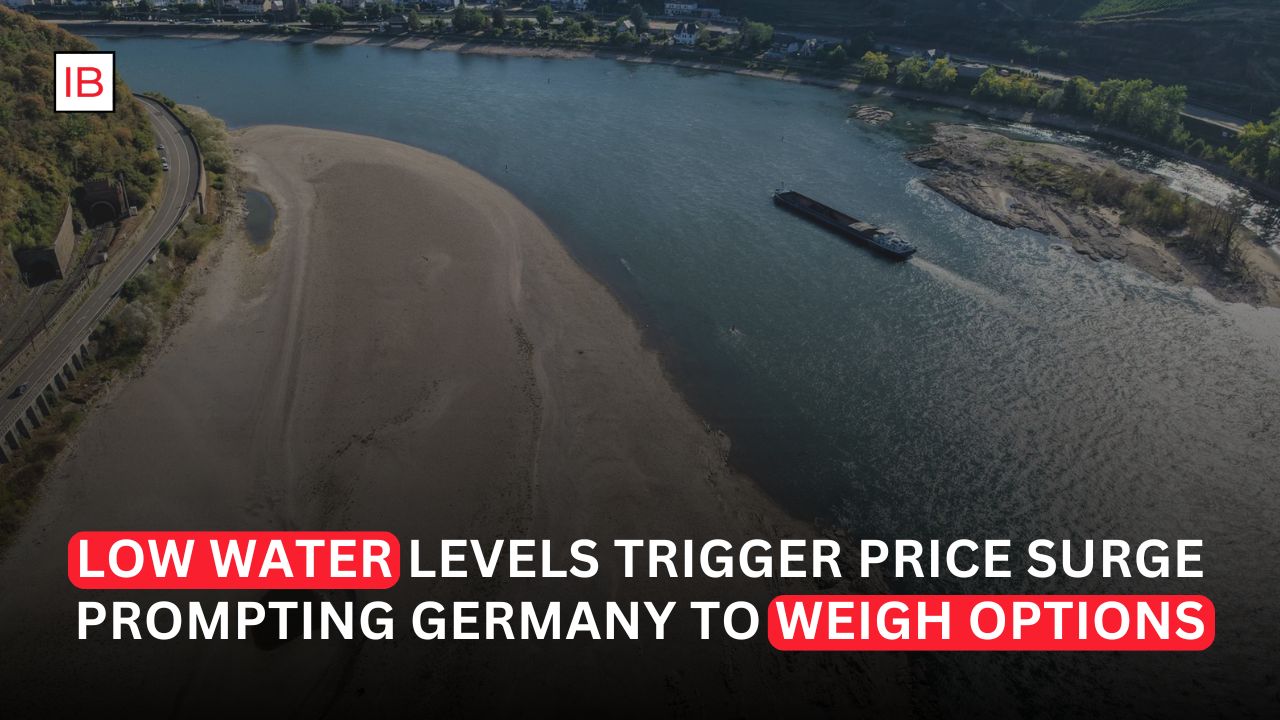
Germany is facing growing economic pressure from exceptionally low water levels on the Rhine River, with severe summer heat disrupting the transport of fuel and other essential commodities and driving up prices in parts of the country.
The worsening conditions are forcing German authorities and businesses to consider alternative ways of moving goods as river transport becomes increasingly difficult. The Rhine is one of Europe’s most important commercial waterways, connecting major industrial regions with ports and international markets. Its disruption is therefore creating consequences far beyond the river itself.
German officials are closely monitoring the situation, particularly the effect of higher transportation costs on fuel prices and consumers.
Rhine Water Levels Fall to Critical Levels
The prolonged heatwave and lack of rainfall have pushed water levels on the Rhine to exceptionally low levels.
The problem is particularly serious around Kaub, a key bottleneck for commercial shipping. As water becomes shallower, vessels cannot safely carry their normal cargo loads. Operators must reduce the amount of fuel, chemicals, coal and other goods loaded onto each barge.
Recent reports indicate that shipping activity has already been halted or restricted in some southern sections of the river as water levels reached new lows.
The restrictions create a simple but costly problem: more vessels and alternative transport are required to move the same quantity of goods.
That pushes freight rates higher and ultimately increases the cost of products being transported.
Fuel Prices Come Under Pressure
One of the biggest concerns for Germany is the impact on fuel supplies and prices.
The Rhine is an important transportation route for petroleum products, including diesel and other refined fuels. When barges cannot operate normally, suppliers face additional costs and may have to rely more heavily on trucks, railways or alternative supply routes.
German Transport Minister Patrick Schnieder has said the government is watching fuel-price increases linked to the low water levels and severe summer heat.
The situation is particularly sensitive because higher logistics costs can eventually reach consumers through increased prices at fuel stations and across the wider economy.
Germany Turns to Road Transport
As river shipping becomes less reliable, road transportation is taking on a larger role.
Several German states have suspended or relaxed restrictions on Sunday truck traffic to help compensate for the disruption to inland shipping. North Rhine-Westphalia and Baden-Württemberg are among the states allowing additional freight movement as businesses attempt to keep supplies moving.
The measure provides companies with another transportation option, but it also comes with limitations.
Germany’s road network cannot easily absorb all the cargo normally transported along the Rhine. Moving large quantities of commodities by truck is also more expensive and can increase congestion, fuel consumption and emissions.
Industrial Companies Face Supply Risks
The Rhine is particularly important for Germany’s industrial sector.
Major manufacturers depend on the waterway to transport raw materials and finished products. Chemicals, petroleum products, coal, minerals and other industrial inputs regularly move along the river.
Companies including BASF and Thyssenkrupp have been affected by supply-chain difficulties associated with the drought. Industry groups warn that continued restrictions could eventually force companies to reduce production if critical materials cannot arrive in sufficient quantities.
Germany’s chemical industry is particularly exposed because many facilities depend on river transportation for feedstocks.
Earlier in the summer, low Rhine levels were already disrupting shipments of naphtha and liquefied petroleum gas to German petrochemical facilities, contributing to production constraints.
Energy Markets Also Feel the Impact
The Rhine disruption is occurring at the same time as Germany’s energy market is dealing with extreme weather and geopolitical uncertainty.
European electricity prices have surged as the latest heatwave reduces wind generation in Germany and places additional pressure on power supplies. Germany’s day-ahead electricity price recently climbed 22.8% to €138.50 per megawatt-hour, according to LSEG data reported by Reuters.
Lower wind output means Germany may need greater reliance on conventional generation, while higher fuel costs increase the expense of producing electricity.
The combination of weak renewable generation, higher cooling demand and transport disruptions creates additional challenges for an economy already facing elevated energy costs.
The Problem Goes Beyond Germany
Germany’s Rhine problem is part of a broader European drought.
The Danube, Rhine and other major waterways have also experienced unusually low water levels during the 2026 summer. The disruptions are affecting shipping, power generation, agriculture and industrial production across multiple European economies.
The economic consequences can spread quickly because European supply chains are highly interconnected.
A shortage of transportation capacity in one region can increase demand for trucks and railways elsewhere, pushing up freight costs. Companies may then pass those expenses on to customers, adding another source of inflation.
Extreme Weather Raises Long-Term Concerns
The immediate problem is the lack of rainfall, but the broader concern is whether extreme heat and drought will become more frequent.
Germany has already experienced major economic disruptions from low Rhine levels in previous years. During severe drought conditions, vessels can carry only a fraction of their normal cargo, sharply increasing transportation costs and creating supply problems.
The 2026 experience is therefore raising questions about whether Germany needs to invest more heavily in infrastructure that can keep supply chains functioning during periods of extreme drought.
Possible responses could include:
- Expanding rail freight capacity
- Improving road freight infrastructure
- Developing alternative supply routes
- Increasing strategic fuel storage
- Improving river and water-management systems
- Strengthening climate-resilient logistics networks
Businesses Prepare for a Longer Disruption
For companies operating along the Rhine, the immediate priority is maintaining supplies.
Businesses are adjusting shipping schedules, reducing cargo loads and searching for alternative transportation. Some are also increasing reliance on road freight despite the higher costs.
However, these solutions become more difficult if low water levels persist for an extended period.
The longer the disruption lasts, the greater the potential impact on manufacturing, fuel distribution and consumer prices.
Looking Ahead
Germany is now facing a difficult combination of extreme heat, drought, disrupted river transportation and rising prices.
The Rhine’s importance to the country’s industrial economy means that continued low water levels could have consequences well beyond the transportation sector. Fuel distributors, chemical manufacturers, energy producers and consumers are all potentially exposed.
For policymakers, the immediate challenge is to keep essential goods moving while limiting the impact on prices. Relaxing truck restrictions and encouraging alternative transportation can provide temporary relief, but those measures may not be sufficient if drought conditions persist.
The longer-term challenge is even more significant. Germany may need to rethink how its critical supply chains operate in a climate where extreme heat and low river levels become more frequent.
The current crisis is therefore not simply a shipping problem. It is a warning that water availability, transportation infrastructure and energy security are increasingly interconnected, and Germany’s ability to adapt could have a major influence on the resilience of Europe’s largest economy.