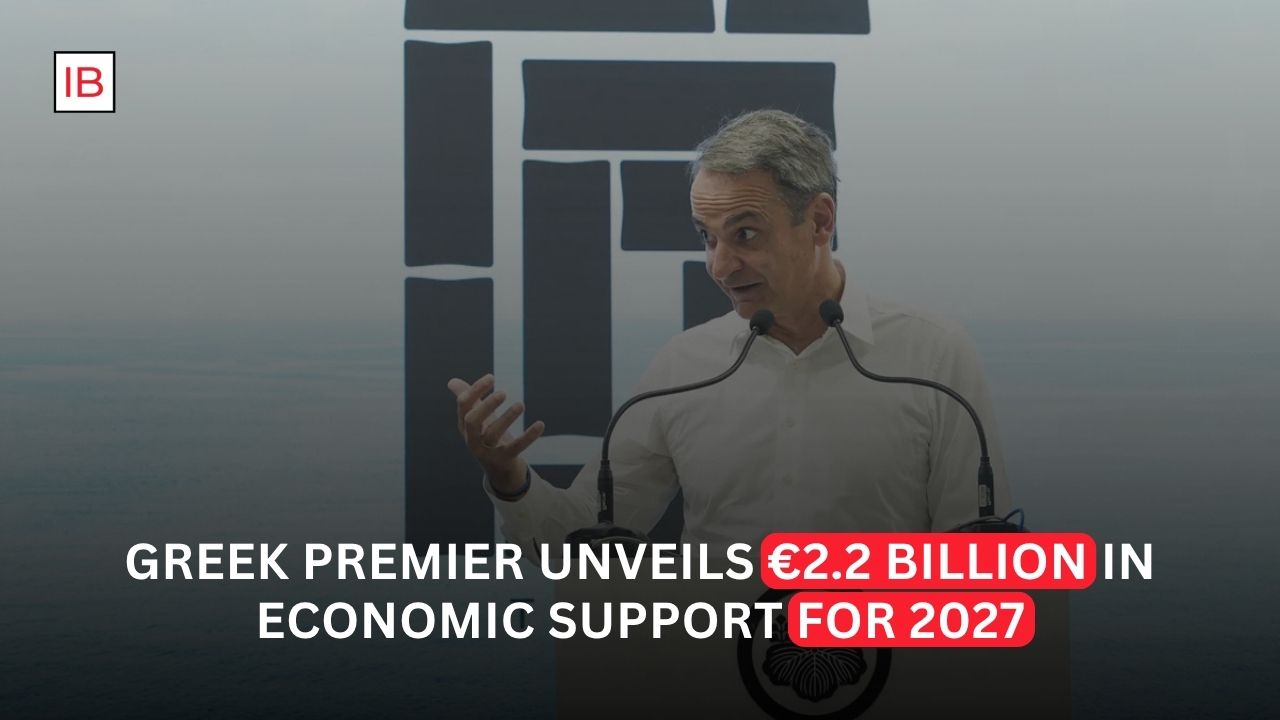
Prime Minister Kyriakos Mitsotakis has announced a €2.2 billion package of tax cuts, wage increases and targeted support for households and businesses as Greece prepares for next year’s general election.
Major Tax Relief and Income Measures
Greek Prime Minister Kyriakos Mitsotakis unveiled a broad economic support package worth €2.2 billion for 2027, equivalent to roughly 1% of the country’s GDP. The measures are designed to raise disposable incomes and ease pressure from the prolonged cost-of-living crisis.
The package includes income-tax reductions, relief for self-employed workers and small businesses, and targeted measures for farmers and families. Low-income farmers and families with three children will receive additional tax relief, while pensioners and public-sector employees will receive annual bonuses of €400 and €500 respectively.
Minimum Wage Set to Rise
Mitsotakis also announced another increase in Greece’s minimum monthly salary. The minimum wage is scheduled to reach €950 in 2027, with a further increase to €1,000 in 2028. Pension contributions will also be reduced by 0.5%, providing additional support for workers.
The government says the measures are possible because of stronger-than-expected economic performance, improved tax collection and a sizeable primary budget surplus. Greece expects its primary surplus to reach around 4% of GDP this year.
Election-Year Economic Strategy
The package comes as Mitsotakis prepares for an election expected next year. His New Democracy government won a strong majority in the 2023 election with 40.5% of the vote, but support has since fallen to around 29% amid concerns over living costs and corruption allegations.
The timing gives the measures clear political significance. The government is seeking to demonstrate that Greece’s post-crisis economic recovery is translating into higher household incomes, even as voters continue to complain about food, energy and housing costs.
Greece’s Economy Shows Resilience
Greece has made substantial progress since its sovereign-debt crisis, with the economy expanding at roughly 2% annually and outperforming the wider euro area. Strong fiscal performance has given the government more room to introduce permanent tax and income measures while continuing to reduce public debt.
However, economic challenges remain. The European Commission expects Greek growth to slow to 1.8% in 2026 and 1.6% in 2027, while inflation is forecast to remain elevated before easing next year. Public debt is still projected to stand at more than 130% of GDP in 2027.
Cost-of-Living Pressure Persists
Despite the recovery, Greek households continue to face significant affordability problems. Average incomes remain well below the levels that many workers expected after years of economic expansion, while food, energy and housing costs remain a major source of public frustration.
Thousands of workers, farmers and union members demonstrated in Thessaloniki around Mitsotakis’ economic address, demanding higher wages and lower prices. The protests underline the gap between Greece’s improving macroeconomic indicators and the financial pressures still experienced by many households.
What Happens Next
The government will now face pressure to ensure that the announced tax cuts and income measures deliver visible improvements before voters head to the polls. Mitsotakis is seeking a third term, but current polling suggests his party may struggle to secure another parliamentary majority on its own.
For Greece, the challenge will be maintaining fiscal credibility while responding to demands for higher incomes and stronger purchasing power. The €2.2 billion package represents the government’s latest attempt to balance those priorities ahead of a closely watched election year.