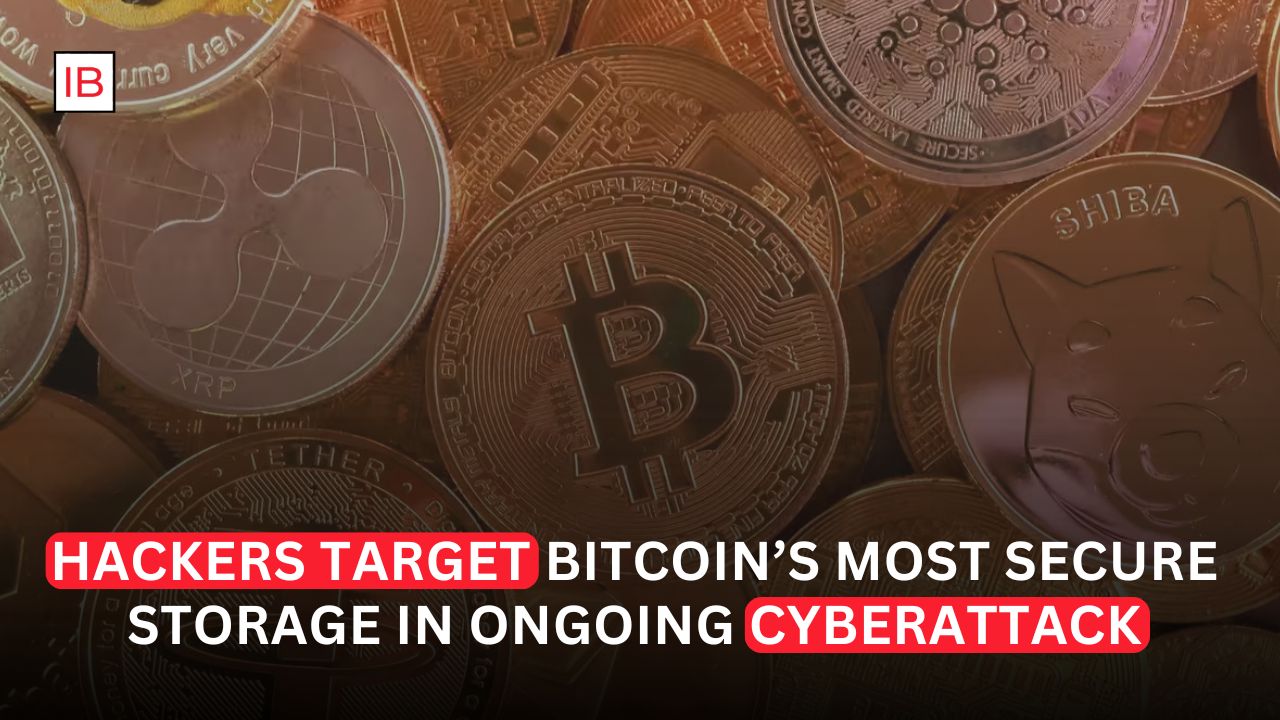
Security Vulnerability in Popular Hardware Wallet Challenges Long-Held Beliefs About Offline Crypto Protection
A major cybersecurity breach has shaken the cryptocurrency industry after hackers exploited a software flaw in one of the market’s best-known hardware wallets, allowing them to steal an estimated $86 million worth of Bitcoin from thousands of users. The attack targeted Coldcard devices manufactured by Canadian company Coinkite, exposing a weakness in technology that many investors considered among the safest ways to store digital assets.
The incident has reignited concerns about cryptocurrency security and demonstrated that even so-called “cold storage” solutions—long regarded as the gold standard for protecting Bitcoin—are not immune to sophisticated attacks. Security researchers say the breach represents one of the largest compromises involving hardware wallets and could have long-lasting implications for how digital assets are stored in the future.
Hardware Wallets Considered the Safest Option
Hardware wallets are physical devices designed to keep cryptocurrency private keys completely offline. Unlike software wallets connected to the internet, these devices generate and store security credentials internally, making them significantly more resistant to online hacking attempts.
Because they remain disconnected from internet-connected systems, hardware wallets have traditionally been recommended for investors holding substantial amounts of cryptocurrency over the long term.
For years, many Bitcoin holders believed that keeping assets in cold storage effectively eliminated the risk of theft. The latest attack, however, has demonstrated that weaknesses in the device’s software can still create vulnerabilities even when the wallet itself never connects to the internet.
Software Flaw Allowed Predictable Seed Phrases
According to cybersecurity researchers, the breach originated from a flaw in the way certain Coldcard devices generated recovery seed phrases.
A seed phrase is a sequence of words that serves as the master key to a cryptocurrency wallet. Anyone possessing that phrase can recreate the wallet and gain complete control over its contents.
Investigators found that some affected devices generated these phrases using predictable values because of an issue in the random number generation process. Instead of producing truly random cryptographic keys, the software occasionally relied on deterministic information such as device serial numbers during fallback operations.
Once attackers understood the flaw, they were able to recreate affected seed phrases, locate vulnerable wallets, and systematically transfer Bitcoin into addresses under their control.
Losses Escalated Rapidly
Initial estimates placed losses at roughly $38 million, but investigators later determined that the attack had expanded significantly.
By the beginning of the week:
- Approximately 1,367 Bitcoin had been stolen.
- More than 4,500 wallets were compromised.
- Estimated losses climbed to around $86 million.
- Attackers continued scanning for additional vulnerable wallets.
Security researchers believe automated tools were used to identify compromised wallets and rapidly drain funds before victims became aware of the problem.
Victims Discover Empty Wallets
Many victims initially struggled to understand how their Bitcoin could disappear despite using offline storage.
Several users reported discovering unauthorized withdrawals only after checking wallet balances days later. Because the devices themselves remained physically secure, many investors assumed their assets were fully protected until transaction histories revealed otherwise.
The incident has highlighted that cryptographic security depends not only on keeping devices offline but also on the quality of the software responsible for generating private keys.
Manufacturer Responds
Coinkite acknowledged that wallets created using affected firmware versions remain at risk and has released updated firmware intended to eliminate the vulnerability.
The company has advised customers to:
- Update devices immediately.
- Generate new seed phrases using corrected firmware.
- Transfer assets from potentially affected wallets.
- Verify that recovery phrases were not generated by vulnerable software versions.
Security experts emphasize that simply updating firmware may not fully protect users if compromised seed phrases were already created before the update.
Broader Security Implications
The breach has drawn widespread attention throughout the cryptocurrency industry because it challenges a core assumption about digital asset security.
Hardware wallets have long represented the preferred storage solution for institutional investors, exchanges, and long-term Bitcoin holders. While the attack does not undermine the concept of offline storage itself, it demonstrates that software implementation remains just as critical as physical isolation.
Industry experts believe wallet manufacturers may face greater scrutiny regarding software audits, cryptographic testing, and independent security verification before future products reach the market.
Crypto Theft Remains a Persistent Threat
Although overall cryptocurrency theft has declined compared with the previous year, cybercriminals continue developing increasingly sophisticated attack methods.
Recent industry data suggests that while the total value of stolen cryptocurrency has fallen, the number of hacking incidents continues to rise. Rather than relying solely on traditional online attacks, criminals are increasingly targeting infrastructure, wallet software, and key management systems.
Looking Ahead
The Coldcard incident serves as a powerful reminder that no security system is completely immune from flaws. Hardware wallets remain one of the safest methods for storing cryptocurrency, but their effectiveness ultimately depends on the integrity of the software that creates and protects cryptographic keys. As digital asset ownership continues expanding worldwide, both manufacturers and investors will likely place greater emphasis on independent security testing, software transparency, and stronger cryptographic safeguards. While confidence in offline storage is unlikely to disappear, this attack may fundamentally change how the cryptocurrency industry evaluates and secures its most trusted storage technologies.