Semiconductor Exports and Artificial Intelligence Demand Push Korea Ahead of Major Economies
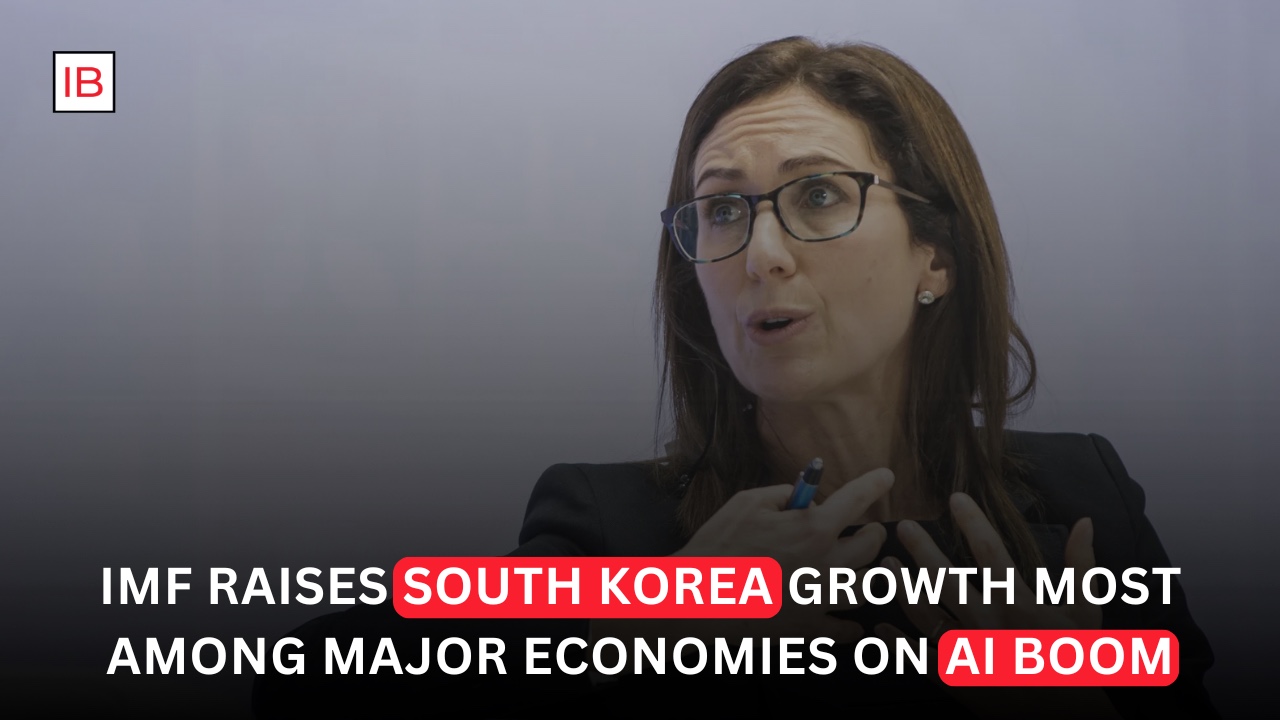
The International Monetary Fund (IMF) has significantly upgraded its economic outlook for South Korea, making it one of the strongest-performing advanced economies as the global artificial intelligence boom drives demand for semiconductors and AI-related hardware.
The IMF raised South Korea’s 2026 economic growth forecast to 2.6%, a 0.7 percentage point increase from its previous estimate, citing stronger-than-expected semiconductor exports and rapid expansion in AI hardware demand. The revision represents one of the largest upgrades among major economies.
AI Hardware Becomes Korea’s Growth Engine
South Korea has emerged as one of the biggest beneficiaries of the global AI infrastructure expansion.
The country’s growth has been supported by strong demand for:
- AI memory chips
- High-bandwidth memory (HBM)
- Data center components
- Advanced semiconductor technology
Major chipmakers such as Samsung Electronics and SK Hynix have benefited from rising demand as technology companies worldwide invest heavily in AI systems and computing infrastructure.
Semiconductor Exports Drive Economic Recovery
The semiconductor industry has become a central pillar of South Korea’s economic performance.
Strong chip exports have helped offset challenges in other parts of the economy, including:
- Weak domestic consumption
- Higher energy costs
- Global trade uncertainty
- Geopolitical risks
The IMF noted that Korea’s unexpected growth performance was largely connected to semiconductor and AI hardware exports outperforming earlier expectations.
Korea Outperforms Other Advanced Economies
The upgraded forecast places South Korea among the fastest-growing developed economies.
The IMF’s revised outlook shows Korea benefiting from its position in global technology supply chains, while many other advanced economies face slower growth due to inflation pressures and geopolitical uncertainty.
The country’s strong technology manufacturing base has allowed it to capture a larger share of AI-related investment compared with economies more dependent on traditional industries.
Samsung and SK Hynix Lead AI Chip Expansion
South Korea’s two largest semiconductor companies are playing a major role in the AI hardware race.
Their growth is being driven by demand for:
- Memory solutions for AI servers
- Advanced semiconductor packaging
- High-performance computing products
- Next-generation data center technology
The continued expansion of AI models has increased demand for specialized memory products, strengthening Korea’s position in the global semiconductor market.
Risks Behind the AI-Led Growth
Despite the positive outlook, the IMF warned that South Korea’s growth remains closely tied to the semiconductor cycle.
Potential risks include:
- A slowdown in AI investment
- Falling chip demand
- Global technology market corrections
- Increased competition from other semiconductor producers
The IMF noted that while AI investment is currently supporting growth, policymakers must prepare for possible changes in the technology cycle.
Energy Costs and Global Uncertainty Remain Challenges
South Korea’s economy still faces pressure from global developments, particularly rising energy prices and geopolitical tensions.
Higher energy costs could affect:
- Manufacturing expenses
- Corporate profitability
- Consumer prices
- Export competitiveness
However, strong technology exports have helped reduce the impact of these challenges compared with previous forecasts.
Future Growth Depends on AI Innovation
South Korea’s economic strategy is increasingly focused on maintaining leadership in advanced technology industries.
The country is investing in:
- Semiconductor manufacturing
- AI research
- Robotics
- Data infrastructure
- Digital transformation
Government and industry leaders believe continued innovation will be essential to sustaining long-term economic growth.
Looking Ahead
The IMF’s upgraded forecast highlights how artificial intelligence is reshaping global economic winners.
South Korea’s strong position in semiconductor manufacturing has allowed it to benefit from the AI boom more than many other advanced economies. With companies like Samsung and SK Hynix expanding AI-related production, the country is positioning itself as a key player in the future technology economy.
However, maintaining this momentum will depend on continued innovation, stable global demand, and the ability to manage risks linked to the fast-changing semiconductor industry.