Indonesia’s President Sets 6% Growth Goal and Tighter Fiscal Target as Government Tries to Balance Ambitious Development Plans With Investor Concerns
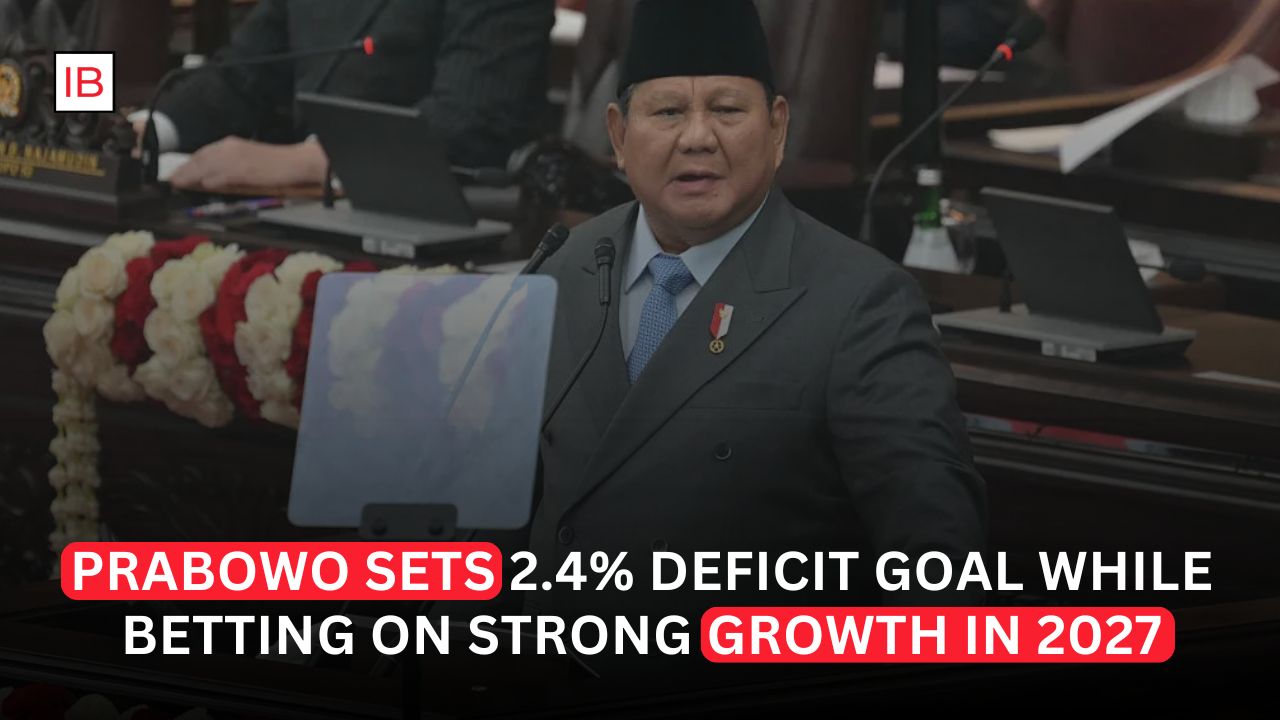
Indonesian President Prabowo Subianto has pledged to reduce the country’s budget deficit in 2027 while pursuing stronger economic growth, setting out a fiscal plan that seeks to combine spending on development and social programs with greater financial discipline.
Prabowo proposed a 2027 national budget of 4,097.2 trillion rupiah ($229.73 billion), an increase of about 3.9% from the previous year. The proposed fiscal deficit is set at 2.4% of gross domestic product, below the government’s projected deficit of 2.85% for 2026 and within Indonesia’s legal ceiling of 3%.
The plan comes as Prabowo faces pressure to demonstrate that his ambitious economic agenda can be financed without undermining investor confidence or creating excessive fiscal risks.
Government Targets 6% Economic Growth
The 2027 budget is built around a 6% economic growth target.
Prabowo has made faster economic expansion one of the central goals of his presidency. His administration ultimately wants to raise Indonesia’s growth rate to 8% by 2029, substantially above the country’s recent pace.
The president has argued that stronger growth is necessary to create jobs, improve living standards and support Indonesia’s transition toward a more developed economy.
The 2027 budget therefore combines fiscal restraint with substantial spending aimed at increasing productive capacity.
Deficit Target Falls From 2026
The proposed 2.4% deficit represents a deliberate effort to demonstrate fiscal discipline.
Indonesia’s projected deficit for 2026 is around 2.85% of GDP, meaning the government is planning to reduce the gap between revenue and expenditure next year. The target also remains below the country’s 3% legal limit.
Prabowo had previously outlined a broader target of keeping the 2027 deficit between 1.8% and 2.4% of GDP.
The narrower deficit is important for investors because concerns about fiscal management have increased as the government expands major spending programs.
Budget Focuses on Eight Major Programs
The government plans to use the 2027 budget to support eight key programs.
These include efforts to achieve food and energy self-sufficiency, strengthen industrial development and improve education.
The strategy reflects Prabowo’s broader economic vision, which places greater emphasis on domestic production and reducing Indonesia’s dependence on imported goods.
Food and energy security are particularly important parts of the government’s agenda because Indonesia remains exposed to fluctuations in global commodity prices and international supply chains.
Industrial Development Remains a Priority
Prabowo’s administration wants Indonesia to move beyond exporting raw commodities and develop more value-added industries.
Industrialization is therefore expected to play a major role in the government’s growth strategy.
The country has substantial reserves of resources including nickel, coal and other commodities, but the government increasingly wants those resources processed domestically before being exported.
The strategy could help Indonesia create higher-paying jobs and increase the value generated from its natural resources.
However, efforts to increase government control over commodity exports have also created uncertainty among investors.
Fiscal Discipline Faces Spending Pressures
Reducing the deficit will not be easy.
Prabowo has introduced major spending initiatives, including the government’s Free Nutritious Meals program, while also pursuing investments in infrastructure, education, food security and energy independence.
Fuel subsidies are another source of fiscal pressure.
According to recent reporting, concerns about increased subsidies, a weaker rupiah and capital outflows have contributed to questions about Indonesia’s fiscal position.
The government will therefore need to balance politically important programs with its promise to maintain fiscal discipline.
Inflation Remains Under Control
Indonesia’s inflation environment currently provides some support for the government’s growth ambitions.
Consumer-price inflation stood at 2.88% in July, remaining within Bank Indonesia’s target range.
The government’s 2027 budget assumes inflation of around 2.5%.
Keeping inflation under control will be important if Indonesia wants to achieve faster economic growth without triggering significant increases in interest rates or weakening household purchasing power.
Stable inflation could also help maintain consumer confidence and support private investment.
Rupiah Assumption Highlights Currency Risks
The budget is based on an assumption that the rupiah will average around 17,500 per US dollar in 2027.
The currency has faced pressure this year, making the exchange-rate assumption an important part of the government’s economic calculations.
A weaker rupiah can increase the cost of imports and foreign-currency debt while also adding pressure to inflation.
At the same time, a competitive currency can benefit exporters and support domestic manufacturing.
Managing the rupiah will therefore remain an important challenge for policymakers.
Bond Yields Also Matter
The 2027 budget assumes a 6.9% yield on 10-year government bonds.
Higher borrowing costs could make it more difficult for the government to finance its spending plans while maintaining the targeted deficit.
Investors have been watching Indonesia’s bond and currency markets closely as they assess whether Prabowo’s economic policies can deliver stronger growth without weakening fiscal credibility.
A credible deficit reduction plan could help reassure markets.
Investors Remain Cautious
The budget announcement comes during a period of heightened investor skepticism.
Concerns have included the government’s commodity policies, the weakening rupiah and questions about the transparency and implementation of some economic initiatives.
Indonesia’s stock market has also experienced significant volatility this year, adding pressure on policymakers to provide clearer signals about economic management.
The lower deficit target is therefore more than a budgetary number.
It is also an attempt to demonstrate that Prabowo’s growth ambitions will not come at the expense of financial stability.
Growth Strategy Depends on Investment
Prabowo’s government is counting heavily on investment to accelerate the economy.
The administration wants domestic and foreign investors to finance new factories, infrastructure projects and industrial facilities.
Investment can help Indonesia raise productivity while creating employment opportunities.
However, investors typically require predictable regulations and stable macroeconomic conditions.
That means the government’s fiscal strategy will need to be supported by consistent economic policies if it wants to attract the capital required to achieve its growth targets.
Long-Term Goal Is 8% Growth
The 6% target for 2027 is part of a much larger ambition.
Prabowo has repeatedly said that Indonesia should eventually achieve 8% annual economic growth.
That would represent a substantial acceleration from the country’s recent growth rate.
The government believes that industrialization, infrastructure development, food and energy independence and higher investment can help achieve that goal.
Economists and investors, however, are likely to focus on whether the government can translate those ambitions into measurable productivity gains.
Challenges Remain
The biggest challenge for Prabowo will be achieving stronger growth while maintaining fiscal credibility.
Indonesia must finance major social and development programs while limiting the deficit.
It must also manage the rupiah, keep inflation under control and reassure investors concerned about policy uncertainty.
The government’s ability to improve tax collection and increase state revenues could become increasingly important.
Without stronger revenue growth, maintaining ambitious spending programs while reducing the deficit could prove difficult.
Looking Ahead
Prabowo’s 2027 budget represents an attempt to strike a delicate balance between economic ambition and fiscal discipline.
The government is targeting 6% economic growth while limiting the fiscal deficit to 2.4% of GDP, below the expected 2.85% deficit for 2026.
The proposed 4,097.2 trillion rupiah budget will focus on food and energy self-sufficiency, industrial development, education and other programs designed to strengthen Indonesia’s long-term economic capacity.
For Prabowo, the challenge will be proving that stronger growth can be achieved without excessive borrowing or renewed pressure on the rupiah.
The government is simultaneously trying to attract investment, develop domestic industries and expand social programs while reassuring financial markets that Indonesia remains committed to responsible fiscal management.
If the strategy succeeds, Indonesia could move closer to Prabowo’s long-term goal of 8% annual growth by 2029.
But reaching that target will require more than government spending.
It will depend on stronger private investment, higher productivity, reliable regulation and continued macroeconomic stability.
The 2027 budget is therefore an important test of whether Prabowo can combine his ambitious growth agenda with the fiscal discipline investors are demanding.