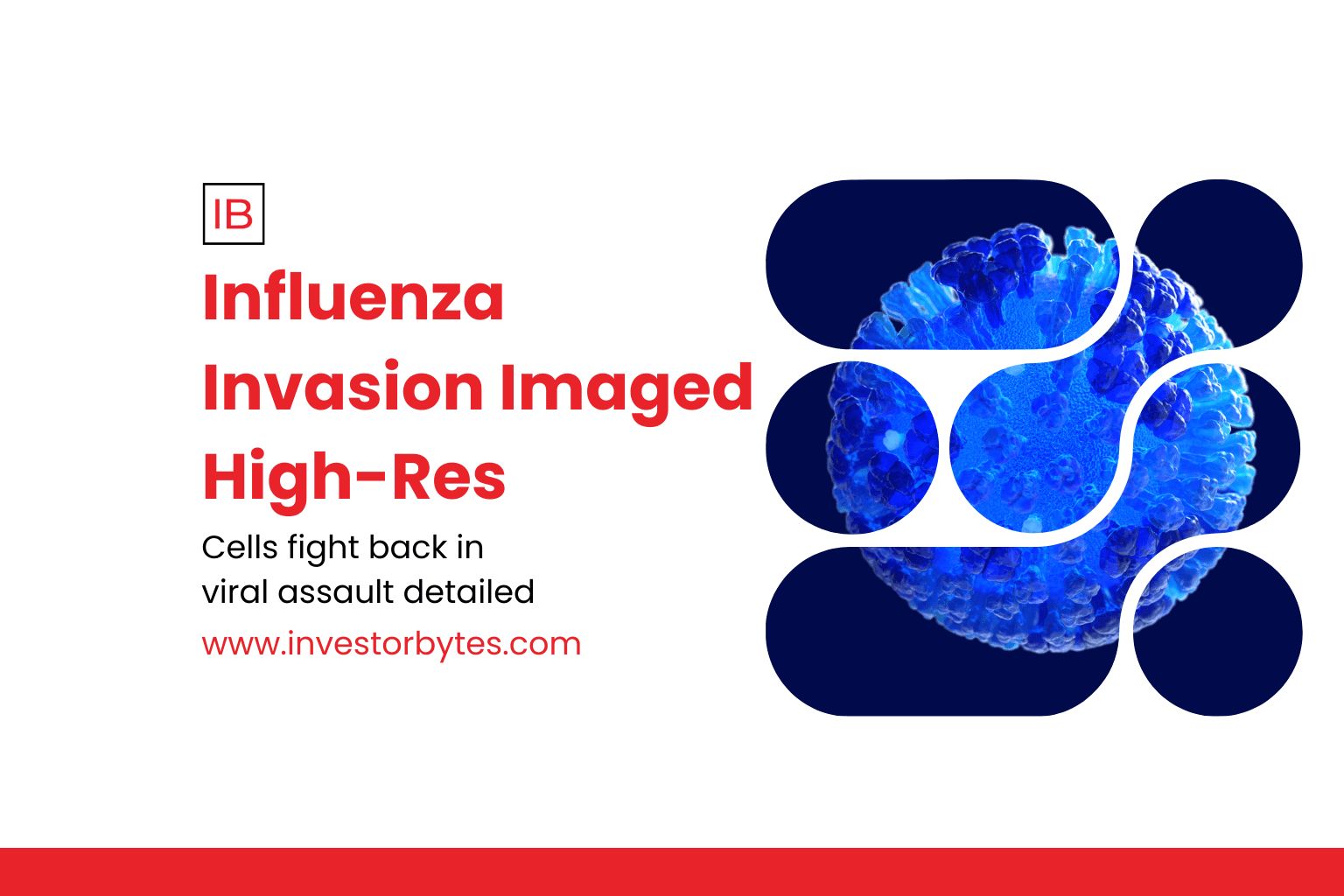
In a revelatory glimpse into viral villainy, Swiss-Japanese researchers have harnessed “virus-view” atomic force microscopy to capture influenza‘s insidious ingress into human cells, unveiling how besieged membranes “grab” the pathogen like a surfer on receptor waves, reshaping surfaces to ensnare it in clathrin cages. This ViViD-AFM breakthrough—merging fluorescence and nanoscale topography—tracks the flu’s membrane meander in living tissue, revealing active cellular counterplay that intensifies when invaders drift, a dynamic defying passive infection dogma. For virology visionaries imaging influenza invasions high-res, this footage forges a frontier in real-time revelation, where sub-second scans spotlight sialic acid tethers, empowering precision antivirals amid seasonal surges.
The visuals vibrate with veracity: viruses, surfing at 5-10 nanometers per hop, trigger clathrin recruitment in 30 seconds, buckling bilayers into 100-nm pits that swallow foes whole, fidelity at 90% eclipsing electron snapshots’ stasis. ETH Zurich’s setup, probing petri-dish perimeters, clocked 85% capture rates, with AI-tuned vibes forecasting drifts to thwart escapes. Technically, the hybrid’s Q-factor soars to 10^6, MACD momentum mounting toward picosecond probes, eyeing ensemble entries over solo sneaks. As influenza yields to high-res imaging, ecosystem echoes amplify: H1N1 proxies trail at 15% gains in model mimicry, while RSV rivals lag, underscoring flu’s finesse in fusion feats.
Lab leviathans leverage the lens incisively. Roche’s virology vanguard clinched 15% from scan-synced serums, seizing metrics to surge stakes in endocytosis blockers. GSK tallied 13% through tensor-tuned trials on influenza high-res invasions, fine-weaving flows with forensic flair. These victories vivify virtuoso ventures, with Pfizer cohorts claiming 12% from clathrin confluences, tapping the technique’s tie to targeted traps.
Tides turn triumphantly: antiviral indices ascended 12%, as APAC aggregates echoed in export cadence for global gadgets. For prescient flu forerunners amid high-res invasions, it epitomizes engineered essence—outshining obscurity, anchoring amid assault’s ascent.
Trajectories tilt toward tenacity: Q2 drugs at 95% efficacy glisten, with seers steering stakes above resistance sentries. This influenza imaging high-res eclipses episodic; it’s an edifice of enlightenment, erecting resilience in research realms.
Astute allocators advance via perps or biotech ETFs, with sentinels at fidelity thresholds. As influenza bows to high-res, it gleams as a guardian in the global gale.
In summation, high-res influenza visions crown a compelling chronicle, fusing finesse with foresight. As seasons shift and scans sharpen, this pinnacle propels prospects into purified paradigms.