Landmark Infrastructure Transaction Becomes Kuwait’s Largest Foreign Investment as Gulf Energy Sector Attracts Global Capital
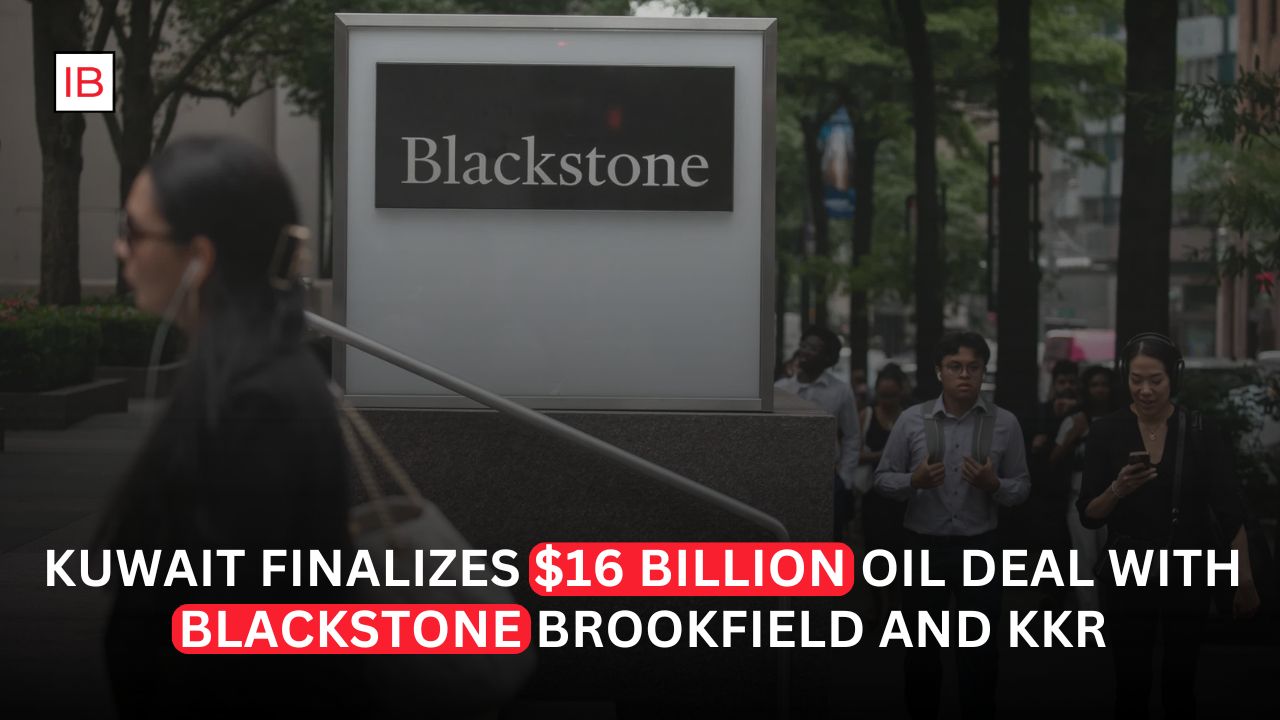
Kuwait has signed a landmark $16 billion infrastructure agreement with global investment firms Blackstone, Brookfield Asset Management, and KKR, marking the largest foreign direct investment in the country’s history. The transaction involves Kuwait’s extensive crude oil pipeline network and reflects the Gulf region’s growing strategy of unlocking capital from energy infrastructure while retaining operational control.
The agreement, known as Project Peregrine, is structured as a lease-and-leaseback arrangement between Kuwait Petroleum Corporation (KPC) and a consortium led by the three investment firms. The deal comes at a time of heightened geopolitical tensions across the Middle East, underscoring investor confidence in Kuwait’s long-term energy infrastructure despite regional uncertainty.
Structure of the Agreement
Under the transaction, a newly established joint venture will acquire the usage rights to Kuwait’s crude oil pipeline network while Kuwait Oil Company (KOC), a subsidiary of KPC, retains majority ownership and continues operating the infrastructure.
Key features of the agreement include:
- Total transaction value of $16 billion.
- Blackstone, Brookfield, and KKR will jointly own a 49% stake.
- Kuwait Oil Company retains 51% ownership and operational control.
- Lease period of 20.5 years.
- Volume-based tariff structure.
- Approximately 320 kilometers of domestic and export crude oil pipelines included in the transaction.
Unlike a traditional asset sale, the arrangement allows Kuwait to raise substantial capital while maintaining full responsibility for operating and maintaining its critical oil transportation infrastructure.
Billions in Upfront Funding
The transaction is expected to provide approximately $7.85 billion in upfront proceeds to Kuwait Petroleum Corporation.
Officials say the funds will support:
- Expansion of oil production capacity.
- Infrastructure modernization.
- Capital expenditure programs.
- Long-term energy investment.
- Economic development initiatives.
Kuwait has ambitious plans to increase crude production capacity to 4 million barrels per day by 2035, making additional infrastructure investment a strategic priority.
Growing Interest in Gulf Infrastructure
The deal reflects a broader trend across Gulf energy producers, which are increasingly monetizing infrastructure assets to attract international investment without privatizing core operations.
Similar transactions have been completed in recent years by:
- Saudi Aramco.
- Abu Dhabi National Oil Company (ADNOC).
- Bahrain’s energy sector.
These arrangements allow governments to unlock capital tied up in infrastructure while preserving long-term operational control over strategic energy assets.
Global Investors Expand Energy Portfolios
For Blackstone, Brookfield, and KKR, the acquisition strengthens already significant investments in global infrastructure.
The firms continue targeting:
- Energy pipelines.
- Transportation networks.
- Utilities.
- Renewable energy.
- Digital infrastructure.
Infrastructure assets remain attractive because they typically generate stable, predictable cash flows through long-term contracts, making them appealing during periods of economic uncertainty.
Geopolitical Context
The agreement was finalized as geopolitical tensions continue affecting the Middle East and global energy markets.
Despite concerns surrounding regional security, Kuwait has continued pursuing long-term investment partnerships while reinforcing its position as a reliable energy exporter.
Analysts say completing such a major transaction during a period of regional instability demonstrates strong international confidence in Kuwait’s energy sector and legal framework for foreign investment.
Economic Significance for Kuwait
The investment represents a major milestone in Kuwait’s efforts to diversify financing sources while maintaining public ownership of strategic assets.
Officials believe the transaction will:
- Improve financial flexibility.
- Support long-term energy expansion.
- Attract additional foreign investment.
- Strengthen infrastructure financing.
- Enhance international investor confidence.
The structure also enables Kuwait to recycle capital into future projects without reducing state control over its oil industry.
Looking Ahead
The $16 billion pipeline agreement between Kuwait Petroleum Corporation and the consortium of Blackstone, Brookfield, and KKR highlights the growing role of private capital in financing critical energy infrastructure across the Gulf. By combining foreign investment with continued state ownership, Kuwait has secured significant funding while preserving control of one of its most important national assets.
As Gulf countries continue modernizing their energy sectors and investing in future production capacity, similar infrastructure partnerships are expected to become increasingly common. For global investors, the transaction reinforces the attractiveness of high-quality energy infrastructure capable of generating stable long-term returns even during periods of geopolitical uncertainty.