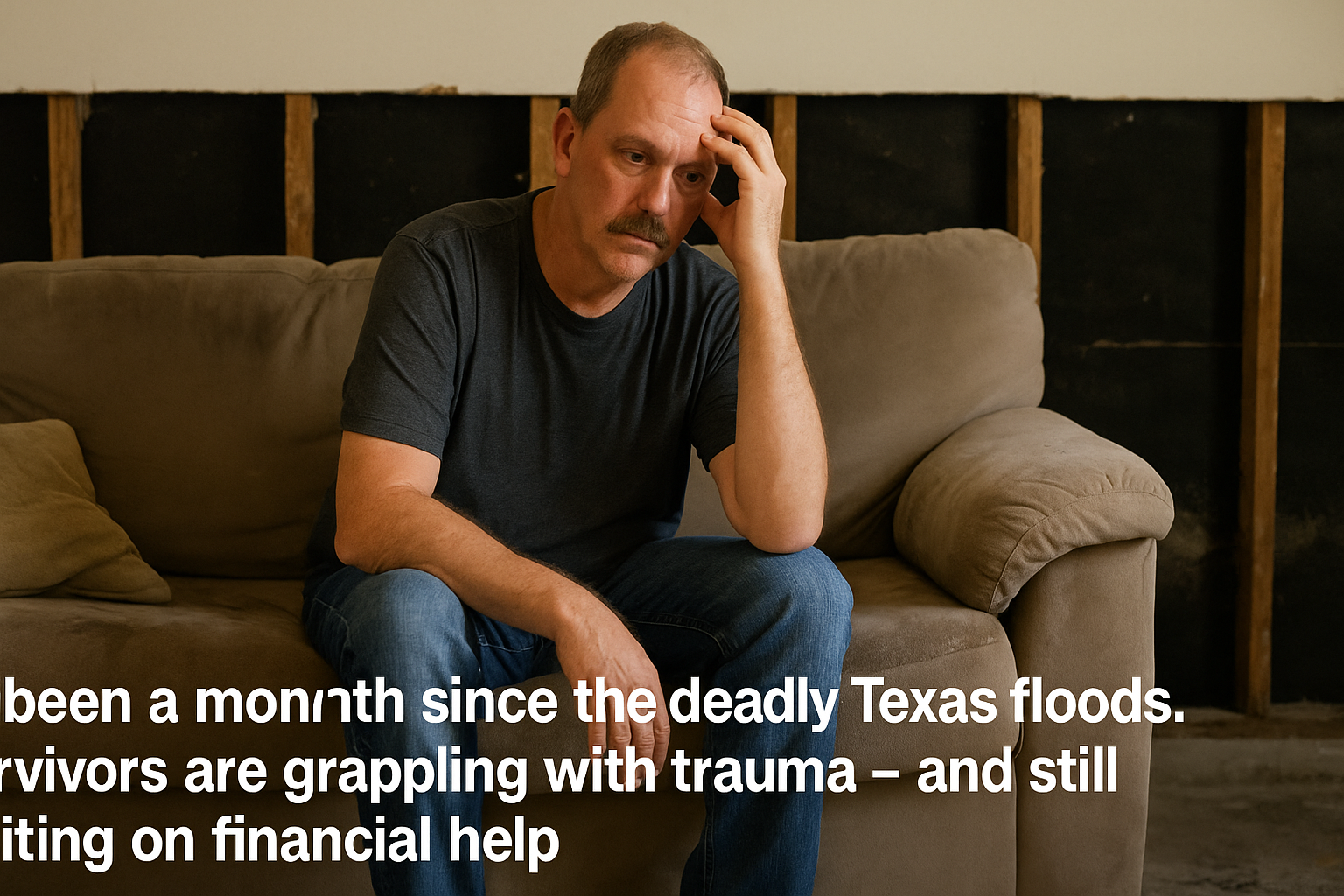
**It’s Been a Month Since the Deadly Texas Floods: Survivors are Grappling with Trauma – and Still Waiting on Financial Help**
The month of September began with unrelenting rainfall that transformed the serene landscapes of Texas into torrents of devastation. The Texas floods have not only wreaked havoc in many communities but have also left survivors grappling with the heavy burdens of trauma and uncertainty. As the water recedes, a different kind of struggle remains—one that involves navigating the complicated aftermath of natural disasters: recovery and assistance.
### The Devastating Impact of the Floods
In early September, meteorologists warned residents of the impending storms. The skies opened up, unleashing a biblical deluge that caught many off guard. Rivers swelled beyond their banks, and roadways became rivers, sweeping away homes, businesses, and lives. By the time the clouds cleared, Texas was left with scenes of devastation that few had ever witnessed. Thousands of homes were damaged or destroyed; communities were isolated; lives were lost; and countries’ mental health was placed under immense strain.
The flooding has become one of the state’s most significant natural disasters in recent history, drawing national and international attention. News outlets covered the impacts of the floods, but the resilience shown by the people on the ground garnered admiration across the country. Communities banded together to save neighbors, and a sense of solidarity emerged amidst chaos. Yet, behind the scenes, countless survivors are grappling with the psychological and emotional ramifications of such a catastrophic event.
### The Emotional Toll
For many survivors, the recent floods have triggered post-traumatic stress, fear, and anxiety. The haunting image of rising waters and the sounds of destruction linger in their minds. Some awake in the middle of the night in a cold sweat, reliving the moments they experienced during the floods. They grapple with the memories of friends and family fleeing their homes; the sound of rushing water, and the pain of losing cherished belongings.
Psychological experts highlight that recovery from such traumatic events is not only about rebuilding homes and restoring property; it also involves healing the emotional scars left behind. For some, that recovery includes professional therapy, while others might lean on their family and friends.
Still, the grief and trauma experienced by many survivors are compounded by another pressing issue: the delays in receiving financial help and support from governmental and non-profit organizations. One month has passed since the flooding, yet many are still waiting for assistance.
### The Financial Strain
In the immediate aftermath of a disaster, financial aid becomes a lifeline for those displaced. Various governmental organizations, including FEMA (Federal Emergency Management Agency), are charged with providing relief to impacted individuals. However, the process can be slow and fraught with bureaucracy. For many survivors, navigating government paperwork is daunting, and access to assistance is often limited by various eligibility criteria.
Survivors are left in a limbo state, often unable to afford temporary housing or necessary repairs to their homes. Many have taken to social media to express their frustrations, sharing stories of their struggles in obtaining funds to rebuild their lives. The delays in financial assistance can exacerbate feelings of helplessness and trauma.
Moreover, those who are uninsured or underinsured face even greater challenges, as they find themselves ineligible for certain types of financial assistance. Their stories echo throughout community centers where people gather to share their experiences, creating a sense of solidarity among those who have lost so much.
### Community Resilience and Support
Despite the overwhelming challenges, the resilience of the Texas community shines through. Local organizations and volunteers stepped in to support those affected by the floods. Fundraisers have been organized, allowing individuals and businesses from around Texas to contribute toward recovery efforts. Food drives, clothing donations, and mental health counseling sessions are just a few examples of how communities are coming together in this time of need.
Neighbors have united to help each other with cleanup efforts, share supplies, and offer temporary shelter for those displaced. It’s a testament to the spirit of community ingrained in Texas culture. While federal aid may be slow to arrive, the local networks of support are quick to respond.
In the wake of natural disasters, it becomes evident that human compassion remains a powerful force. Often, it is the small acts of kindness – providing meals, helping with cleanup, offering a listening ear – that can have the most profound impact on those in distress.
### Looking Ahead
As we move forward in the recovery process, the need for sustained support—both emotional and financial—remains crucial. It will take months, if not years, for the affected communities to rebuild fully. Mental health resources should be prioritized to ensure that survivors can process their trauma and begin to heal.
Additionally, the process of recovering financial assistance needs reevaluation, emphasizing the need for agility and compassion in disaster response efforts. Simplifying applications, increasing public awareness of resources available, and expediting funds can make significant differences for those who have lost everything.
### Conclusion
A month has passed since the deadly Texas floods, but for survivors, the healing process is just beginning. While