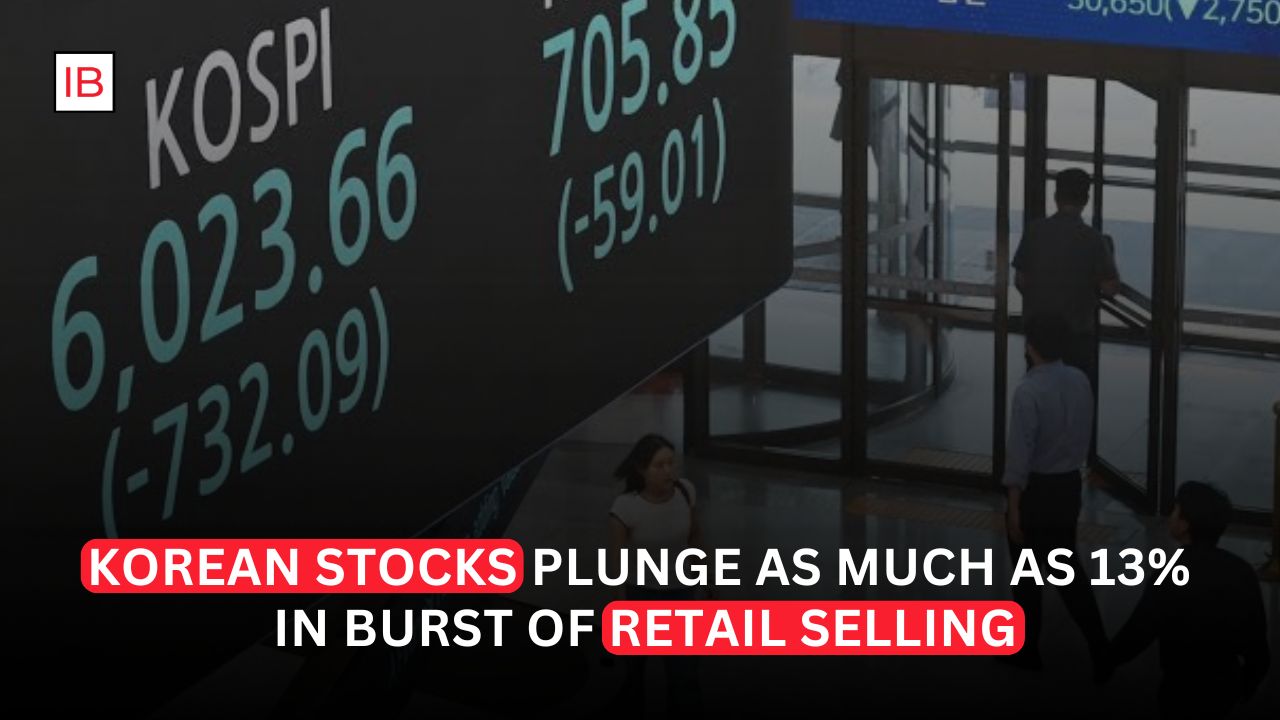
South Korea’s stock market suffered one of the worst two-day routs in its history on Wednesday, with chipmaker shares extending steep losses after SK Hynix’s latest earnings failed to meet Wall Street’s lofty expectations, wiping out hundreds of billions of dollars in value and triggering panic among leveraged retail traders.
A Historic Two-Day Collapse
The benchmark Kospi Index dived as much as 12.6% intraday on Wednesday, before paring losses to close down roughly 6%. Combined with a nearly 11% slump the previous day, the index is now tracking its steepest two-day decline on record and its worst monthly performance ever, having tumbled more than 30% in July alone. Trading was halted briefly on both days after circuit breakers were triggered. At the depths of the rout, the selloff had wiped as much as $2.18 trillion off Seoul’s equity market, though the Kospi still remains up roughly 34% year-to-date, making it one of the best-performing major indexes in the world despite the recent carnage.
SK Hynix at the Center of the Storm
The immediate trigger for the selloff was SK Hynix’s second-quarter results, which showed operating profit surging 557% year-on-year to roughly 60.54 trillion won, or about $41.6 billion. While that growth figure sounds impressive, it fell short of the 64 trillion won analysts had expected based on consensus estimates, and investors seized on the miss as a sign the AI-driven memory chip boom may be losing momentum. SK Hynix shares tumbled as much as 20% during the session, with the stock’s American depositary receipts also sliding sharply in earlier trading. Executives attempted to reassure markets by pointing to a structural shift toward “agentic” AI, which they said would continue driving demand for both AI-specific and conventional memory chips, but the message did little to stem the selling.
Analysts pointed to specific concerns beyond the earnings miss itself. One strategist noted that SK Hynix’s decision to lift capital expenditure into the high 40 trillion won range, while staying quiet on shareholder returns and pricing terms within its long-term supply contracts, left investors feeling distinctly uneasy about the rally’s sustainability.
Samsung Drags Alongside SK Hynix
Because SK Hynix and Samsung Electronics together account for more than half of the Kospi’s total market weighting, the index has effectively become a direct proxy for global sentiment toward AI hardware demand. Samsung shares fell nearly 10% during Wednesday’s session, compounding losses from SK Hynix and underscoring just how concentrated South Korea’s recent rally had become around a narrow set of AI-linked chip stocks.
Retail Leverage Amplifies the Pain
Much of the damage has been intensified by heavy use of borrowed money among South Korea’s famously active retail investor base, many of whom piled into chipmaker stocks over recent months to capture exposure to the booming global AI trade. That same leverage, which had accelerated the market’s gains on the way up, is now working in reverse, as brokers forcibly liquidate losing positions to cover margin calls, creating a cascading effect that has deepened the selloff far beyond what fundamentals alone might suggest. Trading volumes have remained relatively light throughout the rout, suggesting that buyers who had been aggressively chasing the rally in recent weeks have largely stepped to the sidelines.
A Rally Built on Narrow Foundations
South Korea’s remarkable run earlier this year relied almost entirely on the fortunes of its two dominant chipmakers, as global investors sought exposure to the AI memory chip shortage through Samsung and SK Hynix. That concentration, while a powerful driver of gains during the boom, has left the broader market acutely vulnerable to any hint of disappointment from either company, a dynamic now playing out in dramatic fashion.
What Comes Next
With doubts mounting among analysts over whether current index levels represent a genuine bottom, and with the broader AI infrastructure trade facing its first serious test of investor conviction after a period of near-uninterrupted gains, South Korea’s markets face a period of heightened uncertainty. Whether this week’s rout proves to be a healthy correction after an overheated rally, or the start of a more prolonged reassessment of AI-driven valuations across Asian markets, is likely to become clearer in the sessions ahead.