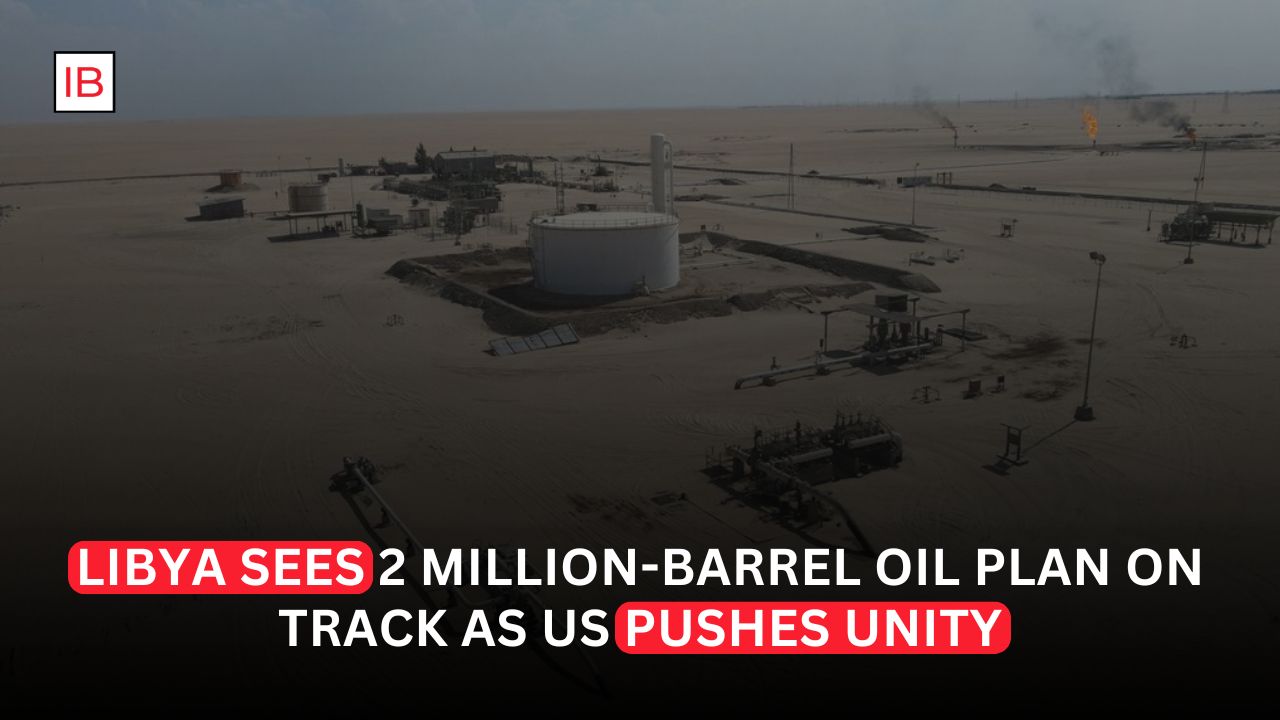
Libyan officials remain confident that the country’s ambitious oil production plans can be achieved as the United States continues encouraging political unity and greater stability across the country.
Libya says its plan to increase crude oil production to 2 million barrels per day remains on schedule despite ongoing political divisions and security challenges. Government officials believe continued investment in oil infrastructure, combined with international support for political reconciliation, will allow the country to significantly expand output over the coming years. The production target has become a central part of Libya’s strategy to revive its economy, which relies heavily on oil exports for government revenue and foreign exchange.
The renewed optimism comes as the United States continues diplomatic efforts aimed at encouraging cooperation between Libya’s rival political and military factions. Washington has argued that greater national unity is essential not only for long-term political stability but also for attracting international investment into Libya’s energy sector. Analysts say sustained peace would allow global energy companies to expand operations while reducing the risk of disruptions that have repeatedly affected oil production over the past decade.
Oil Remains the Backbone of Libya’s Economy
Libya possesses Africa’s largest proven oil reserves, making the energy sector the foundation of its economy. Oil accounts for the overwhelming majority of government income and export earnings, meaning higher production would provide significant financial benefits while supporting reconstruction and public spending.
Before the 2011 uprising, Libya produced around 1.6 million barrels of oil per day. However, years of civil conflict, political instability, armed blockades, and infrastructure damage caused production to fluctuate dramatically. Although output has recovered in recent years, authorities believe reaching the 2 million barrel target will require major investment and continued political stability.
Officials estimate that billions of dollars will need to be invested in upgrading oil fields, pipelines, export terminals, and processing facilities to support higher production capacity.
International Energy Companies Increase Investment
Growing confidence in Libya’s energy sector has encouraged several major international oil companies to expand their presence in the country.
Recent agreements involving global energy firms have focused on exploration, field development, and infrastructure modernization. These investments are expected to improve production efficiency while helping unlock additional reserves across Libya’s major oil basins.
Government officials believe continued foreign investment will play a crucial role in achieving production goals. International companies bring advanced technology, operational expertise, and financing that are essential for modernizing Libya’s aging energy infrastructure.
US Continues to Support Political Unity
Alongside growing energy investment, the United States has continued encouraging dialogue between Libya’s competing political factions.
American officials believe greater political cooperation would improve national security, strengthen economic development, and reduce the risk of future disruptions to oil production. Washington has also supported joint security initiatives designed to improve coordination between rival military forces protecting key energy facilities.
Analysts note that political stability remains the single most important factor determining whether Libya can achieve its ambitious production targets. Previous periods of conflict frequently resulted in export blockades, temporary shutdowns, and damage to critical infrastructure that significantly reduced oil output.
Challenges Still Remain
Despite the positive outlook, significant obstacles continue to face Libya’s oil industry.
Political divisions remain unresolved, with rival administrations and armed groups continuing to compete for influence in different parts of the country. Security risks around key production areas and export terminals also remain a concern for both domestic authorities and international investors.
In addition to political uncertainty, Libya must continue upgrading aging infrastructure that has suffered years of underinvestment. Pipelines, storage facilities, refineries, and export terminals require substantial modernization to support sustained production growth.
Industry experts caution that while the 2 million barrel target is achievable, maintaining political stability will be essential if long-term investment is to continue.
Importance for Global Oil Markets
An increase in Libyan production would have implications beyond the country’s borders. Additional oil supplies could contribute to greater stability in global energy markets, particularly at a time when geopolitical tensions continue affecting oil prices and supply chains.
Libya’s light, sweet crude is especially attractive to European refiners because it is relatively inexpensive to process into fuels such as gasoline and diesel. Higher exports could strengthen Europe’s energy security while providing Libya with increased export revenues.
Market participants will therefore continue monitoring both Libya’s production progress and political developments, as any disruption could quickly influence global crude markets.
Looking Ahead
Libya’s confidence in achieving 2 million barrels of daily oil production reflects growing optimism about the country’s energy sector despite continuing political challenges. Increased foreign investment, expanding infrastructure projects, and international diplomatic support have strengthened expectations that production can continue rising over the coming years.
However, long-term success will depend on maintaining political stability, improving security around energy facilities, and attracting sustained international investment. If these conditions are met, Libya could significantly increase its role in global oil markets while generating the revenue needed to support economic recovery and national development.
For energy investors and global markets, the country’s progress toward its production target will remain closely watched as Libya seeks to transform its vast oil resources into long-term economic growth while navigating a complex political landscape.