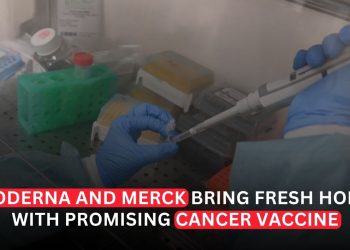
Lung cancer, claiming 1.8 million lives yearly, witnesses vaccine revolutions: mRNA platforms repurpose COVID-19 tech for neoantigen targeting, while LungVax pioneers prevention in high-risk cohorts. UCL and Oxford’s world-first LungVax trial, funded by £2.06 million from Cancer Research UK, launches in 2026 for smokers and ex-smokers via NHS screening, training immunity against early neoantigens and tumor-associated markers to abort precancerous cells.
Therapeutically, BioNTech’s BNT116 mRNA vaccine—encoding six NSCLC antigens (MAGE-A3/A4/C1, CLDN6, KK-LC-1, PRAME)—advances in Phase I/II LuCa-MERIT-1 (NCT05142189), synergizing with PD-1 inhibitors for PD-L1-high patients post-progression, slashing relapse risks via tumor-specific T-cell priming. Mount Sinai’s PGV001, a multi-peptide neoantigen vaccine, proves safe in Phase 1 across NSCLC and others, eliciting responses curbing recurrence; expanded trials target glioblastoma and prostate combos.
UF Health‘s retrospective reveals COVID mRNA vaccines within 100 days of immunotherapy extend survival in 180 advanced NSCLC patients versus 704 unvaccinated, boosting immune vigilance—22.5% remission at 28 days. MSK’s post-surgical trials pair personalized mRNA vaccines with pembrolizumab, analyzing ctDNA for minimal residual disease; enrollment ramps in 2025. UK Markey’s NSCLC mRNA targets six markers, probing chemo/immuno synergies to prevent Stage 4 relapse.
These innovations—yielding 50% growth curbs in models—herald 10-year survival leaps beyond 10%, democratizing precision oncology for underserved regions like Appalachia.