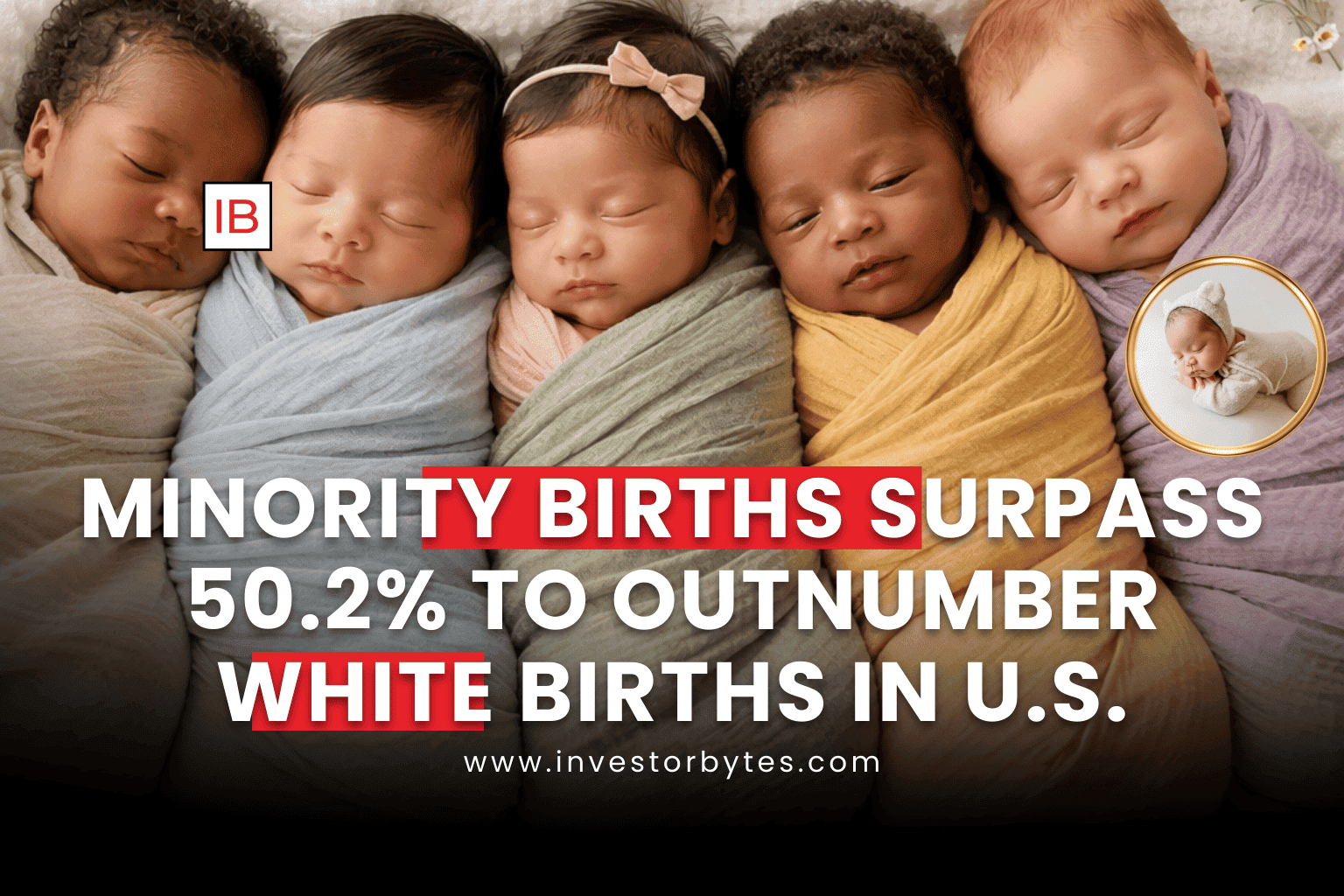
In a transformative milestone for the American demographic landscape, a new study of 33 million births has confirmed that for the first time in U.S. history, white births have fallen below the 50% mark. As of late February 2026, minority births—including Hispanic, Black, and Asian—now represent the new majority of the nation’s youngest generation.
This shift, documented in a landmark analysis published in JAMA Network Open and reported by major outlets on February 21, 2026, arrives nearly two decades earlier than previous census projections had estimated for the general population.
The Data: Breaking the 50% Barrier
The study, which analyzed U.S. birth data from 2016 through the end of 2024, reveals a steady multi-year decline in non-Hispanic white births, while other groups have maintained or increased their share of the total birth rate.
The Tipping Point: Non-Hispanic white births now account for 49.6% of the U.S. total.
The New Majority: Hispanic, Black, and Asian births combined now account for 50.4%.
Regional Drivers: The shift is most pronounced in states like Texas, California, and Florida, where younger Hispanic populations and higher immigration rates have sustained birth levels even as the national fertility rate hit a record low of 1.6.
Economic and Social Implications
This “Minority-Majority” birth rate is already reshaping long-term planning for the U.S. labor market and social safety net.
The Medicaid Pillar: Currently, Medicaid finances over 40% of all U.S. births. With Hispanic and Black women accounting for a rising share of deliveries, experts warn that proposed federal cuts to Medicaid would disproportionately impact the very demographic driving national growth.
Education & Workforce: As this “post-millennial” cohort enters the education system, the demand for bilingual and culturally competent services will become a structural necessity rather than an elective program.
The Aging Gap: While the youth population is becoming more diverse, the senior population remains majority white. By 2026, the oldest Baby Boomers are turning 80, creating a society where a diverse, younger workforce will increasingly support an aging, less-diverse retiree base.