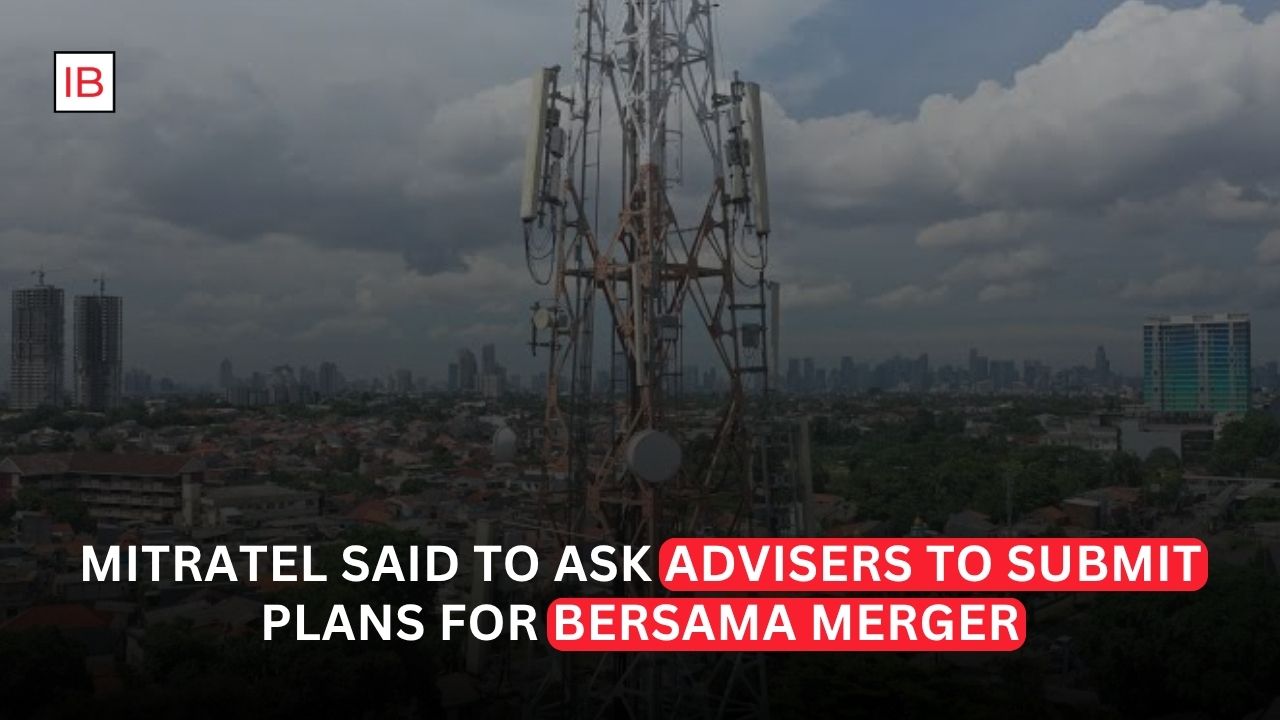
Indonesia’s telecommunications infrastructure sector could be heading toward another major consolidation as PT Dayamitra Telekomunikasi, better known as Mitratel, is seeking advisers to submit proposals for a potential merger with Tower Bersama Infrastructure, according to people familiar with the matter.
The development revives a combination that could create one of Indonesia’s largest telecommunications tower companies and reshape the competitive landscape for digital infrastructure in the country.
The discussions are still at an early stage, meaning there is no guarantee that a transaction will ultimately be completed. Any agreement would likely require negotiations over valuation, ownership, governance, financing and regulatory approvals.
Still, the fact that advisers are being approached suggests the idea has moved beyond a purely theoretical discussion.
Mitratel and Bersama Could Create a Major Tower Platform
Mitratel is already Indonesia’s largest independent telecommunications tower operator.
The company reported ownership of more than 40,000 towers in the first quarter of 2026, alongside an expanding fiber-optic network. Its tower-leasing business remains the core of its revenue, while management has been working to expand into broader digital infrastructure services.
Tower Bersama is another major player in Indonesia’s tower market.
A combination would therefore bring together two companies with extensive infrastructure portfolios and long-standing relationships with mobile network operators.
Previous reports have put the potential transaction value at around 90 trillion rupiah, or roughly $5.5 billion, although that figure should not be treated as a confirmed valuation for the latest discussions. Earlier reports also indicated that both companies had been discussing the possibility of a merger with advisers.
Why Indonesia’s Tower Industry Is Consolidating
The telecom tower business has changed significantly as Indonesia’s mobile market has matured.
During the earlier stages of mobile expansion, operators built large numbers of towers to establish nationwide coverage.
Today, the emphasis is increasingly on maximizing the use of existing infrastructure.
That creates an economic incentive for tower companies to consolidate.
A larger tower operator can potentially:
- Spread operating costs across more assets
- Improve bargaining power with suppliers
- Increase tower occupancy
- Reduce duplicated infrastructure
- Improve maintenance efficiency
- Expand relationships with telecom operators
- Invest more efficiently in fiber and digital infrastructure
The basic logic is straightforward: if two large tower portfolios can be managed more efficiently together, the combined company may generate higher returns than the businesses operating separately.
Mitratel Is Already Pursuing Scale
Mitratel’s own strategy shows why scale matters.
The company has been consolidating businesses within its corporate structure to create a more integrated digital-infrastructure platform.
In 2026, Mitratel merged two subsidiaries, PT Persada Sokka Tama and PT Ultra Mandiri Telekomunikasi, into the parent company.
Management said the internal consolidation was designed to improve efficiency, broaden capabilities and strengthen the company’s position as a next-generation tower company.
That strategy could provide a useful foundation for a much larger combination with Tower Bersama.
But combining two major public companies would be substantially more complicated than merging subsidiaries.
The Potential Synergies Are Significant
The strongest argument for the transaction would be operational synergies.
Telecommunications towers are expensive assets to build and maintain.
Once a tower exists, however, additional tenants can generate incremental revenue without requiring an entirely new structure.
This makes tower companies particularly sensitive to tenancy ratios.
A larger combined portfolio could provide opportunities to move customers onto existing infrastructure rather than building duplicate towers.
Potential benefits could include:
Lower operating costs: A larger organization could consolidate procurement, maintenance and administrative functions.
Higher tenancy: Combining tower portfolios could create opportunities to place more operators on existing sites.
Greater bargaining power: A larger buyer of equipment and services may negotiate better terms.
Broader geographic coverage: The combined company could offer telecom operators access to a larger national footprint.
Stronger fiber capabilities: Tower infrastructure can increasingly be integrated with fiber networks and other digital infrastructure.
These benefits are not guaranteed, but they explain why consolidation remains attractive in the sector.
Fiber Is Becoming Increasingly Important
The tower industry is no longer just about steel structures holding antennas.
As mobile networks become more data-intensive, fiber infrastructure is becoming increasingly important.
Mitratel has been expanding its fiber business.
In the first quarter of 2026, the company said it added 1,080 kilometers of fiber organically, taking its total fiber length to 58,279 kilometers. Fiber revenue increased 8.5% year over year during the period.
This points toward a broader transformation of the business.
Tower companies can potentially become digital-infrastructure platforms rather than simply landlords for telecom equipment.
A merger with Tower Bersama could therefore be evaluated not only on the number of towers involved but also on how the combined company could expand into fiber and other infrastructure services.
The Deal Would Also Change the Competitive Landscape
Indonesia already has a relatively concentrated tower market.
A merger between two major operators would increase that concentration further.
That could have advantages for infrastructure investment, but it would also raise questions for regulators.
Competition authorities would likely examine whether a combined company could gain too much bargaining power over mobile network operators.
The regulatory process could therefore become one of the biggest obstacles to a transaction.
The companies would need to demonstrate that consolidation produces efficiencies without unfairly restricting competition.
Telecom Operators Would Be Closely Watching
The potential merger would matter enormously to Indonesia’s mobile network operators.
Tower companies are infrastructure suppliers to mobile carriers.
A combined Mitratel-Bersama entity could have greater scale and negotiating power when dealing with customers.
That could be positive if greater scale leads to lower costs and faster deployment.
But operators could also worry that having fewer major tower providers reduces their negotiating leverage.
This balance will be closely examined if the talks progress.
The Transaction Could Also Unlock Capital
Large infrastructure companies require significant capital.
A bigger tower platform could potentially gain better access to financing because of its scale, recurring revenues and large asset base.
Mitratel’s financial performance provides some support for that argument.
The company reported first-quarter 2026 revenue of about 2.29 trillion rupiah, EBITDA of 1.90 trillion rupiah and net profit of 545 billion rupiah. Its EBITDA margin was 82.7%, reflecting the high-margin nature of its tower-leasing business.
Recurring tower revenue can make infrastructure companies attractive to lenders and long-term investors.
A larger combined platform could therefore potentially finance new infrastructure more efficiently.
But Valuation Will Be a Major Challenge
The biggest question may ultimately be price.
Mitratel and Tower Bersama shareholders will need to determine how the companies should be valued relative to each other.
If one side believes its assets deserve a significant premium, negotiations could become difficult.
There are several ways a transaction could potentially be structured, including a cash deal, share-based combination or some mixture of the two.
Each structure would distribute the risks and benefits differently.
For shareholders, the key issue will be whether the expected synergies justify the price paid.
Shareholder Interests Will Matter
Mitratel is controlled by Telkom Indonesia, giving the state-linked telecommunications group an important role in any major transaction.
The ownership structure could simplify certain strategic decisions, but it also means the transaction would attract attention from a wide range of stakeholders.
Shareholders would want to understand:
- The proposed valuation
- Ownership percentages after the merger
- Debt levels
- Expected synergies
- Management structure
- Dividend implications
- Regulatory requirements
- Integration costs
A deal that looks attractive strategically can still destroy shareholder value if the acquiring company pays too much.
Indonesia Has Already Seen Telecom Consolidation
The possible Mitratel-Bersama transaction is part of a broader consolidation trend.
Indonesia has already witnessed major telecom combinations.
XL Axiata and Smartfren completed a major merger, while Indosat was created through the combination of Indosat and Ooredoo’s Indonesian operations.
The tower industry is following a similar logic.
As telecom operators consolidate, infrastructure providers can also seek scale.
The objective is to create companies large enough to support increasingly sophisticated networks while maintaining efficient capital allocation.
Technology Is Increasing the Value of Infrastructure
The growth of 5G and data-intensive applications is changing the economics of telecom infrastructure.
Consumers are using more mobile data.
Businesses are adopting cloud services.
Artificial intelligence is increasing demand for computing and connectivity.
Digital services require physical infrastructure.
That means towers, fiber networks and related infrastructure could become increasingly valuable over time.
For Mitratel and Tower Bersama, this creates a strategic opportunity.
A combined company could position itself as a major infrastructure provider supporting Indonesia’s broader digital economy.
The Deal Is Not Guaranteed
Investors should be careful not to treat the adviser process as evidence that a merger will definitely happen.
Early-stage negotiations can fail for many reasons.
The companies could disagree over valuation.
Regulators could raise objections.
Shareholders could reject the structure.
Financing could become unattractive.
Management teams could disagree over control.
A merger announcement is therefore very different from a completed transaction.
At this stage, the most accurate interpretation is that Mitratel is exploring the possibility seriously enough to seek professional advice.
Integration Would Be Another Major Risk
Even if the deal is agreed, combining two large tower companies would not be simple.
The businesses would need to integrate:
- Employees
- Technology systems
- Contracts
- Procurement
- Maintenance operations
- Financial systems
- Customer relationships
- Asset databases
The companies would also need to determine which towers should be retained, upgraded or potentially sold.
Cost savings may take years to fully materialize.
Meanwhile, integration expenses could be substantial.
What Investors Should Watch
The next major signals will likely come from the adviser-selection process and any formal disclosures from the companies.
Investors should pay particular attention to whether discussions move from exploratory talks toward a definitive transaction.
Important developments would include:
Adviser appointments: These would indicate that negotiations are becoming more structured.
Valuation discussions: The implied transaction value will determine whether the deal creates shareholder value.
Ownership structure: Investors will want to know who controls the combined company.
Regulatory review: Competition concerns could affect the transaction’s timeline and structure.
Financing: Debt and equity requirements will determine the financial impact.
Synergy estimates: Management will need to explain how much value consolidation can realistically generate.
A Potential New Leader in Indonesian Digital Infrastructure
If completed successfully, a Mitratel-Tower Bersama combination could create an infrastructure company with enormous scale.
The combined business could potentially operate tens of thousands of towers and expand its role in fiber and other digital infrastructure.
That scale could become increasingly valuable as Indonesia’s demand for connectivity grows.
But bigger is not automatically better.
The transaction would only make economic sense if the combined company can generate enough operational and financial benefits to justify the cost and complexity of the merger.
Conclusion
Mitratel’s reported move to ask advisers for plans around a potential Tower Bersama merger marks an important development in Indonesia’s telecommunications infrastructure sector.
The logic behind the combination is clear.
Both companies operate large tower portfolios, and greater scale could create efficiencies, improve asset utilization and strengthen their position as Indonesia’s digital economy expands.
Mitratel is already pursuing consolidation internally and expanding beyond traditional tower leasing into fiber and broader digital infrastructure. Its first-quarter results showed strong profitability and continued growth in its fiber operations.
But the potential transaction also carries significant risks.
Valuation will be crucial.
Regulatory authorities will need to consider the impact on competition.
Shareholders will have to determine whether the promised synergies justify the price.
And management will face the difficult task of integrating two major infrastructure businesses.
The transaction is therefore far from guaranteed.
Still, the renewed merger discussions demonstrate how Indonesia’s telecom industry is evolving. As mobile networks become more complex and digital infrastructure becomes more strategically important, scale is becoming increasingly valuable.
For Mitratel and Tower Bersama, a combination could create a much larger platform capable of serving the country’s next phase of digital growth.
The central question is no longer simply whether the two companies can merge.
It is whether they can merge at a price and structure that creates lasting value for shareholders, customers and Indonesia’s rapidly expanding digital economy.