The Philippines is preparing for another large borrowing program in 2027, raising concerns that the government could absorb too much of the country’s available financing and leave less credit for private companies and households.
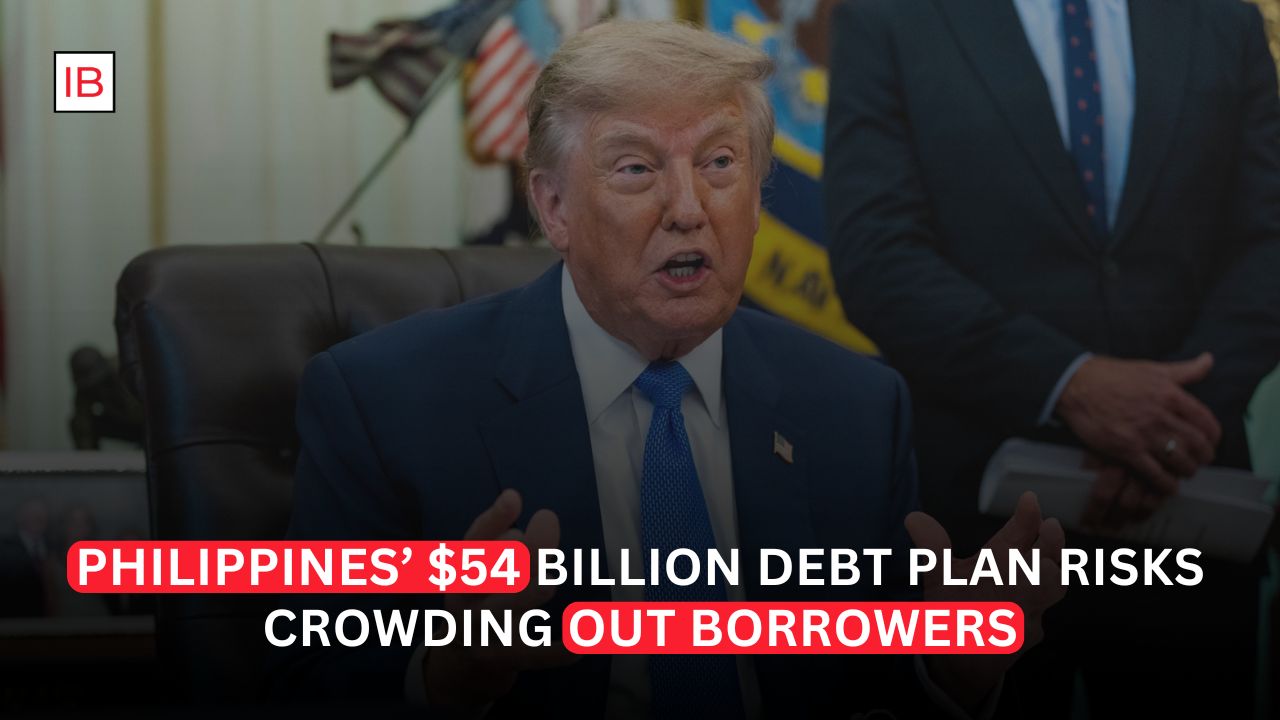
President Ferdinand Marcos Jr. has proposed a 7.2 trillion-peso ($118.1 billion) national budget for 2027, a 6% increase from the current year, as his administration attempts to revive an economy that has recently lost momentum.
The size of the spending plan means the government will need substantial financing. That could become a problem if domestic banks and investors increasingly direct their funds toward government securities instead of lending to businesses.
The risk is commonly known as crowding out: when heavy government borrowing pushes up financing costs or absorbs funds that might otherwise support private-sector investment.
Government Borrowing Is Already Dominating
The Philippines has increasingly relied on its domestic financial markets to fund government spending.
As of the end of May 2026, national government debt stood at 18.55 trillion pesos, according to the Bureau of the Treasury. Domestic debt accounted for 67.37% of the total, while foreign obligations represented 32.63%.
Domestic debt had reached 12.50 trillion pesos by the end of May, up from 12.12 trillion pesos at the end of 2025.
The government’s preference for domestic financing is deliberate. Borrowing in pesos reduces exposure to currency fluctuations and allows authorities to rely more heavily on the country’s local capital markets.
But that strategy has a limit.
The more government securities that banks, pension funds and other domestic investors purchase, the greater the potential competition for funds available to private borrowers.
The 2027 Budget Adds Pressure
Marcos’ proposed 2027 budget comes at a difficult time for the Philippine economy.
Economic growth slowed to 2.3% year over year in the second quarter of 2026, the weakest quarterly performance since 2021. First-half growth reached only 2.6%, below the government’s full-year target of 3.5% to 4.5%.
The slowdown was linked to weaker construction activity and softer domestic demand.
That makes the government’s spending plans particularly important.
Officials want higher public expenditure to support infrastructure and economic activity. But financing that spending through additional borrowing could create another problem if private companies struggle to obtain affordable credit.
The government therefore faces a difficult balancing act: borrow enough to support growth without borrowing so aggressively that it restricts the private investment needed for that growth.
Why Crowding Out Matters
Crowding out does not necessarily mean that private borrowers will suddenly lose access to credit.
The effect can be more subtle.
When the government issues large quantities of bonds, banks and institutional investors may find government securities attractive because they are relatively low-risk and offer predictable returns.
Banks could consequently have less incentive to extend loans to companies, particularly riskier small and medium-sized businesses.
Alternatively, private borrowers may have to offer higher interest rates to compete with government debt.
Higher borrowing costs can discourage companies from expanding factories, purchasing equipment or hiring workers.
For households, the consequences could include more expensive mortgages, consumer loans and other forms of credit.
That is why the government’s borrowing strategy matters beyond the public sector.
Domestic Financing Has Advantages
There is, however, an important counterargument.
The Philippines’ reliance on domestic borrowing also provides protection against foreign-exchange risks.
The Bureau of the Treasury says the government has deliberately maintained a domestic bias in its financing program. Its 2026 borrowing plan, for example, called for roughly 77% domestic financing and 23% external financing.
Borrowing domestically means the government is less exposed to sudden increases in the peso value of dollar-denominated debt.
That became particularly important during periods of currency volatility.
Foreign borrowing can appear cheaper under certain circumstances, but it exposes the government to exchange-rate movements and international financial conditions.
So moving entirely toward foreign borrowing would not be a straightforward solution.
Debt Levels Are Continuing to Rise
The country’s debt trajectory is another reason investors are watching the 2027 plan closely.
National government debt was 17.71 trillion pesos at the end of 2025, according to the Bureau of the Treasury. That was already a 10.32% increase from the previous year’s level.
More recent figures show that debt continued to rise during the first half of 2026.
The latest budget documents indicate that national government debt could reach about 21.48 trillion pesos by the end of 2027, according to reports based on the government’s budget financing documents.
That would represent a substantial increase from expected 2026 levels.
The critical issue is not simply whether the debt number rises.
Governments can sustain higher debt when economic growth and revenues increase sufficiently to support interest payments.
The concern emerges when borrowing grows faster than the economy’s ability to generate income.
Growth Has Become the Key Variable
The Philippines’ recent economic slowdown makes the debt question more complicated.
The government is borrowing partly because it wants to stimulate economic activity and maintain infrastructure investment.
If those investments generate stronger growth, higher government revenues could eventually make the additional debt easier to manage.
But if growth remains weak, borrowing costs can consume a larger portion of government resources.
That creates a difficult cycle.
Slower growth reduces revenues. Lower revenues increase financing requirements. Higher borrowing can increase interest costs. And larger interest payments can leave less money for productive government spending.
This is why investors are paying close attention not just to the size of the borrowing program but also to how the money is used.
Infrastructure Spending Is a Major Focus
The government has argued that public investment is necessary to maintain the Philippines’ long-term growth potential.
Infrastructure can increase productivity by improving transportation, energy supply and connectivity.
The problem is that not all government spending produces the same economic return.
Borrowing to finance productive infrastructure can potentially strengthen future growth.
Borrowing to cover recurring expenses is different.
The more the government can demonstrate that new debt is supporting projects capable of increasing economic activity, the easier it becomes to justify a larger borrowing program.
Banks Could Face a Difficult Choice
Philippine banks are likely to remain major buyers of government debt.
That can provide banks with relatively secure assets and help the government finance its deficit.
But excessive exposure to government securities could change the composition of bank balance sheets.
Instead of lending to businesses that are expanding production, banks may allocate more funds to government bonds.
That is where the crowding-out concern becomes particularly important.
The government is competing for the same domestic savings that companies need for investment.
Private Investment Is Crucial
The Philippines cannot rely on public spending alone to generate sustainable growth.
Private companies are responsible for a large share of investment, employment and innovation.
If businesses face persistently high borrowing costs, investment could weaken further.
That would be particularly damaging at a time when the economy is already growing below the government’s target.
The policy challenge is therefore not simply to keep government borrowing under control.
It is to ensure that government financing does not unintentionally suppress the private investment needed to strengthen the economy.
Interest Rates Will Matter
The country’s monetary-policy environment will also influence how serious the crowding-out risk becomes.
If interest rates remain relatively high, government borrowing could become more expensive while private borrowers also face elevated financing costs.
If rates fall, the government could refinance debt more cheaply and private credit could become more accessible.
But falling rates can also affect demand for government securities and the attractiveness of different investments.
The interaction between fiscal policy and monetary policy will therefore be important throughout 2027.
The Bigger Fiscal Challenge
The Philippines is not facing an immediate debt crisis simply because the government is planning a large borrowing program.
That would be an overly simplistic conclusion.
The bigger issue is whether borrowing can remain compatible with strong economic growth, manageable interest costs and sufficient credit for the private sector.
The government’s own debt-management strategy has emphasized domestic financing partly to reduce foreign-exchange exposure and support local capital markets.
But the same strategy can create pressure on those markets if government financing requirements become too large.
What Happens Next
Marcos’ proposed 2027 budget will now face scrutiny from Congress, investors and economists.
The debate will likely focus on whether the spending increase can generate enough economic activity to justify the additional borrowing.
For the government, the argument is that stronger public investment can help reverse the recent slowdown.
For critics, the concern is that excessive borrowing could push up financing costs and make it harder for private companies to invest.
Both risks are real.
The Philippines needs public spending to support infrastructure and growth, but it also needs a healthy private sector capable of creating jobs and expanding investment.
The success of the 2027 fiscal strategy will therefore depend on more than the size of the budget.
It will depend on whether the government can borrow heavily without taking too much financing away from the businesses and households that drive the wider economy.
With national debt already rising and economic growth slowing, that balance could become one of the most important economic policy questions facing the Philippines in 2027.