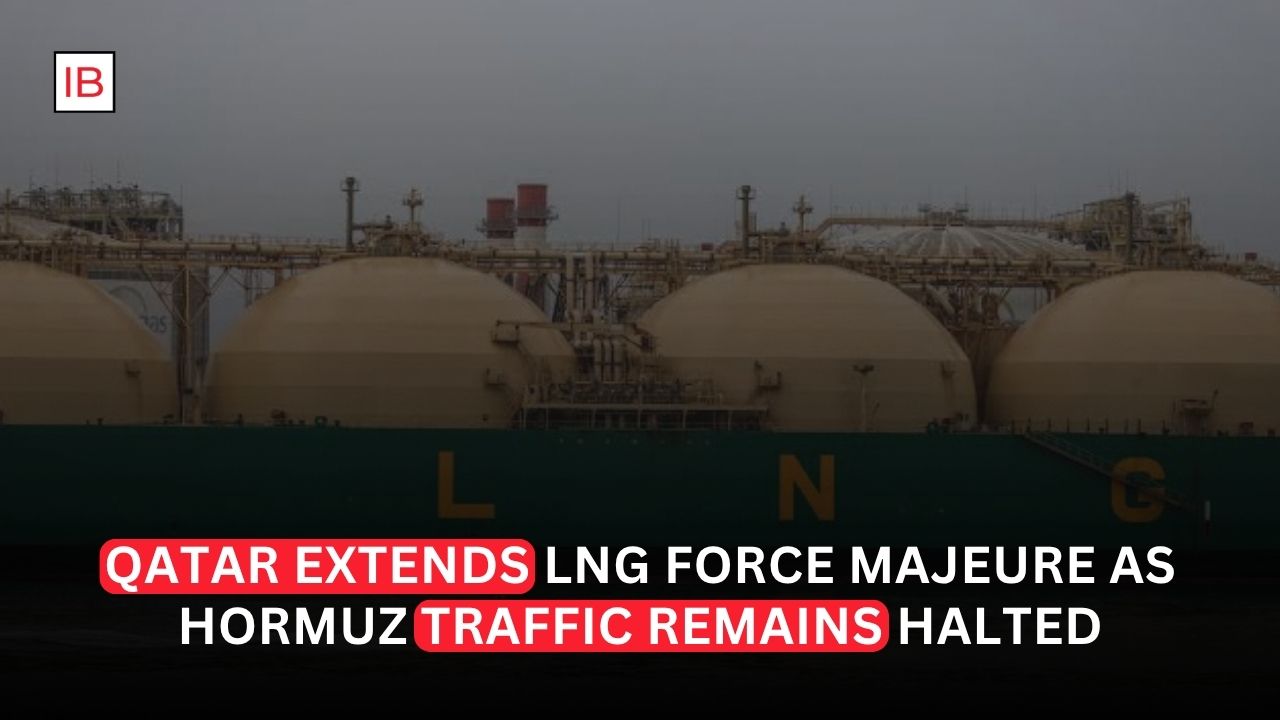
Qatar is extending force majeure on liquefied natural gas supplies as shipping through the Strait of Hormuz remains severely disrupted, highlighting the growing strain on one of the world’s most important energy corridors.
The move means buyers of Qatari LNG continue to face uncertainty over contracted cargoes, while QatarEnergy remains unable to restore exports to normal levels. Qatar was previously one of the world’s largest LNG suppliers, accounting for roughly a fifth of global LNG supply before the regional conflict disrupted production and maritime traffic.
Hormuz Remains a Critical Bottleneck
The Strait of Hormuz is essential to Qatar’s LNG industry because the country’s export terminals depend on the waterway to reach international customers.
Despite diplomatic efforts and limited vessel movements, shipping remains far below normal levels. Reuters reported that only seven commodity vessels crossed the strait on Thursday, compared with 17 the previous day and a 10-day average of 15.
The limited traffic demonstrates why QatarEnergy remains cautious about restoring contractual LNG deliveries.
Force Majeure Protects QatarEnergy
Force majeure allows a company to suspend or modify contractual obligations when extraordinary circumstances prevent it from fulfilling agreements.
For QatarEnergy, the disruption of shipping represents an external event beyond the company’s normal control.
The declaration therefore provides legal protection while the company deals with an unusually dangerous operating environment.
However, extending force majeure does not eliminate the commercial consequences. Buyers still need replacement supplies, while Qatar loses export revenue and market share during the disruption.
LNG Exports Have Collapsed
The impact on Qatar has already been enormous.
Qatar’s LNG exports have fallen by about 96% during the conflict, according to Reuters. Only 18 cargoes were shipped during the period compared with 509 in the same period a year earlier.
That decline represents a major shock for an economy heavily dependent on energy exports.
Qatar has spent decades building its position as a leading LNG supplier, with long-term contracts supplying major customers across Asia and Europe.
Buyers Face Supply Uncertainty
The consequences extend well beyond Qatar.
Asian and European buyers rely heavily on Qatari LNG, particularly under long-term contracts.
Indian importer Petronet LNG, for example, has been waiting for clarity over future Qatar cargoes after dozens of contracted shipments were affected by the disruption. The company has a long-term agreement with QatarEnergy for 7.5 million tonnes of LNG annually.
Extended force majeure therefore creates uncertainty for utilities and energy companies planning their winter inventories.
Europe Faces Additional Pressure
European gas markets are particularly vulnerable because the region has limited room for supply disruptions.
Gas storage levels have already been unusually low for the time of year, according to Reuters. The continued absence of Qatari cargoes could make European markets more sensitive to weather and unexpected supply problems later in the year.
A colder-than-expected winter could therefore produce another sharp increase in demand.
Asia Must Find Alternatives
Asian LNG buyers face a similar challenge.
Countries such as Japan, South Korea and India depend heavily on imported LNG for electricity generation and industrial activity.
When Qatari cargoes become unavailable, buyers must compete for alternative supplies from the United States, Australia and other producers.
That competition can push prices higher, particularly when several countries attempt to secure replacement cargoes simultaneously.
US LNG Gains Importance
The disruption has created an opportunity for US LNG exporters.
American producers have increased shipments as buyers look for alternatives to Gulf supplies. Reuters reported that higher US sales have helped compensate for part of the Qatari shortfall.
The crisis could therefore accelerate the long-term shift toward more geographically diversified LNG supply.
Prices Remain Vulnerable
The LNG market remains highly sensitive to developments around Hormuz.
Earlier in the crisis, Asian LNG prices rose sharply as traders anticipated supply shortages. Kpler reported that Asian LNG prices jumped as concerns grew that around 20% of global LNG supply could be affected by the disruption.
Even if physical supply eventually improves, the geopolitical risk premium could remain embedded in prices.
Qatar’s Economy Under Pressure
The LNG disruption is also affecting Qatar’s broader economy.
The country has already reduced government spending as energy revenues have fallen. The Financial Times reported that some government department budgets were cut by as much as 30%, while overseas aid was reduced significantly.
Qatar has substantial financial reserves and a large sovereign wealth fund, giving it more protection than many energy exporters.
But a prolonged disruption would still represent a major economic cost.
Doha Pushes Diplomacy
Qatar is not simply waiting for shipping conditions to improve.
Doha has intensified diplomatic efforts aimed at reopening the Strait of Hormuz.
Qatar’s Prime Minister Sheikh Mohammed bin Abdulrahman Al Thani traveled to Tehran and held talks with Iranian officials, with freedom of navigation and regional de-escalation among the issues discussed.
Qatar’s position gives it an unusual role because it is simultaneously an energy producer and a regional diplomatic intermediary.
Iran Sets Conditions for Reopening
Iran has indicated that reopening the waterway depends on several conditions.
Iranian officials have been working with Oman on a potential shipping corridor through Iranian and Omani waters. Reuters reported that Tehran is also demanding measures including changes to sanctions and the broader regional conflict.
Those conditions make a rapid return to normal shipping difficult.
Traffic Is Still Far Below Normal
The scale of the disruption is visible in shipping data.
Before the conflict, the Strait of Hormuz handled vastly more commercial traffic than it does today. Current vessel movements remain well below normal even as diplomatic negotiations continue.
For LNG companies, this means that simply clearing mines or announcing safe navigation is not enough.
Shipowners, insurers and energy companies must also believe that vessels can transit without unacceptable risks.
Insurance Is Another Barrier
Shipping companies face significant insurance and security concerns when operating in a conflict zone.
Even if governments announce that shipping lanes are technically open, commercial operators may remain reluctant to send expensive LNG carriers through the area.
That can keep LNG exports below capacity even after physical conditions begin improving.
A Prolonged Crisis Could Reshape LNG
The longer the disruption continues, the greater the possibility that global LNG trade patterns will permanently change.
Buyers may seek more diversified portfolios, additional US LNG contracts and greater storage capacity.
Qatar could also face pressure to reconsider how much of its export infrastructure depends on a single maritime chokepoint.
Qatar’s Long-Term Position Remains Strong
Despite the current crisis, Qatar’s fundamental position in the LNG market has not disappeared.
The country possesses enormous natural-gas reserves and world-class LNG infrastructure.
Its long-term contracts and established relationships with major buyers give it advantages that competitors cannot easily replicate.
The current disruption is therefore more a crisis of transportation and geopolitics than a loss of Qatar’s underlying resource advantage.
The Key Question Is Hormuz
The future of Qatari LNG ultimately depends on the Strait of Hormuz.
If diplomatic efforts succeed and commercial shipping gradually returns, QatarEnergy could begin restoring deliveries.
If the waterway remains restricted for months, however, the disruption could become a structural problem for Qatar, its customers and the global LNG market.
Conclusion
QatarEnergy’s decision to extend force majeure on LNG supplies shows that the Strait of Hormuz crisis remains unresolved despite renewed diplomatic efforts.
Qatar’s LNG exports have already suffered an extraordinary decline, with Reuters reporting a roughly 96% drop in shipments during the conflict. Buyers in Asia and Europe are consequently searching for replacement supplies, while US LNG exporters are gaining greater importance.
The situation also demonstrates how dependent global energy markets remain on a small number of critical shipping routes.
For Qatar, the immediate priority is restoring safe and reliable access through Hormuz. For buyers, the priority is securing alternative cargoes and maintaining adequate inventories.
Diplomatic efforts led partly by Qatar itself could eventually reopen the waterway, but current vessel traffic remains far below normal.
Until shipping becomes reliably safe, QatarEnergy is unlikely to return fully to normal LNG deliveries.
The longer the disruption lasts, the greater the risk that today’s temporary supply shock becomes a lasting transformation of the global LNG market.