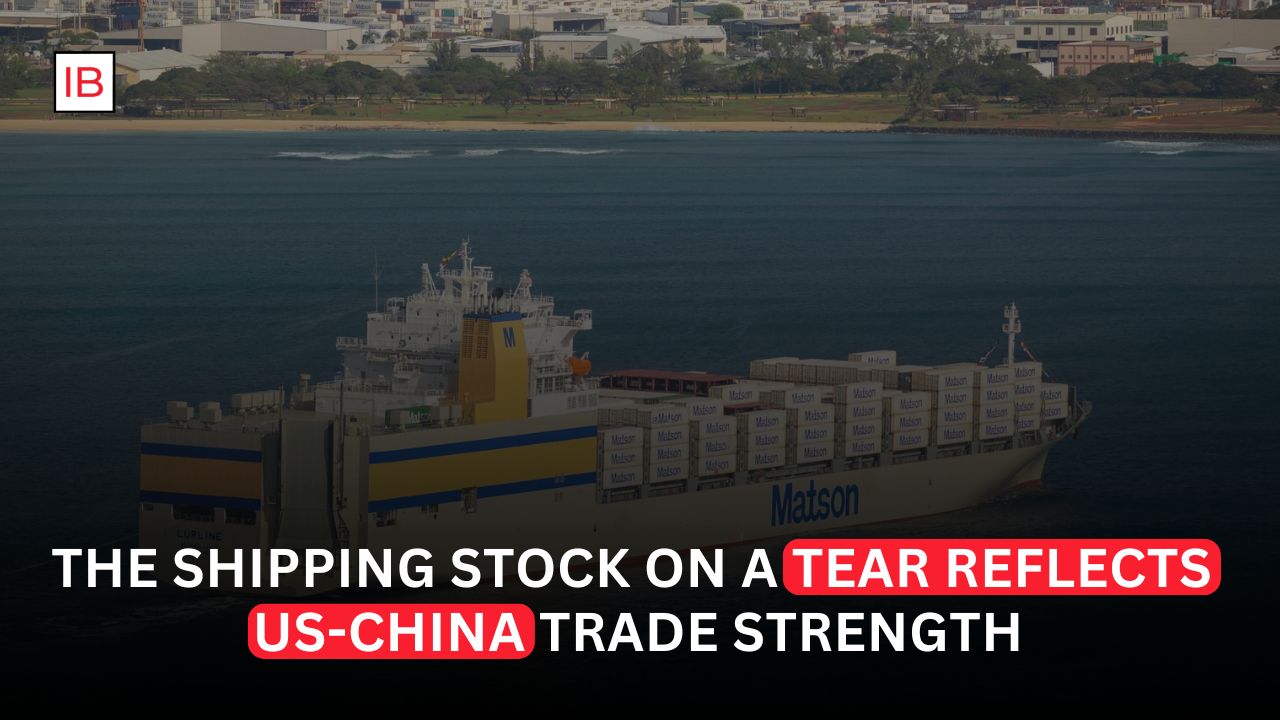
Matson’s stock has become one of the standout performers in global shipping this year, surging more than 55% in the first half of 2026 alone, as the ocean carrier rides a wave of unexpectedly strong transpacific trade tied to a thaw in U.S.-China trade relations.
A Breakout First Half
Matson shares climbed from $123.71 at the start of the year to a peak of $201.94 on June 12, before pulling back somewhat to close the first half at $192.23, according to Container News data tracking global shipping stocks. Even after that pullback, the stock still closed more than 55% above where it started the year, marking the strongest performance among the container shipping companies tracked, outpacing rivals like MPC Container Ships and Israeli carrier ZIM, both of which also posted solid gains during the same period.
China Strength Driving the Rally
The rally has been fueled substantially by Matson’s China express service, which has benefited from unusually strong freight demand and rates throughout 2026. The company’s preliminary second-quarter results, covering the period ended June 30, showed operating income jumping roughly 40% year-over-year, with consolidated operating income guided to a range of $153 million to $160 million and diluted earnings per share expected between $4.12 and $4.30. Management pointed specifically to higher-than-expected freight rates and demand across its CLX and MAX China services, driven by e-commerce, garments, and general merchandise shipments amid tight transpacific capacity.
That strength builds on an already solid first quarter, when Matson beat earnings expectations by nearly 13% even as revenue came in below forecasts, reflecting declining domestic volumes offset by strengthening demand in the company’s China service specifically.
The Trade Agreement Behind the Momentum
Much of this year’s transpacific strength traces back to a U.S.-China trade and economic agreement announced on October 30, 2025, which triggered unusually elevated freight demand that carried into the fourth quarter of last year and has continued shaping trade patterns well into 2026. Matson’s fourth-quarter 2025 ocean transportation operating income reached $136 million, benefiting directly from that post-agreement surge, and while the company expects Q3 demand to remain near capacity through peak season, management has signaled that Q4 2026 volumes will likely reflect more traditional seasonal patterns rather than the exceptional levels seen a year earlier.
For the full year, Matson expects China service volume to exceed 2025 levels, supported by continued solid U.S. consumer demand and what management has described as a more stable overall trading environment compared with the volatility that characterized parts of the past two years.
Rewarding Shareholders Along the Way
Matson’s operational strength has translated directly into shareholder returns. The company raised its quarterly dividend to $0.38 per share in a June 25 decision, signaling continued commitment to returning cash to investors even as it simultaneously guides toward higher near-term operating income. That dividend increase ties directly to the recent strength in China trade and logistics performance, though it also raises longer-term questions about how the company balances rising payouts against the capital needs of its ongoing fleet renewal program.
Expanding Beyond China
Beyond its core China business, Matson has also highlighted growing momentum in its regional service across Vietnam, Thailand, and the broader Southeast Asia region, an area the company has flagged as a notable strategic development in recent investor presentations. That diversification effort suggests Matson is working to reduce some of its geographic concentration risk even while its China-linked trade lanes continue driving the bulk of near-term earnings strength.
The Risk Beneath the Rally
Despite the stock’s strong run, analysts have cautioned that Matson’s fortunes remain heavily tied to the durability of current trade conditions. The company’s own risk disclosures point to potential changes in tariff policy, broader geopolitical conditions, and shifting trade dynamics between the U.S. and China as factors that could reverse the tailwinds currently powering its results. Industry-wide, container shipping stocks have shown a tendency to react more to changing trade expectations than to underlying historical financial performance, a pattern that leaves even strong performers like Matson vulnerable to rapid sentiment shifts if trade relations sour again.
What Comes Next
With Matson’s full second-quarter earnings call scheduled for August 3 and peak shipping season still unfolding, investors will be watching closely for management’s updated guidance on how sustainable this year’s China-driven strength really is heading into the back half of 2026. Whether the current trade détente holds, and whether Matson’s diversification into Southeast Asia can eventually reduce its reliance on any single trade corridor, will likely shape the stock’s trajectory well beyond this year’s standout first-half performance.