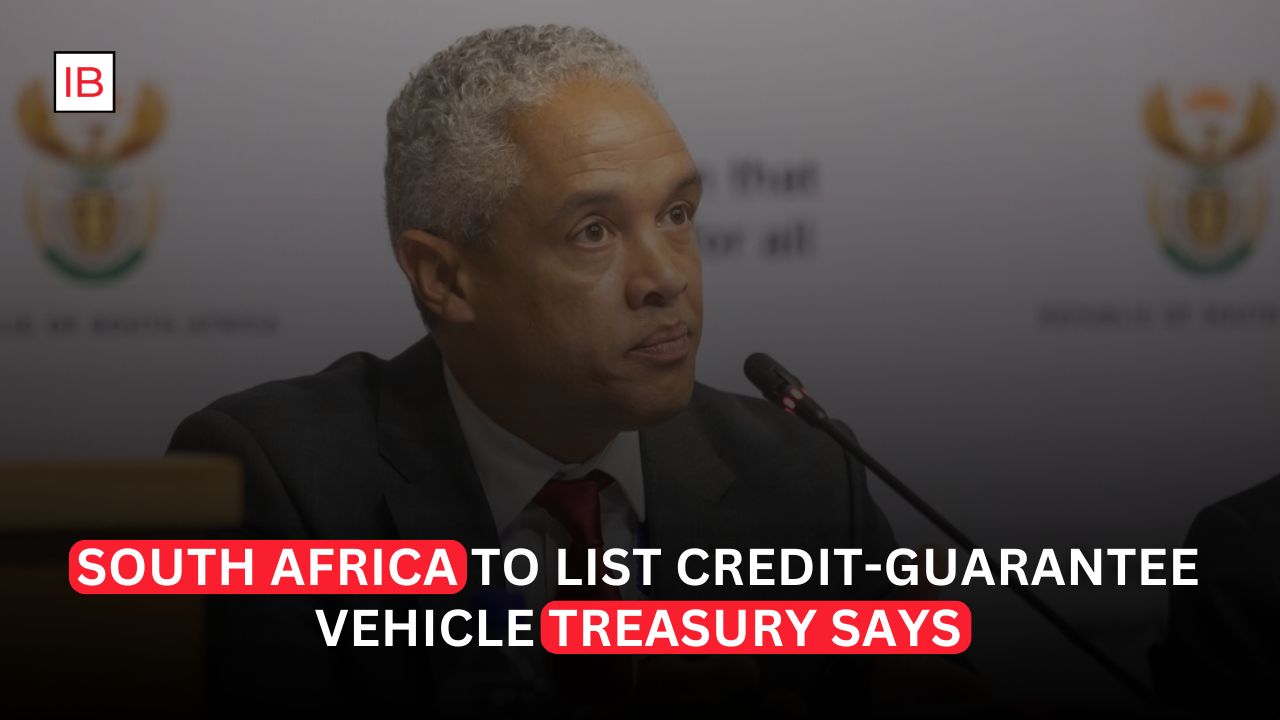
South Africa’s National Treasury has confirmed plans to eventually list the country’s newly established Credit Guarantee Vehicle, a World Bank-backed financing structure designed to unlock billions of dollars in private capital for infrastructure development, as the mechanism moves from concept toward full operational readiness.
What the Credit Guarantee Vehicle Actually Does
The Credit Guarantee Vehicle, known as the CGV, was established following approval from the World Bank’s Board of Executive Directors on March 5, 2026, as part of the broader South Africa Blended Finance Platform for Resilient Infrastructure Program. The vehicle is designed to issue market-based credit guarantees that help de-risk infrastructure investment, crowd in private capital, and reduce South Africa’s reliance on traditional sovereign guarantees to fund major projects. Structured as a private, majority privately owned non-life insurance company regulated by South Africa’s Prudential Authority, the CGV is intended to operate independently of government while still serving the state’s broader infrastructure development goals.
How the Vehicle Is Being Capitalized
The World Bank has committed $350 million in financing through the International Bank for Reconstruction and Development to help capitalize the CGV via the South African government, supporting both the vehicle’s core capital base and broader project pipeline development. National Treasury has additionally committed seed equity of 2 billion rand, giving the government a minority shareholding in the vehicle alongside its role as an initial capital provider.
The CGV’s initial capital base is expected to reach approximately $500 million, with the government funding up to $100 million of that total through a World Bank loan, while the remaining $400 million is expected to come from a mix of domestic, regional, and international development finance institutions, potentially including the International Finance Corporation, along with specialized development funds and philanthropic organizations joining at a later stage. Over time, further investment could scale the CGV’s total capitalization to as much as $2.5 billion, a figure that would meaningfully expand its capacity to guarantee infrastructure financing across the country.
A Response to Chronic Underinvestment
The initiative addresses a persistent structural problem in South Africa’s economy: despite having deep and sophisticated financial markets, long-term institutional capital in the country has remained significantly under-allocated to infrastructure. South Africa’s growth has averaged less than 1% over the past decade, with unemployment remaining above 30% and disproportionately affecting young people, while persistent bottlenecks in electricity, freight logistics, and water services continue to raise costs and constrain both productivity and job creation.
Finance Minister Enoch Godongwana has emphasized that the CGV will initially support massive investment in transmission infrastructure, with plans to broaden its mandate over time to cover water, freight logistics, education, and health sectors. World Bank division director for South Africa Satu Kahkonen has described the program as central to helping mobilize private investment for infrastructure that improves services, strengthens competitiveness, and expands economic opportunity across the country.
Timeline Toward Operational Readiness
Treasury has targeted the second half of 2026 for the CGV to become operational, with the vehicle needing to secure a license from the South African Reserve Bank’s Prudential Authority before it can begin formally issuing guarantees. The initiative complements broader reforms underway through Operation Vulindlela II, the government’s structural reform program aimed at unlocking growth and investment, alongside parallel efforts to improve governance, regulatory certainty, and project preparation capacity across the electricity, transport, and water sectors.
Why a Future Listing Matters
Treasury’s confirmation that it intends to eventually list the CGV signals an ambition to broaden the vehicle’s investor base well beyond its initial group of development finance institutions and government backers, potentially opening it up to public market investors down the line. A future listing could help the CGV raise additional capital more efficiently while also providing a market-based valuation benchmark for a financing structure that blends public, multilateral, and private capital in a relatively novel way for South Africa’s infrastructure sector.
What Comes Next
With the CGV’s initial capitalization still being finalized and its Prudential Authority licensing process ongoing, the vehicle’s path toward both operational readiness and an eventual public listing will likely unfold in stages over the coming months and years. Analysts studying the structure have suggested it has genuine potential to help “rewire” how South African bank capital flows into infrastructure projects, though the scale of its ultimate impact will depend heavily on how successfully Treasury and its development finance partners can attract the additional capital needed to reach the CGV’s full $2.5 billion long-term target.