Government Investment Fund Posts Strong Returns Following Months-Long Market Intervention
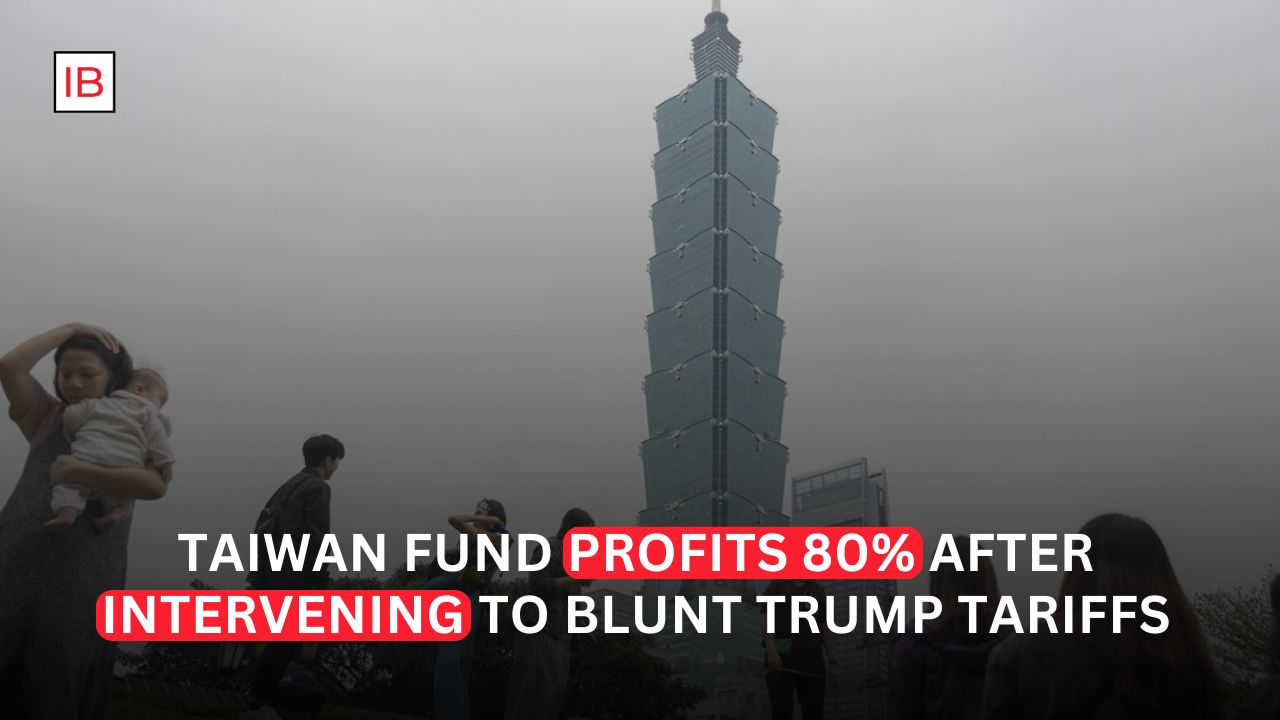
Taiwan’s National Financial Stabilization Fund generated an 80% return after intervening to support the island’s stock market during the turmoil triggered by U.S. President Donald Trump’s tariff announcements.
The government revealed that the fund earned a net profit of NT$9.86 billion (approximately US$300 million) after investing NT$12.25 billion during its nine-month market support operation. The intervention helped restore investor confidence following one of the sharpest selloffs in Taiwan’s stock market history.
Market Rescue Followed Historic Selloff
The stabilization fund entered the market after Trump’s reciprocal tariff announcements sparked heavy selling across global financial markets.
The intervention was launched following:
- Sharp declines in Taiwan’s stock market
- Increased global trade uncertainty
- Heavy foreign investor selling
- Rising market volatility
- Concerns over export-driven industries
Officials said the primary objective was to stabilize investor confidence rather than generate profits.
Strong Returns Exceed Expectations
According to Taiwan’s Ministry of Finance, the fund successfully exited all of its positions after markets recovered.
The operation produced:
- NT$12.25 billion invested
- NT$9.86 billion in net profit
- Approximately 80% investment return
- Full exit from market positions
- Successful completion of the intervention
The fund gradually reduced its holdings as market conditions improved, avoiding major disruptions during the selling process.
AI Boom Helped Fuel Recovery
Taiwan’s stock market rebounded strongly as global demand for artificial intelligence technologies accelerated.
Key drivers of the recovery included:
- Strong semiconductor exports
- AI-related investment
- Robust technology earnings
- Improving investor sentiment
- Recovery in global equity markets
Major technology companies, particularly those linked to AI supply chains, played a significant role in lifting Taiwan’s benchmark index.
Stabilization Fund Restores Confidence
The National Financial Stabilization Fund was created to protect Taiwan’s financial markets during periods of exceptional volatility.
Its responsibilities include:
- Supporting market stability
- Restoring investor confidence
- Reducing excessive volatility
- Preventing systemic financial risks
- Maintaining orderly market conditions
Officials emphasized that market stabilization—not maximizing investment returns—remains the fund’s primary mission.
Risks Still Remain
Despite the successful intervention, Taiwan’s Ministry of Finance warned that financial markets remain vulnerable to external risks.
Investors continue monitoring:
- Global trade tensions
- Geopolitical developments
- U.S. tariff policies
- International capital flows
- Technology sector performance
Officials noted that Taiwan’s export-oriented economy remains sensitive to changes in global political and economic conditions.
Taiwan’s Technology Sector Continues to Lead
Taiwan’s world-leading semiconductor industry has remained a key source of economic strength throughout the recovery.
Growing global demand for:
- AI chips
- Advanced semiconductors
- Data center hardware
- High-performance computing
- Electronics exports
has continued supporting both the broader economy and Taiwan’s equity market.
Looking Ahead
Taiwan’s National Financial Stabilization Fund has concluded one of its most successful market interventions, delivering an approximately 80% return while helping restore confidence after the market turmoil caused by U.S. tariff announcements. Although the fund has fully exited its positions, officials remain cautious about future risks stemming from global trade tensions and geopolitical uncertainty.
As Taiwan continues to benefit from the global AI boom and strong semiconductor demand, investors will be watching whether the island’s markets can maintain their momentum without further government support.