Shipping Disruptions Deepen as Washington Threatens More Economic Pressure and Tehran Uses the Strait as Leverage
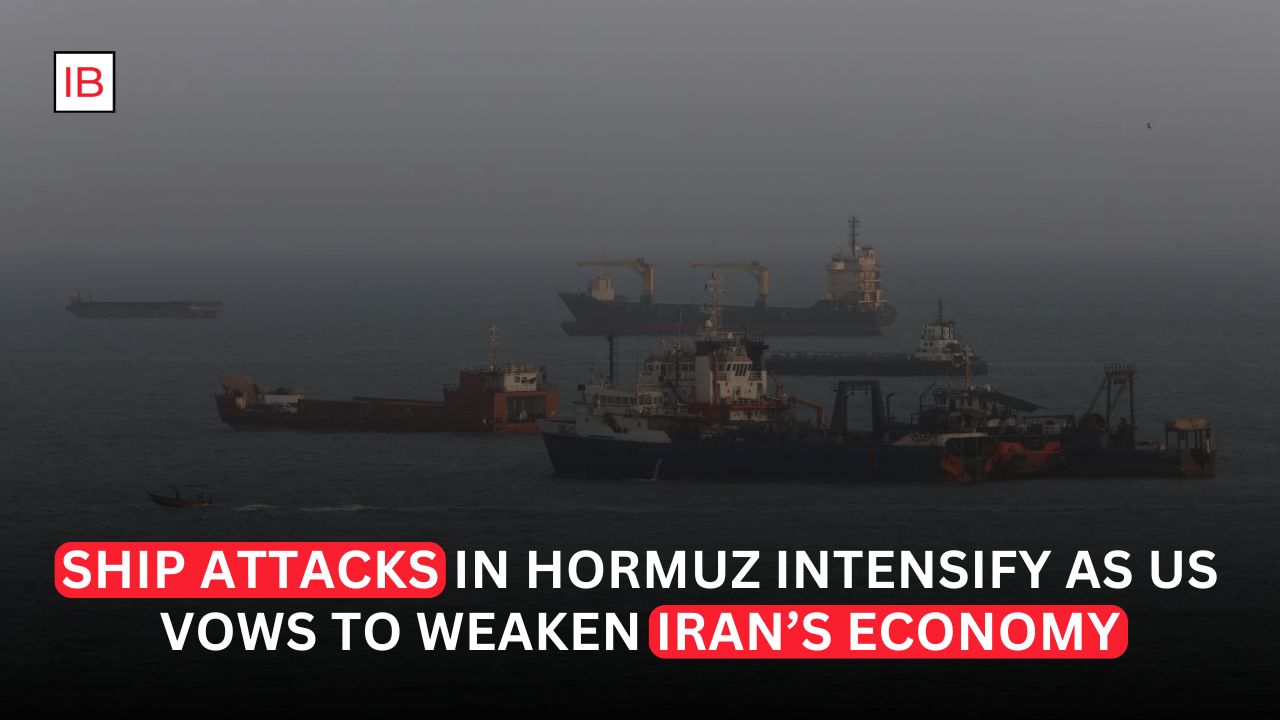
The crisis around the Strait of Hormuz is intensifying as attacks on commercial vessels mount and the United States threatens to increase economic pressure on Iran, pushing one of the world’s most important shipping routes deeper into a prolonged confrontation.
Ship traffic through the strategic waterway has fallen dramatically as commercial operators avoid the risks created by attacks, blockades and uncertainty over whether vessels can safely pass. Two UAE-linked vessels were attacked on August 14, while the United States has warned that it could maintain its naval blockade of Iran indefinitely.
The escalation is creating a difficult situation for global energy markets because Hormuz previously handled roughly one-fifth of the world’s oil supply.
Attacks Increase Pressure on Commercial Shipping
The latest incidents involving vessels linked to the United Arab Emirates have added to a growing list of maritime attacks since the war began.
Abu Dhabi National Oil Co. said one of its vessels was attacked while traveling through the Strait of Hormuz on August 14. No injuries were reported, but the incident marked the third attack involving an ADNOC tanker in less than a week.
The UAE has said it will defend its sovereignty and navigation rights while continuing to prioritize diplomacy.
The attacks have nevertheless made shipping companies increasingly reluctant to send vessels through the waterway.
Hormuz Traffic Has Collapsed
The most immediate consequence has been a sharp reduction in maritime traffic.
Reuters reported that only a small number of vessels crossed the strait on Friday, dramatically below normal levels. Before the conflict, more than 130 vessels could pass through the waterway on a busy day.
The decline illustrates the power of perceived risk.
Even when a ship is not directly attacked, operators must consider insurance costs, possible delays, crew safety and the possibility of becoming caught between military forces.
That can make avoiding the waterway economically preferable to attempting a transit.
Iran Uses the Strait as Leverage
Iran has made clear that reopening Hormuz is tied to the broader political dispute with Washington.
Tehran has demanded an end to US military pressure and sanctions, along with other concessions, before allowing normal shipping activity to resume. Iran has also asserted that it controls access to the waterway.
The strategy gives Iran an important source of leverage.
Although the restrictions damage Iran’s own economy, disrupting Hormuz also threatens the economic interests of the United States and its allies by limiting access to global energy supplies.
Washington Threatens More Economic Pressure
The United States is responding with a strategy increasingly focused on economic pressure.
US officials have said Washington can maintain its naval blockade of Iran indefinitely and intends to increase economic pressure on Tehran.
The Trump administration has warned of additional measures designed to isolate Iran economically.
The objective is to force Tehran to change its position without necessarily expanding the conflict into a larger military campaign.
That approach reflects the growing importance of economic pressure in the confrontation.
Trump Warns of Higher Energy Costs
The disruption has already affected energy markets.
US gasoline prices have risen substantially compared with a year earlier, while crude oil futures have climbed as traders assess the possibility of prolonged supply disruptions.
President Donald Trump has told Americans to accept higher gasoline prices as a consequence of the conflict, presenting the economic cost as part of the broader confrontation with Iran.
That message highlights one of Washington’s biggest challenges.
A prolonged Hormuz crisis could hurt Iran economically while simultaneously increasing costs for American consumers.
The Strait Is Critical to Global Energy
Hormuz is one of the world’s most important energy chokepoints.
Before the current conflict, around 20% of global oil supplies passed through the waterway, making any sustained disruption a major concern for governments, energy companies and financial markets.
The waterway is also important for liquefied natural gas shipments.
As a result, restrictions can affect more than crude oil.
Higher energy transportation costs can eventually filter through to electricity, manufacturing, transportation and consumer goods.
Shipping Insurance Becomes More Expensive
The security risks have also changed the economics of maritime transport.
Insurance companies must assess the possibility of missile attacks, drones, mines and military intervention when covering vessels traveling near the conflict zone.
Higher premiums increase the cost of every voyage.
Even companies willing to send ships through Hormuz may therefore face significantly higher operating expenses.
That creates another incentive to delay shipments or seek alternative routes where possible.
Alternative Routes Offer Limited Relief
The region has some alternative export infrastructure, but those options cannot fully replace Hormuz.
Saudi Arabia and the UAE have pipelines and other routes that can bypass part of the waterway, but their capacity is limited compared with the enormous volumes normally moving through Hormuz.
This means that even if Gulf producers attempt to redirect exports, a prolonged closure or severe disruption would still create major challenges for global energy markets.
Iran Is Also Paying a Heavy Price
Iran’s strategy carries substantial economic costs of its own.
The country’s economy has already been damaged by the war, sanctions and the US naval blockade.
Oil exports, which remain an important source of government revenue, have been severely disrupted. One recent analysis estimated that the blockade was costing Iran hundreds of millions of dollars a day and contributing to a sharp contraction in economic activity.
The pressure is therefore becoming a contest over which side can withstand economic pain for longer.
The US Wants to Break Iran’s Economic Resilience
Washington’s broader strategy is aimed at reducing Iran’s ability to finance the war and maintain its military operations.
By restricting Iranian oil exports and limiting maritime access, the United States is attempting to squeeze Tehran’s primary sources of foreign currency.
The theory is that sustained economic pressure could eventually make Iran more willing to negotiate.
But the strategy also carries risks.
If Tehran believes economic pressure threatens its survival, it could respond by escalating attacks rather than compromising.
Diplomacy Remains Possible
Despite the escalation, diplomatic channels have not completely disappeared.
Oman has been involved in efforts to mediate between Washington and Tehran, while discussions have continued around the possibility of reopening Hormuz under new security arrangements.
Iran has indicated that it wants guarantees regarding sanctions and military activity before restoring normal navigation.
The United States, meanwhile, wants Iran to reopen the waterway and return to negotiations.
Those competing demands remain the biggest obstacle to a settlement.
The Global Economy Faces Another Shock
A prolonged Hormuz crisis could have consequences well beyond the Middle East.
Higher oil prices can increase transportation and production costs around the world.
Central banks could face a difficult choice between tolerating higher inflation and maintaining tighter monetary policy.
For emerging markets that depend heavily on imported energy, the impact could be particularly severe.
Higher fuel costs can weaken currencies, increase inflation and reduce household purchasing power.
Asia Faces Particular Exposure
Asian economies are especially exposed because many rely heavily on Gulf energy shipments.
China, India, Japan and South Korea are among the major importers of Middle Eastern oil.
Any prolonged disruption could force buyers to compete more aggressively for supplies from other producers.
That could raise global prices even if overall physical shortages remain manageable.
Markets Are Watching for the Next Escalation
Investors are closely monitoring every development around Hormuz.
Another attack on a tanker could trigger a fresh jump in oil prices.
A diplomatic breakthrough, by contrast, could quickly reduce the risk premium embedded in energy markets.
The uncertainty makes the situation especially difficult for traders because both military and political developments can produce sudden market movements.
Looking Ahead
The growing number of ship attacks around the Strait of Hormuz is turning the waterway into the central economic battleground of the US-Iran conflict.
Commercial shipping has fallen dramatically, with operators increasingly unwilling to risk vessels through a route that has become associated with attacks, blockades and military confrontation.
The latest attacks involving UAE-linked vessels demonstrate that the danger is not limited to Iranian or American ships.
ADNOC has reported repeated attacks on its vessels, while the UAE has vowed to defend navigation rights and its sovereignty.
For Iran, restricting Hormuz provides powerful leverage because the waterway is essential to global energy trade.
But the strategy comes at a significant economic cost.
Iran is simultaneously damaging the international shipping system and cutting into its own ability to export oil and generate revenue.
The United States is attempting to exploit that vulnerability through a naval blockade and increasingly aggressive economic pressure. Washington has indicated that it is prepared to maintain the blockade indefinitely and impose additional measures against Tehran.
The economic consequences are already spreading beyond Iran.
Oil prices have risen, US gasoline prices are significantly higher than a year ago, and shipping companies face increased insurance and security costs.
The longer the crisis lasts, the greater the risk that those costs will feed into global inflation.
For central banks, that could complicate interest-rate decisions at a time when policymakers are already balancing economic growth against price pressures.
The most important question is whether economic pressure can force Iran back to negotiations before the shipping crisis becomes a broader global energy shock.
Diplomatic efforts involving Oman offer a possible path toward de-escalation, but Tehran and Washington remain far apart on the conditions for reopening Hormuz.
If negotiations succeed, shipping could gradually resume and some of the risk premium in oil markets could disappear.
If they fail, the situation could become considerably more dangerous.
A prolonged closure would threaten energy supplies, raise transportation costs and increase inflation risks across major economies.
For Iran, the stakes are equally high.
The country is already facing severe economic pressure, and continued disruption to oil exports could further weaken government finances and deepen the domestic economic crisis.
The Strait of Hormuz has therefore become more than a shipping route. It is now the key economic lever in a confrontation that is testing how much pain both Washington and Tehran are willing to absorb.
For global markets, the concern is that the longer the standoff continues, the harder it will become to contain its effects.
Every additional attack, delayed tanker and cancelled voyage increases the possibility that a regional conflict will produce a much broader economic shock.