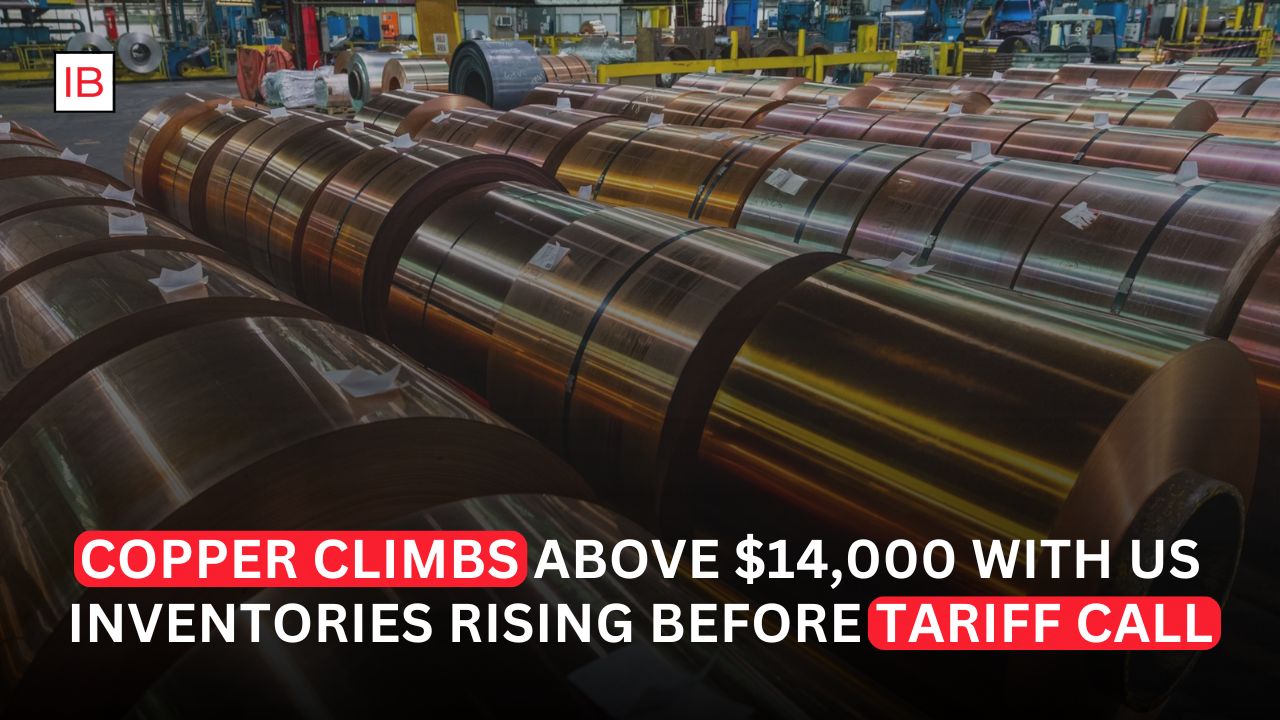
Heavy Shipments to America Create Shortages Elsewhere, Driving Copper Toward Record Levels
Copper prices continued their remarkable rally, moving closer to the $14,000-per-ton mark as an aggressive flow of metal into the United States tightened supplies across the global market. Traders, manufacturers, and investors are increasingly competing for available inventories after large volumes of copper were redirected to the U.S. ahead of potential trade measures, creating shortages in other key consuming regions.
The sustained rise in prices reflects a combination of strong industrial demand, limited mine supply growth, declining exchange inventories, and shifting global trade flows. Copper, often viewed as a key indicator of economic activity because of its widespread use in construction, manufacturing, electronics, and renewable energy, has become one of the strongest-performing industrial commodities of the year.
Analysts say the current rally is being driven not only by traditional supply-and-demand fundamentals but also by unusual trading activity as merchants move significant quantities of copper into the United States before possible tariff changes take effect. The resulting reduction in available inventories elsewhere has placed additional upward pressure on international prices.
U.S. Imports Reshape Global Market
One of the biggest drivers behind the recent surge has been the rapid increase in copper shipments heading to the United States.
Commodity traders have accelerated deliveries to American warehouses amid expectations that future trade policies could increase import costs or alter supply chains. Bringing material into the country before any new measures are introduced allows companies to avoid potential disruptions while securing inventory at current pricing.
However, this movement has had an unintended consequence.
As more copper is directed toward U.S. storage facilities, less material remains available for buyers in Europe, Asia, and other international markets, tightening global supply and pushing benchmark prices steadily higher.
Exchange Inventories Continue Falling
Copper inventories stored in major commodity exchanges have declined significantly in recent months.
Lower warehouse stocks generally indicate stronger demand relative to available supply.
Several exchanges have reported:
- Falling registered inventories.
- Increased physical deliveries.
- Reduced immediately available supplies.
- Strong demand from manufacturers.
When inventories decline while industrial demand remains firm, traders typically expect higher prices because buyers become increasingly willing to pay premiums to secure immediate supply.
The latest inventory trends have reinforced expectations that the physical copper market remains considerably tighter than headline production figures might suggest.
Demand Remains Strong Across Industries
Copper continues benefiting from multiple long-term growth drivers.
The metal plays an essential role in:
- Electric vehicles.
- Power grids.
- Renewable energy projects.
- Data centers.
- Artificial intelligence infrastructure.
- Consumer electronics.
The rapid expansion of AI data centers has become an increasingly important source of copper demand.
Large facilities require enormous quantities of electrical wiring, transformers, cooling systems, and power infrastructure, all of which depend heavily on copper.
Meanwhile, continued investment in clean energy and electrification has further strengthened long-term consumption expectations.
Supply Growth Remains Limited
While demand continues expanding, global mine production has struggled to keep pace.
Several challenges continue limiting supply growth:
- Declining ore grades.
- Project delays.
- Environmental permitting.
- Labor disruptions.
- Higher development costs.
Developing new copper mines often requires many years of planning, permitting, financing, and construction.
As a result, supply cannot respond quickly to rising demand, allowing prices to remain elevated for extended periods when consumption accelerates.
Investors Increase Commodity Exposure
The tightening physical market has attracted growing investor interest.
Commodity funds have increased exposure to copper as expectations for further price gains continue strengthening.
Many investors view copper as an attractive asset because it benefits from both:
- Industrial economic growth.
- Long-term structural trends.
Unlike some commodities driven primarily by short-term consumption, copper is increasingly supported by multi-year investment themes including energy transition, digital infrastructure, and artificial intelligence.
These structural factors have encouraged many institutional investors to maintain bullish positions despite already substantial price increases.
Manufacturing Faces Higher Costs
Rising copper prices also create challenges for manufacturers.
Industries dependent on copper now face increasing input costs, including:
- Construction.
- Automotive manufacturing.
- Electrical equipment.
- Consumer electronics.
- Industrial machinery.
Companies may attempt to absorb higher costs through productivity improvements, but many ultimately pass part of the increase on to customers.
If copper prices remain elevated for an extended period, they could contribute to broader inflationary pressures across several manufacturing sectors.
Market Watches Future Trade Policy
Traders remain closely focused on potential changes in U.S. trade policy.
Additional tariffs or import restrictions could further influence global copper flows, potentially creating additional regional imbalances.
Market participants also continue monitoring developments in:
- Chinese industrial demand.
- Global manufacturing activity.
- Mine production.
- Central bank policy.
- Infrastructure spending.
Each of these factors could significantly influence copper prices during the coming months.
Looking Ahead
Copper’s advance toward $14,000 per ton highlights the growing imbalance between expanding global demand and constrained supply. Heavy shipments into the United States ahead of possible trade measures have tightened international availability, while declining exchange inventories and continued industrial consumption have reinforced expectations that physical markets remain exceptionally tight. At the same time, long-term demand generated by artificial intelligence infrastructure, renewable energy, electric vehicles, and grid modernization continues supporting one of the strongest structural investment stories within global commodity markets.
Although prices have already reached historically elevated levels, many analysts believe the underlying supply-demand imbalance remains unresolved. Unless substantial new mining capacity becomes available or industrial demand slows significantly, copper could continue experiencing periods of heightened volatility and sustained strength. For investors, manufacturers, and policymakers alike, copper has become one of the clearest examples of how strategic industrial metals are increasingly shaping the future global economy.