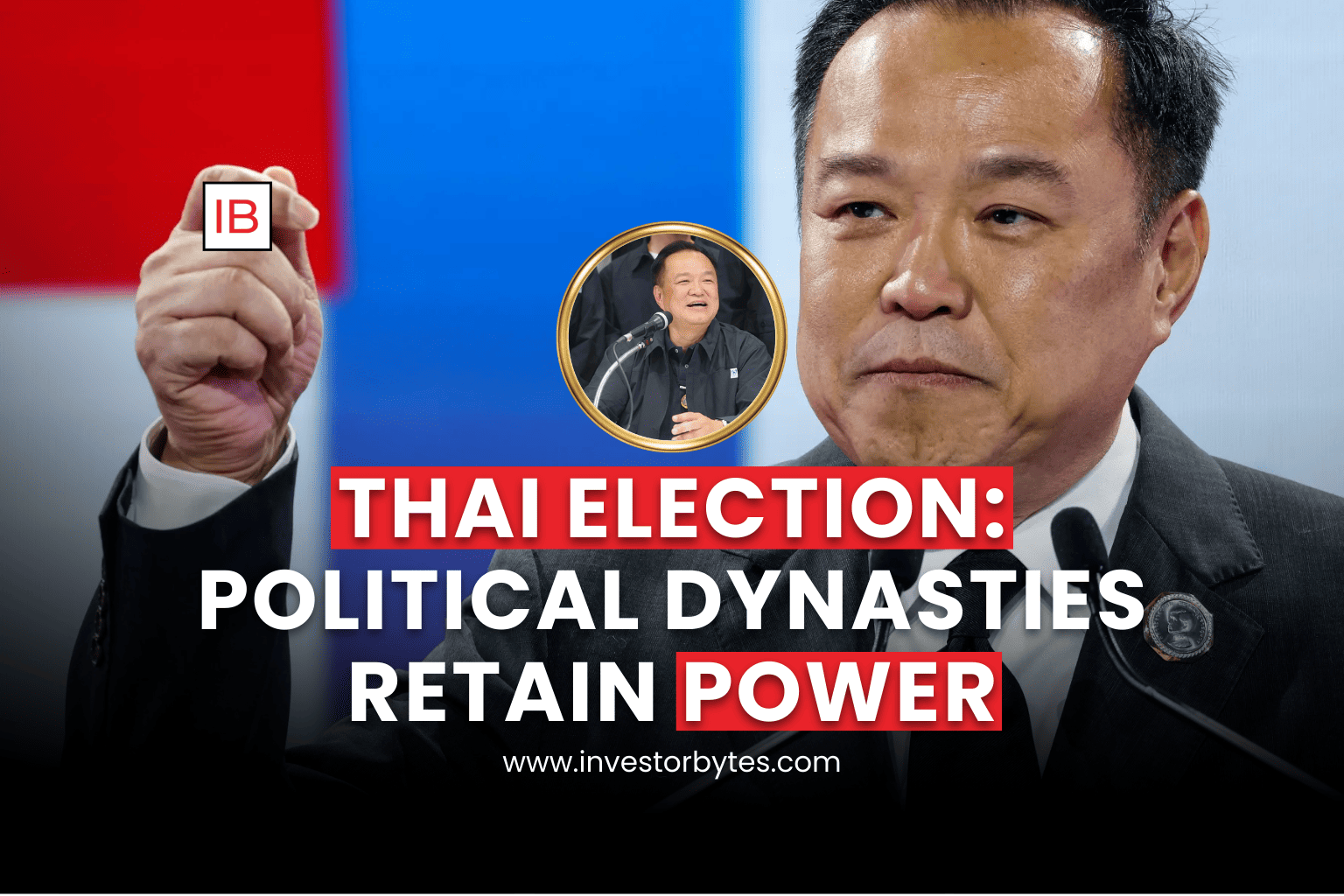
The dust has settled on Thailand’s snap general election, revealing a seismic shift that many observers are calling a “restoration of the old order.” While pre-election polls favored the progressive People’s Party (PP), the final results delivered a commanding victory for the conservative Bhumjaithai Party (BJT), led by incumbent Prime Minister Anutin Charnvirakul.
This outcome marks a definitive moment in Thai history where traditional patronage networks—locally known as the “Big Houses” (Baan Yai)—have successfully blunted the “orange wave” of reform that swept the nation in 2023.
The 2026 Election: A Conservative Surge
The election held on February 8, 2026, was triggered by the dissolution of Parliament in December 2025. Facing a sluggish economy and a series of judicial ousters of prime ministers—including Paetongtarn Shinawatra in 2025—the conservative establishment successfully utilized a “flight to safety” narrative.
The Bhumjaithai Party leveraged surging nationalism following recent border clashes with Cambodia to recast Anutin as a decisive “wartime” leader. The strategy paid off: Bhumjaithai secured a massive 193 seats, a historic high for the party.
Final Seat Count (Unofficial Results)
| Party | Ideology | 2026 Seats | Seat Change |
| Bhumjaithai (BJT) | Conservative / Nationalist | 193 | +122 |
| People’s Party (PP) | Progressive / Reformist | 118 | -33 |
| Pheu Thai (PT) | Populist / “Big House” | 74 | -67 |
| Kla Tham | Conservative Splinter | 58 | (New) |
| Democrat | Traditional Conservative | 22 | -3 |
The Resilience of the “Big Houses”
The most striking feature of the 2026 vote was the return of patronage politics. While the People’s Party dominated the party-list vote (popular vote) and swept all 33 constituencies in Bangkok, they struggled to penetrate the rural and provincial strongholds controlled by powerful political dynasties.
Bhumjaithai’s Network: The party’s success was built on recruiting “A-grade” candidates from the Baan Yai (Big House) families in the Northeast and South. These local dynasties provide social services, financial support, and infrastructure to their communities, creating a level of “unconditional loyalty” that reformist rhetoric struggled to break.
The “Shinawatra” Decline: For the first time in over two decades, the Thaksin-linked Pheu Thai Party fell below 100 seats. Analysts suggest the party’s decision to “switch sides” and join a military-backed coalition in 2023 alienated its base, leaving its “Big House” networks vulnerable to poaching by Bhumjaithai.
Kla Tham’s Entry: The emergence of the Kla Tham Party, led by the influential and controversial Thammanat Prompow, further fractured the conservative vote, effectively “mopping up” rural seats that previously belonged to Pheu Thai or pro-military groups.
“The 2026 election was less a clash of ideologies and more a masterclass in traditional electoral machinery. The ‘Big Houses’ proved that in rural Thailand, the local politician you know is still more powerful than the reform you are promised.” — Napon Jatusripitak, Political Analyst
A Referendum for Reform?
Simultaneously with the general election, Thais voted in a national referendum on whether to replace the military-drafted 2017 constitution.
In a move that highlights the country’s deep contradictions, while voters chose a conservative government, they simultaneously delivered a clear mandate for a new constitution, with over 60% voting in favor. This “split-brain” result suggests that while the public wants structural change, they are hesitant to trust a progressive party with the immediate levers of power amid economic and regional instability.