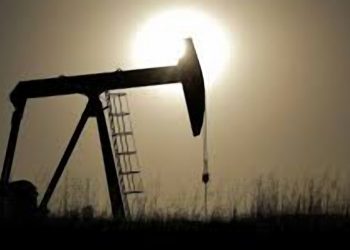
Nigeria has produced few industrial projects as ambitious as the Dangote Group’s massive manufacturing and energy empire. What began as a trading business has evolved into a sprawling industrial operation spanning cement, fertilizers, food processing and, most importantly, petroleum refining.
The scale of that transformation matters far beyond Nigeria.
Dangote’s industrial expansion is creating something Africa has historically lacked: large-scale domestic manufacturing capacity capable of replacing imports and potentially supplying neighboring markets.
That could change the economic position of Nigeria within Africa. Instead of primarily exporting raw commodities and importing finished products, the country could increasingly process its own resources and export higher-value goods.
But there is a catch.
The size of the industrial empire does not automatically guarantee economic transformation. Nigeria still faces major problems involving infrastructure, electricity, currency volatility, logistics, regulation and purchasing power. The success of Dangote’s model will ultimately depend on whether those obstacles can be overcome.
From Trading Business to Industrial Powerhouse
The Dangote story began decades ago with trading activities, but the group gradually moved into manufacturing.
Cement became the foundation of the expansion.
The company invested heavily in production facilities across Nigeria and other African countries, eventually becoming one of the continent’s biggest cement producers.
From there, the group expanded into fertilizers and food products.
The strategy has been consistent:
Build large domestic production capacity for products that Nigeria previously had to import.
That approach is particularly important for an economy as large as Nigeria’s.
The country has a huge population, substantial natural resources and significant consumer demand. Yet it has historically imported many of the products it could theoretically produce itself.
Dangote’s industrial model attempts to reverse that imbalance.
The Refinery Is the Biggest Piece of the Puzzle
The most consequential part of the group’s expansion is its petroleum refinery near Lagos.
The Dangote Refinery is one of the largest single-train refineries in the world and represents an investment of roughly $19 billion.
Its scale is enormous.
The refinery was designed to process around 650,000 barrels of crude oil per day when operating at full capacity.
That gives Nigeria the potential to dramatically reduce its dependence on imported refined petroleum products.
For decades, Nigeria exported crude oil while importing large quantities of gasoline, diesel and other refined fuels.
That created an unusual economic contradiction.
The country had the raw material but lacked sufficient domestic refining capacity.
Dangote is attempting to change that equation.
Why Refining Matters So Much for Nigeria
The refinery could have several effects on the Nigerian economy.
Lower dependence on imports
Nigeria can potentially source more refined products domestically.
Reduce foreign-exchange pressure
Importing fuel requires dollars and other foreign currencies.
Improve supply security
Domestic refining can reduce exposure to international shipping disruptions.
Create industrial jobs
Large-scale refining supports engineers, technicians, logistics companies and service providers.
Develop downstream industries
Petrochemical and industrial businesses can be built around refinery output.
The last point may ultimately be the most important.
The refinery should not be viewed simply as a gasoline factory.
It could become the center of a much larger industrial ecosystem.
The Petrochemical Opportunity Is Even Bigger
A modern refinery produces more than transportation fuel.
It can provide feedstocks for plastics, chemicals and other industrial products.
That creates opportunities for Nigeria to move further down the manufacturing chain.
Instead of exporting crude oil and importing plastic products, Nigeria could potentially produce more of those materials domestically.
That is where Dangote’s industrial strategy could have a broader African impact.
A refinery connected to petrochemical manufacturing, fertilizer production, logistics and other industries could become an industrial hub.
Fertilizer Adds Another Strategic Dimension
Dangote has also invested heavily in fertilizer production.
Its fertilizer complex in Nigeria has the capacity to produce millions of tonnes of fertilizer annually.
That matters because agriculture remains central to Nigeria and many other African economies.
Africa has enormous agricultural potential, but agricultural productivity is often constrained by limited access to fertilizer, irrigation, financing and modern equipment.
Domestic fertilizer production can reduce dependence on imports and potentially lower supply-chain costs.
It can also support food production.
That gives Dangote’s industrial expansion a connection to one of Africa’s biggest economic challenges: food security.
Cement Shows the Model Can Work
Dangote Cement provides an earlier example of the group’s industrial strategy.
The company built large production plants not only in Nigeria but across several African markets.
That helped turn cement from an import-dependent product into a major domestic manufacturing industry.
The economic logic is straightforward.
Nigeria has limestone and other raw materials.
Instead of exporting raw materials or importing finished cement, Dangote invested in local processing.
The result is a much higher-value domestic industrial chain.
That model is now being applied on a much larger scale to energy and petrochemicals.
Nigeria Has a History of Import Dependence
The importance of Dangote’s strategy becomes clearer when looking at Nigeria’s economic history.
For decades, the country relied heavily on crude oil exports.
Oil generated foreign exchange and government revenue, but much of the wider industrial economy remained underdeveloped.
That created a vulnerability.
When oil prices rose, Nigeria benefited.
When oil prices collapsed, the economy suffered.
At the same time, the country continued importing many finished goods.
This meant Nigeria was effectively exporting raw materials while importing value-added products.
Dangote’s strategy attempts to break that pattern.
The Currency Problem Makes Local Manufacturing More Valuable
Nigeria’s currency has experienced substantial volatility.
That matters because companies importing machinery, raw materials and finished products often need foreign currency.
When the naira weakens, imports become more expensive.
Domestic manufacturing can reduce some of that exposure.
If Nigeria can produce more fuel, fertilizer, cement and food locally, it can reduce the amount of foreign exchange required for imports.
That does not eliminate currency problems.
But it can reduce one major source of dollar demand.
The Refinery Could Change Nigeria’s Trade Balance
Nigeria has historically spent enormous amounts of foreign currency importing refined petroleum products.
A successful domestic refinery could change that.
Instead of importing large quantities of gasoline and diesel, Nigeria could meet more domestic demand locally.
If production exceeds domestic consumption, the country could eventually export refined products to other African markets.
That would be a major shift.
Nigeria would move from being primarily a crude-oil exporter toward becoming an exporter of refined petroleum products.
Africa Could Become the Next Market
Nigeria’s domestic market is enormous.
But Dangote’s ambitions go beyond Nigeria.
The company can potentially use its scale to supply other African countries.
This is where the African Continental Free Trade Area becomes strategically important.
A more integrated African market could allow Nigerian manufacturers to sell products across borders with fewer trade barriers.
That creates a potential advantage for large industrial producers.
A company that can manufacture at enormous scale in Nigeria may eventually be able to supply dozens of African markets.
Scale Is Dangote’s Biggest Advantage
Industrial businesses often benefit from economies of scale.
A huge refinery can potentially produce fuel more efficiently per unit than a small refinery.
A massive cement plant can spread fixed costs across enormous production volumes.
A large fertilizer operation can reduce the cost of production and logistics.
Dangote has repeatedly pursued this strategy.
The company does not appear interested in becoming a collection of small manufacturing businesses.
It wants to build industrial giants.
That approach is risky, but if successful it can produce significant cost advantages.
But Scale Also Creates Concentration Risk
This is where the story becomes more complicated.
A company that controls major portions of strategically important industries can become extremely influential.
If Dangote controls large shares of cement, fertilizer and refining capacity, its decisions can affect prices and supply across Nigeria.
That creates a policy dilemma.
Nigeria needs domestic champions capable of investing billions of dollars.
But it also needs competitive markets.
The government therefore has to balance industrial development against concerns about market concentration.
The Refinery Has Faced Its Own Challenges
The refinery’s enormous scale does not mean its operations are automatically smooth.
Starting a complex refinery is technically difficult.
It requires reliable crude supplies, stable power, logistics infrastructure, skilled workers and functioning distribution networks.
The refinery has also had to adapt to changing Nigerian regulations and crude-supply conditions.
That illustrates an important weakness in Nigeria’s industrial environment.
Building the factory is only one part of the problem.
The surrounding economic system must work too.
Crude Supply Is Critical
A refinery cannot operate without sufficient crude.
Nigeria is a major oil producer, so the country appears to have an obvious advantage.
But crude production has historically been affected by theft, pipeline problems, underinvestment and operational disruptions.
If domestic refineries cannot consistently obtain crude at competitive prices, their economics become more difficult.
That makes oil-sector reform important to the success of the refinery.
Electricity Remains a Structural Problem
Nigeria’s industrial ambitions face another major obstacle: electricity.
Manufacturing requires reliable power.
Businesses that cannot depend on the national grid often have to use expensive private generators or alternative energy sources.
That raises production costs.
Large industrial projects can partly solve this problem through their own power infrastructure.
But smaller suppliers and manufacturers cannot always do so.
If Nigeria wants an industrial transformation rather than a handful of giant factories, electricity reliability will have to improve across the economy.
Infrastructure Could Determine the Final Outcome
Factories need roads.
They need ports.
They need railways.
They need pipelines.
They need warehouses.
They need telecommunications.
They need customs systems that work efficiently.
Nigeria has improved some infrastructure, but bottlenecks remain.
A factory can produce enormous quantities of goods, but if those products cannot move efficiently to customers, the economic benefits are reduced.
Jobs Are Another Major Benefit
Industrial projects can create direct employment.
But the indirect employment effect can be much larger.
A refinery requires:
- Engineers
- Mechanics
- Security workers
- Transport operators
- Logistics companies
- Equipment suppliers
- Maintenance contractors
- Financial services
- Technology providers
The same applies to cement and fertilizer production.
If industrial clusters develop around these facilities, they can create entire ecosystems of businesses.
That is how manufacturing can have a much larger economic impact than the number of workers employed inside a single factory suggests.
Nigeria Could Capture More Value From Its Resources
This may ultimately be the biggest economic argument for Dangote’s strategy.
Nigeria possesses huge natural resources.
But raw-resource exports capture only part of the potential value.
Processing creates additional stages:
Resource → processing → manufacturing → distribution → export
Each stage can create jobs, taxes, investment and technical knowledge.
Dangote’s industrial strategy is essentially an attempt to push Nigeria further along that chain.
The Model Could Be Replicated Elsewhere in Africa
If the strategy succeeds, other African countries could draw lessons from it.
Many African economies have abundant raw materials but limited processing capacity.
They export:
- Crude oil
- Minerals
- Agricultural commodities
- Natural gas
- Metals
They then import finished products.
That structure leaves much of the economic value outside the continent.
Large-scale African industrial companies could begin changing that.
Dangote is effectively demonstrating what happens when African capital is used to build African production capacity at global scale.
But Other Countries Need Different Models
Not every African country can simply copy Nigeria.
Nigeria has a massive domestic market.
That allows manufacturers to build very large facilities and rely initially on local demand.
Smaller countries need regional markets to achieve similar economies of scale.
That is why African trade integration is so important.
If national markets remain fragmented, many industrial projects will never become large enough to compete internationally.
The AfCFTA Could Be a Force Multiplier
The African Continental Free Trade Area could significantly increase the potential market available to Nigerian manufacturers.
Instead of designing production only for Nigeria’s population, companies could target a continental market of more than a billion people.
That creates opportunities in:
- Fuel
- Fertilizer
- Cement
- Chemicals
- Food
- Steel
- Consumer products
But the trade agreement will only matter if governments actually reduce border barriers and improve logistics.
A free-trade agreement cannot overcome dysfunctional transport networks by itself.
Dangote’s Expansion Could Increase Competition With Global Producers
If Nigerian companies become capable of producing goods at competitive prices, international suppliers could lose market share.
That is particularly relevant in African markets where imported products from Europe, Asia and the Middle East have historically dominated.
A strong African manufacturer could change those competitive dynamics.
The impact would not necessarily be negative for consumers.
Greater domestic production could mean cheaper goods and more reliable supply.
But existing importers and foreign manufacturers would face stronger competition.
The Government’s Role Is Crucial
Dangote cannot transform Nigeria’s economy by itself.
Government policy remains critical.
Nigeria needs:
Stable regulations
Investors need predictable rules.
Reliable infrastructure
Factories need power and transport.
Efficient ports
Exports and imports depend on logistics.
Competitive markets
Large companies should not be allowed to eliminate competition unfairly.
Skilled workers
Industrialization requires engineers and technicians.
Access to capital
Smaller suppliers need financing to participate in industrial ecosystems.
Without these conditions, giant factories can become isolated islands of productivity.
There Is a Risk of Creating an Industrial Monopoly
This is perhaps the most important criticism of the Dangote model.
A national industrial champion can become so large that competition becomes difficult.
If one group controls significant portions of several strategic sectors, regulators must remain independent.
Nigeria therefore faces a balancing act:
It needs companies large enough to compete globally without allowing those companies to become so dominant that competition disappears.
That will become increasingly important if Dangote’s refining and petrochemical operations expand further.
The Consumer Ultimately Matters Most
Industrial investment only becomes economically meaningful if consumers benefit.
That means lower prices, better availability, more jobs and higher incomes.
If domestic production simply replaces imports while keeping prices high, the economic gains are smaller.
The strongest outcome would be a competitive domestic industry that produces efficiently enough to lower costs.
That would increase household purchasing power and help Nigerian businesses compete internationally.
Export Potential Could Be Transformational
The real upside comes if Dangote moves from import substitution to exports.
Replacing imports saves foreign exchange.
Exports generate foreign exchange.
That distinction matters.
If Nigerian refineries, fertilizer plants and manufacturers can supply other African countries, Nigeria could develop a new source of export earnings beyond crude oil.
That would make the economy more resilient.
The Oil Industry Could Become More Integrated
Nigeria’s traditional oil model was relatively simple:
Extract crude → export crude → import refined products.
The emerging model could look very different:
Extract crude → refine crude → produce chemicals → manufacture products → sell domestically and export.
That is a much more sophisticated industrial chain.
It could create significantly more economic value from every barrel of oil.
Food Manufacturing Could Complete the Picture
Dangote’s food businesses also matter.
The company has invested in sugar, flour, salt and other consumer products.
Combined with fertilizer production, that creates an interesting agricultural-industrial chain.
Fertilizer can support farmers.
Farm output can feed processing industries.
Processed food can be distributed through domestic and regional markets.
That is the kind of integrated value chain Nigeria has historically struggled to develop.
Nigeria’s Population Is a Major Advantage
Nigeria’s huge population is often described as a challenge.
It is also an economic asset.
A large population means a large potential consumer market.
If incomes rise, demand for fuel, housing, food, transportation and manufactured goods rises with them.
That creates a powerful foundation for industrial companies.
The problem is ensuring that population growth is accompanied by productivity growth and rising incomes.
The Middle Class Will Matter
Industrialization becomes self-reinforcing when it creates a growing middle class.
Higher industrial wages increase consumption.
Greater consumption encourages businesses to invest.
Investment creates more jobs.
Those jobs create more consumption.
Nigeria has not yet fully achieved that cycle.
But large-scale industrial investment could help create the foundation for it.
The Currency Will Remain a Risk
Even successful industrial companies cannot completely escape Nigeria’s macroeconomic problems.
Currency volatility affects:
- Imported machinery
- Spare parts
- Financing
- Foreign debt
- Raw materials
- Investor confidence
A weaker naira can make Nigerian exports cheaper internationally, but it also raises the cost of imported equipment and inputs.
Long-term industrial investment therefore requires macroeconomic stability.
The Bigger African Question
The Dangote story raises a question that goes beyond one company:
Can Africa build its own industrial champions?
For decades, many of the continent’s largest corporations were subsidiaries of foreign companies.
That is changing.
African entrepreneurs and investors are increasingly building businesses capable of operating at regional and global scale.
Dangote is perhaps the most prominent example.
Its success or failure will therefore be watched far beyond Nigeria.
Why This Could Reshape Africa
If Dangote’s industrial strategy works, its impact could extend through several channels.
Energy
More domestic refining and potentially more fuel exports.
Agriculture
More fertilizer availability.
Manufacturing
Greater domestic production of industrial materials.
Trade
More Nigerian exports to African markets.
Employment
More industrial and supply-chain jobs.
Foreign exchange
Less dependence on imported products and greater export earnings.
Investment
More incentives for other companies to build factories.
Together, those effects could alter Nigeria’s economic position within Africa.
The Biggest Test Is Sustainability
The hardest part begins after the factories are built.
Can they remain competitive?
Can they obtain raw materials reliably?
Can they operate efficiently?
Can Nigeria maintain stable economic policies?
Can the company avoid becoming overly dependent on government support?
Can competitors survive?
Can products reach foreign markets?
Those questions will determine whether Dangote’s industrial empire becomes a genuine transformation or simply a collection of enormous individual projects.
Conclusion
The rise of Dangote’s industrial empire represents one of the most ambitious attempts by African capital to build large-scale manufacturing capacity on the continent.
Its cement operations demonstrated the potential of local production.
Its fertilizer investments target one of Africa’s most important agricultural bottlenecks.
And its giant oil refinery could fundamentally alter Nigeria’s relationship with crude oil by allowing the country to process far more of its own petroleum and potentially export refined products.
The opportunity is enormous.
Nigeria could reduce its dependence on imported goods, conserve foreign exchange, create industrial jobs and build stronger supply chains.
The benefits could extend beyond Nigeria if the country becomes a major supplier of fuel, fertilizer, petrochemicals and manufactured goods to other African economies.
But the risks should not be ignored.
Infrastructure remains weak in important areas. Electricity reliability is a major challenge. Currency volatility complicates investment. Crude supply must remain dependable. And the growing scale of Dangote’s businesses raises legitimate questions about competition and market concentration.
The central lesson is therefore not that one billionaire or one company can single-handedly industrialize Africa.
It is that large-scale African-owned companies can create the industrial infrastructure that governments alone have struggled to build.
If Nigeria can surround these investments with reliable infrastructure, predictable regulation, competitive markets and deeper regional trade, Dangote’s industrial empire could become more than a collection of huge factories.
It could become the foundation for a new African manufacturing model.
The ultimate test will be whether Nigeria moves from exporting raw resources and importing finished goods to processing, manufacturing and exporting higher-value products itself.
If that transition succeeds, the consequences could extend well beyond Dangote and Nigeria.
It could change how Africa participates in the global economy.