Iran War and Falling Water Levels Drive Demand for Transit Slots as Shipping Companies Pay Premiums to Avoid Delays
The Panama Canal is becoming one of the world’s most expensive maritime shortcuts as a surge in vessel traffic, fueled partly by disruptions from the Iran war, collides with growing concerns over water levels.
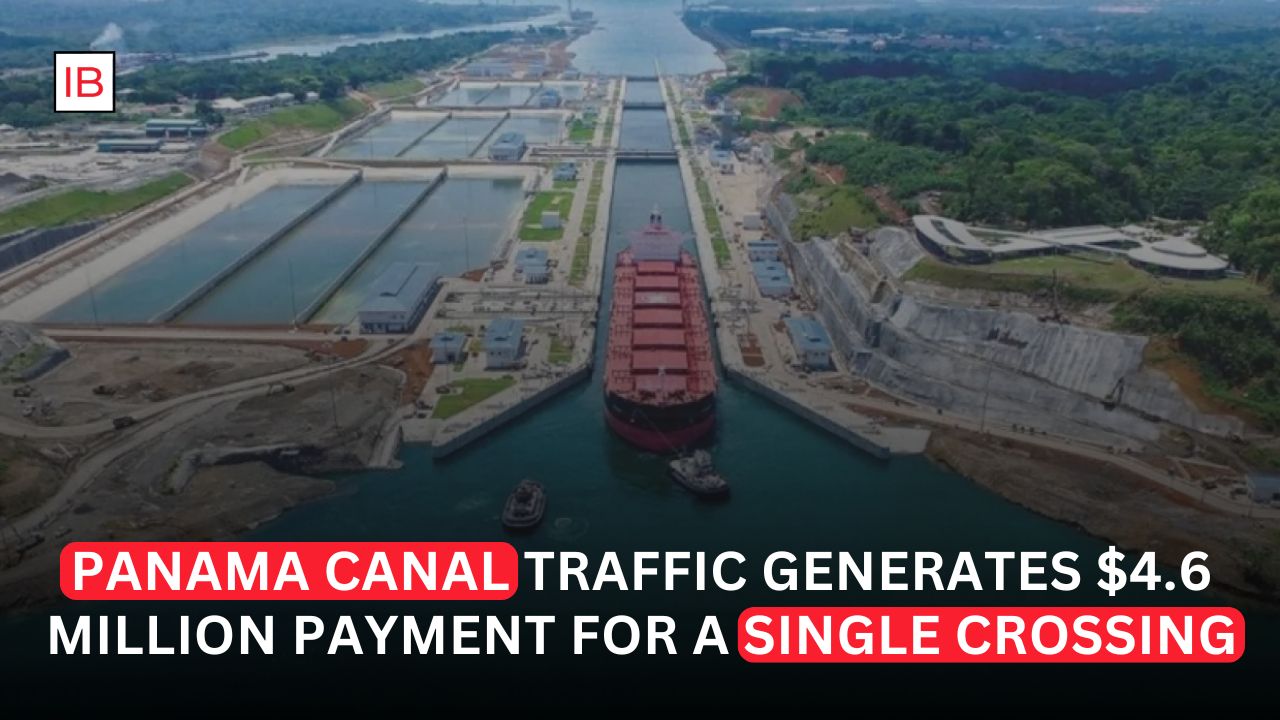
Shipping companies are increasingly competing for limited transit capacity through the crucial waterway connecting the Atlantic and Pacific oceans. In one striking example, a vessel paid roughly $4.6 million for a canal crossing, illustrating how much companies can be willing to spend when avoiding a lengthy queue is more valuable than the additional transit cost.
The extraordinary payment reflects a broader transformation in the economics of the canal. What is normally a predictable shipping route has become a highly competitive market for transit slots as geopolitical disruptions and environmental conditions squeeze available capacity.
Iran War Redirects Global Shipping
The conflict involving Iran has played an important role in increasing demand for the Panama Canal.
Disruptions around major Middle Eastern shipping routes have forced companies to reconsider traditional routes between suppliers and customers. The Strait of Hormuz and the Bab al-Mandab have become significantly more difficult and dangerous for commercial vessels, encouraging some shippers to seek alternative routes.
That has increased traffic through the Panama Canal.
The waterway is particularly valuable for cargo moving between Asia and the US Gulf and East Coast because it can save significant time compared with longer routes around South America.
As companies prioritize reliability and security, the value of a guaranteed canal crossing has risen sharply.
Companies Pay to Skip the Queue
The Panama Canal Authority operates an auction system that allows certain vessels to obtain transit slots when they need additional certainty or cannot rely on standard reservations.
Under normal circumstances, auction prices can be relatively modest compared with the total value of a large cargo.
But when demand rises and vessels begin competing for limited slots, prices can increase dramatically.
The multimillion-dollar payment demonstrates how the economics can change when a shipowner faces the possibility of waiting several days.
A vessel carrying high-value cargo or serving a market with rapidly changing prices may lose considerably more money by sitting idle than by paying an enormous premium for faster passage.
Canal Traffic Is Increasing
The increase in demand is not simply a temporary statistical fluctuation.
The Panama Canal Authority reported that vessel transits and cargo tonnage increased during fiscal 2026, with traffic averaging around 35 vessels a day during the period from October 2025 through June 2026. The increase was particularly strong among container ships and liquefied petroleum gas carriers.
That growth comes as global shipping patterns are changing.
Energy shipments have become particularly important because disruptions in the Middle East are forcing buyers to source supplies from different regions.
US Gulf Coast energy exports to Asian markets can benefit from the Panama Canal because the waterway provides a much shorter alternative to sailing around the southern tip of the Americas.
Water Levels Add Another Constraint
Geopolitics is only part of the problem.
The Panama Canal relies heavily on water from Gatun Lake, the artificial reservoir that supplies the locks with the enormous quantities of freshwater required to move ships through the canal.
Falling water levels have forced the canal authority to impose restrictions on how deeply vessels can sit in the water.
Those draft restrictions mean some ships cannot carry as much cargo as they normally would.
The canal authority announced additional draft adjustments in 2026 as it prepared for potentially difficult conditions associated with a strengthening El Niño weather pattern.
For shipping companies, reduced draft limits create a difficult choice.
They can carry less cargo, wait for a better transit opportunity or pay more to secure passage.
Each option increases costs.
El Niño Raises New Concerns
The timing is particularly significant because the canal is still dealing with the consequences of previous drought conditions.
A severe drought in 2023 and 2024 forced the Panama Canal Authority to restrict the number of vessels passing through the waterway and reduce maximum vessel drafts.
The authority has since worked to improve water-management systems and maintain greater reserves.
But the emergence of another strong El Niño has renewed concerns about whether water supplies will remain sufficient to support normal operations.
Recent estimates have indicated that Gatun Lake water levels could fall further in coming months, creating the possibility of additional restrictions if conditions deteriorate.
Shipping Costs Are Rising
The combination of higher demand and lower water levels is pushing canal-related costs sharply higher.
Auction prices for transit slots have reached unprecedented levels.
Recent reporting showed that daily auctions for commonly used locks averaged around $1.1 million in August, more than 16 times the average from the same period a year earlier. Prices for larger locks averaged roughly $2.5 million, with individual bids reaching even higher levels.
That means the canal is becoming an increasingly important variable in global shipping costs.
When companies pay millions of dollars for a transit slot, those costs can eventually be reflected in freight rates and, potentially, consumer prices.
Panama Canal Rejects Idea of a Fixed $4 Million Fee
The Panama Canal Authority has emphasized that unusually high auction payments should not be interpreted as a new official canal tariff.
When reports first emerged of a vessel paying about $4 million to secure faster passage, the authority said auction results reflected temporary market conditions rather than a rate established by the canal.
The authority said auction prices can be influenced by factors including the urgency of individual customers, freight rates, fuel costs and broader global supply and demand.
In other words, the multimillion-dollar payment represents what a particular shipper was willing to pay for certainty under unusual market conditions.
More Than Just a Shipping Story
The situation at the Panama Canal highlights the growing vulnerability of global trade to disruptions at strategic chokepoints.
The canal is only one of several critical maritime passages around the world.
The Suez Canal, Strait of Hormuz, Bab al-Mandab and other narrow waterways can all influence the cost and speed of international commerce.
When one route becomes dangerous or unavailable, traffic can shift to another.
But alternative routes have limited capacity.
That means a geopolitical crisis in one part of the world can quickly create congestion and higher prices thousands of miles away.
Energy Trade Is Particularly Important
The current Panama Canal situation also illustrates how closely energy markets are connected to maritime infrastructure.
Asian buyers seeking alternatives to Middle Eastern supplies can turn toward US Gulf Coast crude, petroleum products and liquefied natural gas.
The Panama Canal can make those shipments more commercially attractive.
But if canal capacity becomes constrained, the economics of those energy trades can change.
Shipping companies may have to use longer routes, carry less cargo or pay substantially higher fees to secure a transit slot.
Global Supply Chains Face Another Test
For retailers, manufacturers and energy companies, higher shipping costs create another challenge at a time when global supply chains are already dealing with geopolitical uncertainty.
Companies have increasingly sought to diversify suppliers and transportation routes after disruptions during the pandemic, the Red Sea crisis and other global events.
The latest Panama Canal congestion shows why diversification can be difficult.
Alternative routes exist, but they may be significantly more expensive.
A company cannot easily replace one strategic maritime chokepoint with another when global demand is overwhelming available capacity.
Looking Ahead
The Panama Canal is becoming an increasingly valuable and expensive piece of global trade infrastructure as geopolitical disruptions and environmental pressures push shipping companies into a competition for limited transit capacity.
The reported $4.6 million payment for a crossing is an extraordinary example of the premium companies may pay when time and certainty become more valuable than the normal cost of using the canal.
Traffic through the waterway has already increased, with container and LPG vessels contributing significantly to higher volumes.
At the same time, falling water levels linked to El Niño are forcing the Panama Canal Authority to manage vessel drafts and prepare for potentially more difficult conditions later in the year.
The result is a delicate balancing act.
The canal must accommodate rising demand while preserving enough water to maintain operations.
For shipping companies, meanwhile, every additional day spent waiting represents lost time, higher fuel and crew costs and potentially missed commercial opportunities.
The extraordinary price of a single transit slot is therefore more than a remarkable shipping story. It is a warning about how quickly the cost of global trade can rise when geopolitical disruption meets environmental constraints at one of the world’s most important trade chokepoints.
If Middle East disruptions continue and water levels deteriorate further, competition for Panama Canal capacity could remain intense.
That could make the waterway an increasingly important factor in the cost of moving energy, manufactured goods and commodities around the world.