Bond Market Volatility Leaves Investors Waiting for the Next Catalyst
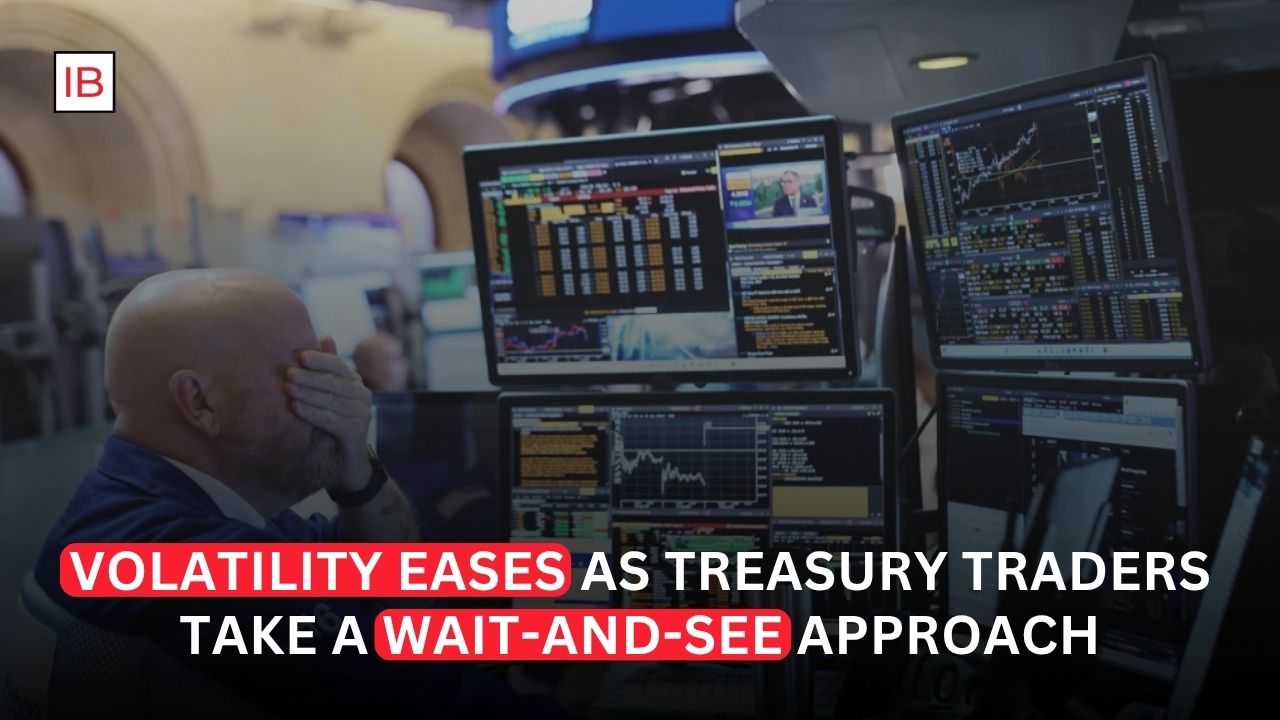
The Treasury market of US is ending a turbulent week with investors taking a more cautious approach after government bonds experienced sharp swings in both directions.
Treasury yields have been pushed higher by concerns over inflation, rising oil prices, massive government borrowing and uncertainty about Federal Reserve policy. At the same time, an unexpected move by the US Treasury Department to increase long-term bond buybacks briefly encouraged investors before yields moved higher again.
The result has been a week of unusually large moves that have left traders reluctant to make aggressive bets until they receive clearer signals about the direction of interest rates and government policy.
Treasury Yields Experience a Sharp Reversal
The latest volatility demonstrates how quickly sentiment has changed in the bond market.
Treasury yields initially fell after Treasury Secretary Scott Bessent announced that the government would increase its purchases of longer-dated debt. The announcement was interpreted as an attempt to improve liquidity and reduce pressure on long-term borrowing costs.
However, the relief did not last.
Yields subsequently moved higher again as investors questioned whether Treasury intervention could overcome the much larger forces affecting the bond market.
The 10-year Treasury yield climbed back toward 4.7%, while the 30-year yield moved above 5%. The 30-year yield has reached levels not seen since 2007, highlighting the scale of the recent market pressure.
Treasury Buybacks Fail to Fully Calm Investors
The Treasury Department’s decision to increase its buybacks was one of the week’s biggest market developments.
The government said it would double the size of its buybacks of 10- to 30-year debt to at least $4 billion per operation. The program is intended to improve liquidity and support the functioning of the Treasury market.
The announcement initially helped push yields lower.
But investors quickly returned to the concerns that had driven the selloff in the first place.
The United States faces enormous borrowing requirements, while the national debt has surpassed $40 trillion. Investors remain concerned that government borrowing and large fiscal deficits will require a substantial supply of Treasury securities.
That supply can place upward pressure on yields when investors demand greater compensation for holding long-term government debt.
Bessent Says Yields Do Not Reflect Economic Fundamentals
Bessent has argued that Treasury yields have risen beyond levels justified by the underlying economic outlook.
He has indicated that the government could increase its bond purchases again if necessary.
However, the market reaction suggests that investors are not convinced that buybacks alone can resolve the problem.
Reuters reported that traders viewed the latest intervention skeptically, with some describing it as a test of whether the Treasury can influence the market.
This creates an important challenge for policymakers.
The Treasury can influence the composition and liquidity of government debt, but it cannot easily eliminate concerns about inflation, fiscal deficits and the overall amount of debt the government must issue.
Inflation Remains a Major Concern
One of the biggest reasons investors are demanding higher yields is persistent inflation.
US inflation stood at 3.4% in July, still well above the Federal Reserve’s 2% target. Rising energy prices have created additional concerns that inflation could remain elevated for longer.
Oil prices have risen sharply as geopolitical tensions involving Iran create uncertainty over global energy supplies.
Higher oil prices can quickly affect the broader economy by increasing transportation, electricity and production costs.
That creates a difficult situation for the Federal Reserve.
If inflation remains elevated, policymakers may need to keep interest rates higher or even consider additional increases.
Higher interest rates generally push Treasury yields higher, particularly at the short end of the curve.
The Federal Reserve Is Adding to Uncertainty
Investors are also waiting for clearer signals from the Federal Reserve.
Markets have struggled to determine whether the central bank will raise rates, hold them steady or eventually begin cutting.
Recent Fed meeting minutes showed disagreement among policymakers over the appropriate policy response to inflation. Meanwhile, traders have been assigning relatively low odds to a September rate increase despite evidence that some officials remain concerned about inflation.
That uncertainty makes the Treasury market particularly sensitive to every economic release and policy comment.
A stronger inflation reading can trigger a rapid rise in yields.
A weaker employment report can produce the opposite reaction.
As a result, investors have become increasingly reluctant to take large directional positions.
The 10-Year Treasury Remains a Critical Benchmark
The 10-year Treasury yield is one of the most important numbers in global financial markets.
It influences borrowing costs across the economy, including:
- Mortgage rates
- Corporate loans
- Auto financing
- Consumer credit
- Government borrowing
- Stock valuations
When the 10-year yield rises sharply, financial conditions generally become tighter.
Companies face higher financing costs, while investors may demand better returns from equities to compensate for the increased attractiveness of government bonds.
That can place pressure on highly valued technology companies in particular.
The recent increase in Treasury yields has already contributed to weakness in parts of the stock market.
The 30-Year Bond Is Sending an Even Stronger Signal
The long end of the Treasury market is facing particularly strong pressure.
The 30-year yield has moved above 5%, a level that has attracted significant attention because long-term government borrowing costs influence infrastructure investment, housing and corporate financing.
The move suggests investors are demanding a larger premium to hold long-duration government debt.
Several factors are contributing to that pressure.
These include:
- Large US budget deficits
- Rising government debt
- Persistent inflation
- Higher oil prices
- Heavy Treasury issuance
- Uncertainty over Fed policy
- Increased private-sector borrowing
The combination has created a challenging environment for long-term bonds.
Rising Oil Prices Are Making the Situation Worse
Energy prices have become an important driver of the Treasury selloff.
Oil has risen as geopolitical tensions threaten energy supplies and create uncertainty around the Strait of Hormuz.
Brent crude has moved toward $95 a barrel, increasing concerns about another wave of inflationary pressure.
Higher oil prices can affect Treasury yields through several channels.
First, they can increase inflation expectations.
Second, they can reduce household purchasing power.
Third, they can complicate Federal Reserve policy by making it harder for policymakers to reduce interest rates.
That combination is particularly unfavorable for long-term bonds.
The US Deficit Remains a Structural Problem
Even if inflation eventually falls, investors still face the issue of America’s fiscal position.
The US government is carrying more than $40 trillion in debt, while annual deficits remain extremely large.
The government therefore needs to issue enormous quantities of Treasury securities to finance spending and refinance existing debt.
Investors may demand higher yields if they believe the supply of bonds will remain extremely large.
This creates a structural challenge that cannot easily be solved through temporary market interventions.
The Treasury can adjust its issuance strategy and buybacks, but the underlying fiscal imbalance remains.
AI Investment Is Adding Another Layer of Demand
Another factor affecting financial markets is the enormous investment required to build AI infrastructure.
Technology companies are spending heavily on data centers, chips, electricity infrastructure and networking equipment.
Much of that investment requires financing.
As borrowing costs rise, the economics of large infrastructure projects become more complicated.
The recent Treasury selloff has therefore affected companies involved in the AI boom. Higher bond yields can increase the cost of financing massive data-center projects and place pressure on highly valued technology stocks.
At the same time, AI investment is supporting economic growth, creating a complicated relationship between technology spending and bond markets.
Investors Are Looking for a Clearer Direction
After such a volatile week, traders appear increasingly interested in waiting rather than making aggressive bets.
The bond market has moved sharply in response to government announcements, inflation concerns, oil prices and Federal Reserve expectations.
That makes positioning difficult.
Investors who buy long-term bonds could benefit if inflation falls and interest rates eventually decline.
But they could suffer substantial losses if yields continue rising.
Similarly, betting against bonds can be profitable if yields continue climbing, but such positions can reverse quickly if policymakers successfully calm the market or economic data weakens.
The result is a market in which traders have become more cautious.
The Dollar Is Also Feeling the Pressure
Treasury market volatility is affecting the US dollar as well.
The initial announcement of larger Treasury buybacks triggered a decline in the dollar as investors considered whether fiscal concerns could eventually shift pressure from bonds toward the currency.
The dollar later recovered some of those losses as traders reassessed the Treasury’s strategy.
This relationship is important.
If investors become increasingly concerned about US debt and inflation, they may seek alternative assets such as gold, foreign currencies or Bitcoin.
That could create additional pressure on the dollar.
For now, however, the dollar remains an essential global reserve currency, and investors continue to closely monitor Treasury market developments.
The Treasury Market Has Become a Policy Battleground
The latest volatility highlights an unusual tension between different parts of US economic policy.
The Treasury Department wants to keep borrowing costs manageable.
The Federal Reserve wants to maintain control over inflation.
Investors want compensation for the risks associated with holding long-term government debt.
These objectives do not always align.
If the Fed keeps rates high to control inflation, Treasury yields may remain elevated.
If the Treasury increases buybacks to push yields lower, investors may question whether the intervention can overcome fundamental fiscal pressures.
That conflict has contributed to the uncertainty currently surrounding the bond market.
What Traders Will Watch Next
The next phase of the Treasury market will depend heavily on several developments.
Investors will monitor:
- Inflation data
- Oil prices
- Employment reports
- Federal Reserve comments
- Treasury auctions
- Government borrowing plans
- Fiscal policy
- Long-term inflation expectations
Any major change in these factors could quickly move yields.
The Federal Reserve’s upcoming communications will be particularly important because traders want greater clarity about the central bank’s reaction function.
Markets also want to know whether Treasury officials intend to expand their intervention further.
Looking Ahead
The US Treasury market is ending one of its most volatile weeks in recent memory with investors increasingly hesitant to make large bets.
The 10-year Treasury yield has returned toward 4.7%, while the 30-year yield has moved above 5%, reflecting persistent concerns over inflation, government borrowing and long-term fiscal sustainability.
Treasury Secretary Scott Bessent’s decision to double long-term bond buybacks initially provided relief, but the market quickly pushed yields higher again.
That reaction demonstrates the difficulty of trying to stabilize a market facing much larger economic forces.
Inflation remains above the Federal Reserve’s target, oil prices are rising because of geopolitical tensions and the US government continues to carry an enormous debt burden. At the same time, investors remain uncertain about the future path of monetary policy.
For now, traders appear to be taking a pause.
The next major economic or policy signal could determine whether the Treasury selloff resumes or whether yields finally stabilize.
The bigger question is whether policymakers can convince investors that inflation, deficits and debt are under control.
Until they do, the Treasury market is likely to remain highly sensitive, volatile and extremely important to the direction of global financial markets.