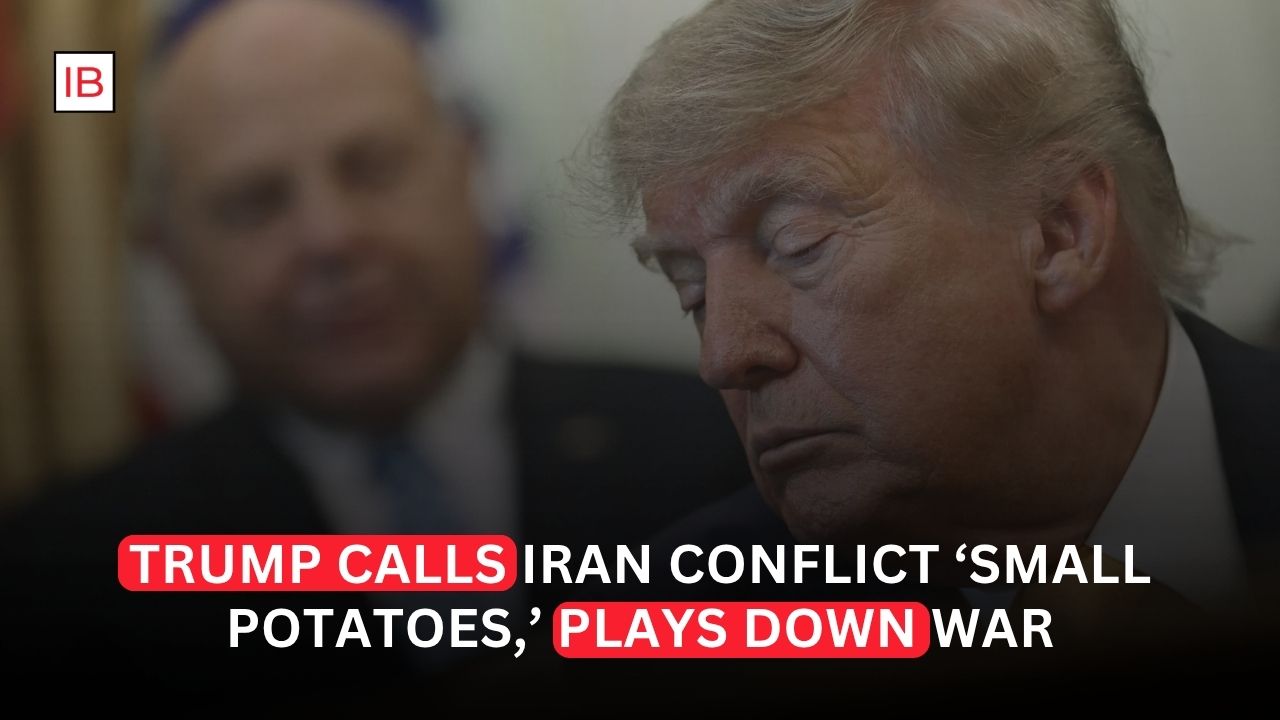
US President Says Ongoing Military Campaign Is Not a Major Conflict for America Despite Renewed Strikes and Rising Regional Tensions. President Donald Trump has played down the scale of the continuing conflict with Iran, describing it as “small potatoes” for the United States even as renewed military action and Iranian retaliation keep tensions high across the Middle East.
Trump’s comments came as his administration continued to avoid describing the fighting as a full-scale war. The president instead characterized it as a military conflict, arguing that the confrontation does not represent a major challenge for the United States.
Trump Downplays Conflict
Speaking to reporters, Trump said it did not matter whether people described the confrontation as a war, insisting that the conflict was relatively limited from the US perspective.
His remarks followed similar comments by Vice President JD Vance, who said he would not describe the situation as a war despite days of renewed strikes and military exchanges between US and Iranian forces.
Trump has repeatedly sought to portray the conflict as limited, previously describing it as a “relatively little war” and saying it was not a major conflict for the United States.
Renewed Strikes Keep Tensions High
The president’s effort to minimize the conflict comes as fighting has intensified again after a period of reduced military activity.
The United States has resumed strikes against Iranian targets, while Iran has responded with missile and drone attacks across the region. The renewed exchanges have raised concerns that the conflict could once again expand into a broader regional confrontation.
Despite Trump’s description of the fighting as limited, the conflict has continued to affect military operations, regional security and global energy markets.
Hormuz Remains at the Center of the Crisis
The Strait of Hormuz continues to be one of the most important points of tension between Washington and Tehran.
The strategic waterway is vital to global oil shipments, and renewed military activity in and around the region has disrupted shipping and increased concerns about energy supplies.
Trump has previously said the United States has control over the strait and suggested that renewed military action against Iran would not last long. However, the continued tensions have kept the risk of further disruption high.
Oil Markets Feel the Impact
The conflict’s economic consequences have become increasingly difficult to ignore.
Oil prices have risen sharply as traders factor in the risk of further disruptions to Middle Eastern energy supplies. Brent crude remained above $95 a barrel, while US crude also posted strong gains during the latest escalation.
Higher energy prices have added to concerns about inflation and have created fresh pressure on governments and financial markets.
The economic impact has increased scrutiny of Trump’s handling of the conflict, particularly as the United States approaches the midterm elections.
Administration Uses Military and Economic Pressure
The Trump administration is pursuing a broader strategy that combines military action with increased economic pressure on Iran.
Washington has expanded sanctions and launched new efforts to isolate Tehran from international trade while maintaining the possibility of further military strikes.
However, Iran has so far resisted US pressure, and the conflict remains unresolved after months of confrontation.
Questions Remain Over How Conflict Ends
Trump’s description of the conflict as “small potatoes” highlights the administration’s effort to reassure Americans that the fighting will not become a prolonged and costly war.
But continued military exchanges, tensions around the Strait of Hormuz and rising oil prices underline the risks of the confrontation.
For now, Trump is continuing to play down the scale of the conflict while keeping military pressure on Tehran. Whether the situation remains limited or develops into a wider regional crisis will depend on how both Washington and Iran respond to the next round of military and diplomatic developments.