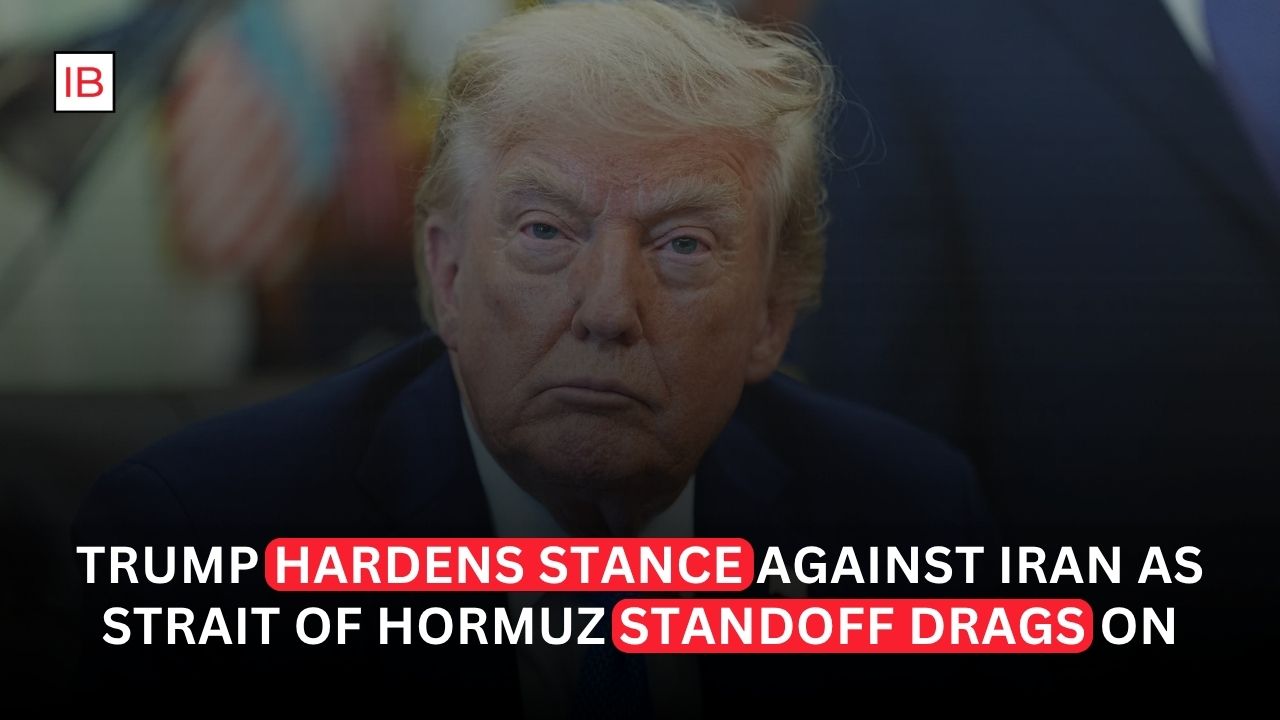
President Donald Trump has adopted an increasingly hard-line position toward Iran as efforts to resolve the standoff over the Strait of Hormuz lose momentum, raising the risk that the prolonged confrontation could further disrupt global energy supplies and deepen tensions across the Middle East.
The latest escalation comes after a 60-day negotiating period between Washington and Tehran expired without a permanent agreement. The temporary arrangement that had helped contain the conflict has effectively broken down, while both sides remain divided over the future of the Strait of Hormuz, sanctions and the terms of any broader peace settlement.
Trump has demanded that Iran surrender and has shown little willingness to extend the existing ceasefire framework. His position reflects a strategy based on maintaining economic and military pressure rather than offering Tehran an easy route back to the previous agreement.
The Strait of Hormuz has become the central point of the dispute. The narrow waterway between Iran and Oman is one of the world’s most important energy routes, carrying a large share of global oil and liquefied natural gas shipments under normal conditions. Traffic through the strait has fallen dramatically during the conflict, creating growing concern among traders, governments and energy companies about the security of future supplies.
Iran has insisted that it has a right to control and manage traffic through the waterway, while the United States has rejected that position. The disagreement has prevented the two countries from reaching an agreement that would restore normal shipping.
Tehran has now warned that it could adopt a fully offensive military posture if diplomacy fails. An Iranian official told Reuters that Iran was prepared to take military action to break the U.S. naval blockade if negotiations did not produce a solution. That threat adds another layer of risk to a situation already affecting commercial shipping and global energy markets.
Trump has also escalated his rhetoric toward Oman, which has played an important role in efforts to mediate between Iran and the United States. The president threatened military action against the U.S. ally if it interfered with Washington’s objectives in negotiations. The threat is particularly significant because Oman has historically served as a channel for communication between Washington and Tehran.
The dispute is already having a visible effect on oil markets. Brent crude rose above $90 a barrel as traders became increasingly concerned that the disruption around Hormuz could last longer than initially expected. Brent recently reached about $91.76 a barrel, while U.S. West Texas Intermediate crude climbed above $85.
Higher oil prices could become a major economic problem if the standoff continues. Energy costs affect transportation, manufacturing and household spending, meaning a prolonged disruption could push inflation higher across major economies. Central banks could then face pressure to keep interest rates elevated even as higher energy costs weaken economic growth.
The oil market is already beginning to price in the possibility that the Hormuz crisis is not temporary. Reuters reported that flows through the waterway have fallen from roughly 18 million barrels a day before the conflict to around 2 million barrels a day, while alternative export routes are unable to fully compensate for the lost capacity.
That creates a particularly difficult situation for global consumers. Even if crude prices remain below previous historical peaks, prolonged disruption can raise insurance, shipping and refining costs. Those additional expenses can eventually reach businesses and households through higher fuel and product prices.
Financial markets are responding to the uncertainty as well. Rising oil prices are contributing to concerns about inflation, while investors are also demanding higher yields from government bonds. The combination of expensive energy and higher borrowing costs creates a difficult environment for stocks and other risk assets.
The confrontation also carries a significant military risk. Iran has warned that it could intensify operations around the strait if negotiations fail, while the United States has maintained its pressure campaign. Any attack on commercial shipping or further military action could trigger another sharp reaction in energy markets.
At the same time, neither side appears to have an easy path toward a compromise. Iran wants relief from the U.S. blockade and sanctions and has demanded major concessions from Washington. Trump, meanwhile, has demanded that Tehran accept U.S. conditions before restrictions are removed. The two positions remain far apart.
Diplomatic channels have not completely disappeared. Oman remains involved in efforts surrounding the reopening of the strait, while other regional governments are encouraging Washington and Tehran to return to negotiations. But the expiration of the 60-day framework has demonstrated how difficult it will be to convert temporary arrangements into a lasting settlement.
For markets, the biggest question is whether the disruption becomes a long-term feature of the global energy system. If shipping through Hormuz gradually returns to normal, oil prices could retreat and some of the inflationary pressure could ease. If the confrontation intensifies, however, crude could remain elevated and create a much broader economic shock.
The immediate danger is therefore not simply another round of political rhetoric between Washington and Tehran. It is the possibility that the dispute over the world’s most strategically important oil chokepoints becomes entrenched.
Trump’s hard-line approach may increase pressure on Iran, but it also raises the cost of failure. With Iran threatening further escalation, shipping traffic severely reduced and oil prices above $90 a barrel, the stakes surrounding the Strait of Hormuz are now considerably higher than they were when the temporary ceasefire was established.
Until Washington and Tehran find a workable arrangement, investors and governments will have to prepare for continued uncertainty in energy markets, financial markets and the wider Middle East.