Donald Trump is trying to make the 2026 midterms a referendum on his broader political agenda, but the biggest threat to Republicans may be much simpler: voters are still unhappy about the cost of living.
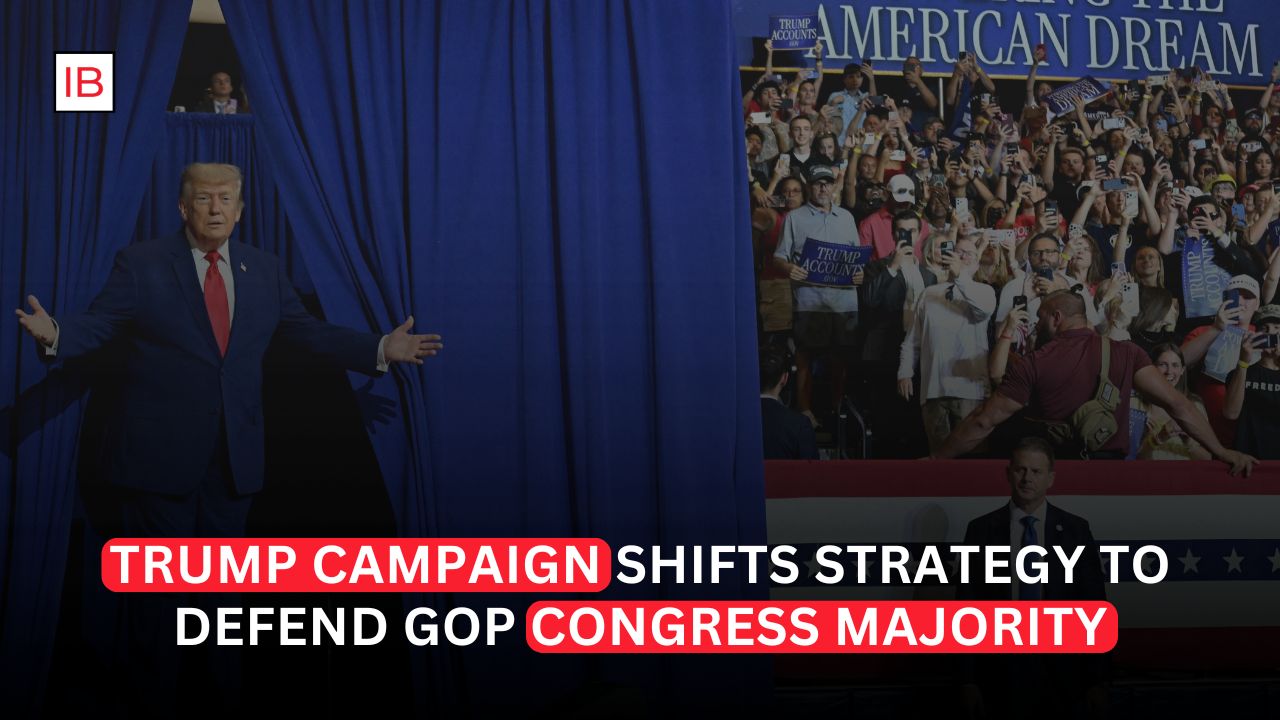
Trump has increasingly taken a hands-on role in the midterms, using endorsements, candidate recruitment, rallies and his political network to shape Republican campaigns. Reuters previously reported that he was already treating the elections as a test of his presidency, despite not appearing on the ballot.
The problem is that Republicans cannot fully control what the election becomes about.
Trump Wants the Election on His Terrain
Trump’s political strengths remain familiar:
- Immigration
- Cultural issues
- Crime
- “America First”
- Opposition to Democrats
- Attacks on the political left
- National security
His campaign operation has also increasingly portrayed progressive Democratic candidates as extreme, particularly after a series of left-wing primary victories. Trump has escalated his anti-communist rhetoric as Republicans test that message for the midterms.
That strategy has a clear logic.
If Republicans can make the election about Democrats being too far left, they don’t have to spend as much time defending Trump’s economic record.
But Voters Keep Bringing the Conversation Back to Prices
That’s the weakness.
Recent polling and reporting indicate that affordability remains one of voters’ dominant concerns.
Food and gasoline prices remain particularly politically sensitive. Reuters reports that grocery prices have risen about 3.4% over 19 months during Trump’s second term, with some major categories such as beef, coffee and apples seeing much larger increases.
That creates a serious problem for Trump.
He campaigned heavily on lowering prices.
So voters don’t necessarily need to decide whether Democrats have a better economic philosophy.
They can simply ask:
“Are things cheaper than I expected them to be?”
The Iran War Makes the Economic Problem Worse
The war with Iran has added another layer of difficulty.
Oil and fuel prices have been pushed higher by disruption around the Strait of Hormuz, while Trump has told Americans to accept higher gasoline prices as part of the cost of confronting Iran.
Politically, that is a difficult message.
A president can argue that higher prices are necessary for national security.
But a voter filling up a car doesn’t necessarily distinguish between:
“Higher prices caused by foreign policy”
and
“Higher prices under the president.”
The political responsibility still tends to land on the incumbent.
Republicans Have Already Recognized the Risk
This isn’t a new concern inside the GOP.
Earlier reporting showed Republican officials and White House aides pushing Trump to focus more heavily on domestic economic issues rather than foreign-policy distractions.
By April, Republicans were already recalibrating their messaging around Trump’s policies while trying to reduce the electoral risk associated with Trump himself.
That’s a revealing strategic problem.
Republican candidates need Trump’s political machinery.
But some of them may not want their races to become entirely about Trump.
That’s the Central Midterm Contradiction
Trump is simultaneously:
Republicans’ biggest political asset
and
their biggest source of electoral exposure.
His endorsement can transform a primary.
His fundraising network can help candidates.
His ability to mobilize Republican voters is difficult to replace.
But his approval ratings and the economic conditions under his presidency can also become liabilities for candidates running in competitive districts.
That creates a difficult balancing act.
Trump Can’t Control Every Republican Race
The White House can decide what message it wants to emphasize.
Voters decide what they actually care about.
A Republican candidate in a competitive suburban district may want to talk about:
Taxes + jobs + healthcare + prices.
Trump may want to talk about:
Immigration + Democrats + cultural conflict + foreign policy.
Those messages aren’t necessarily incompatible.
But they compete for limited attention.
And if economic conditions deteriorate further, the economic message becomes harder to avoid.
Democrats Have Their Own Problem
It would be a mistake to assume this automatically gives Democrats the advantage.
The Democratic Party has a messaging problem of its own.
Progressive primary victories have given Republicans ammunition to portray Democrats as too far left. Reuters reports that Republicans are specifically trying to use issues such as socialism, immigration enforcement and foreign policy to shift the campaign away from economic dissatisfaction with Trump.
That could work.
But it carries a risk.
If Democrats spend too much time talking about ideological battles instead of food, housing, healthcare and wages, they could squander one of their strongest electoral advantages.
Trump’s Best Strategy Is Probably Not the Most Ideological One
The weakest assumption in a Trump-centered midterm strategy would be:
“If we make the election about Democrats, Republican voters will ignore the economy.”
That’s unlikely to work if household costs remain elevated.
A more defensible Republican strategy would be:
Trump’s policies → tangible economic improvements → Republican candidates claim credit locally.
The problem is that the first link needs to produce visible results.
Political messaging cannot permanently substitute for household economics.
The War Creates a Second Strategic Problem
The Iran conflict also makes Trump’s traditional political positioning more complicated.
Trump’s “America First” identity historically emphasized avoiding costly foreign entanglements.
Yet the US is now involved in a prolonged conflict that is contributing to higher energy prices and political dissatisfaction. Reuters reports that about two-thirds of Americans oppose the war, while the economic consequences are increasingly affecting Republican political prospects.
That’s an awkward contradiction for the administration.
Trump needs to convince voters that:
The war is necessary.
But also:
The economic pain is temporary and manageable.
And increasingly:
The administration remains focused on domestic prosperity.
Those arguments become harder to sustain simultaneously if oil prices stay high.
The House Is the Immediate Battleground
The House is particularly important because Democrats have already been preparing for what they would do if they regain control.
Recent Reuters reporting says Democratic leaders are considering an investigative strategy focused on Trump, his administration, donors and connected businesses rather than immediately pursuing impeachment.
That means a Democratic House could create a very different second half of Trump’s presidency:
Subpoenas + hearings + investigations + oversight.
Trump therefore has a strong incentive to prevent Democrats from taking the House.
The Senate Is a Different Problem
The Senate is structurally harder to flip because the electoral map matters more than the national vote alone.
That means Republicans could potentially lose House control without losing the Senate.
For Trump, however, losing either chamber would materially weaken his ability to advance legislation.
Losing both would fundamentally change the balance of power during the final years of his presidency.
Trump’s Personalization of the Election Cuts Both Ways
Trump has a unique ability to turn local races into national contests.
That can increase turnout.
But it can also make otherwise obscure congressional candidates effectively accountable for the president’s record.
If the economy is strong, that’s useful.
If voters are angry about prices, it becomes dangerous.
What Could Save Republicans?
Three things would materially improve their position:
1. Lower Energy Prices
This would immediately reduce one of the biggest economic vulnerabilities.
2. Visible Improvement in Household Finances
If real wages rise and food and housing costs stabilize, voters may become more receptive to Republican economic arguments.
3. Democratic Overreach
If Democrats nominate candidates perceived as too ideological or focus excessively on unpopular policies, Republicans can redirect attention away from Trump’s weaknesses.
What Could Hurt Republicans?
The opposite scenario is straightforward:
High oil prices + persistent inflation + weak real wage growth + prolonged Iran war + unpopular Trump approval ratings.
That combination would make the midterms much harder for the GOP.
And Republicans can’t solve that problem with campaign messaging alone.
The Bigger Picture
Trump’s midterm strategy ultimately depends on something he cannot completely control:
What voters decide the election is about.
Republicans would prefer an election centered on Trump’s political strengths.
Democrats would prefer an election centered on Trump’s record.
But if households continue feeling squeezed, voters may simply make the election about their own finances.
That’s the strongest challenge to Trump’s strategy.
A campaign can define the opponent. It can’t easily redefine the price of groceries, gasoline or housing.