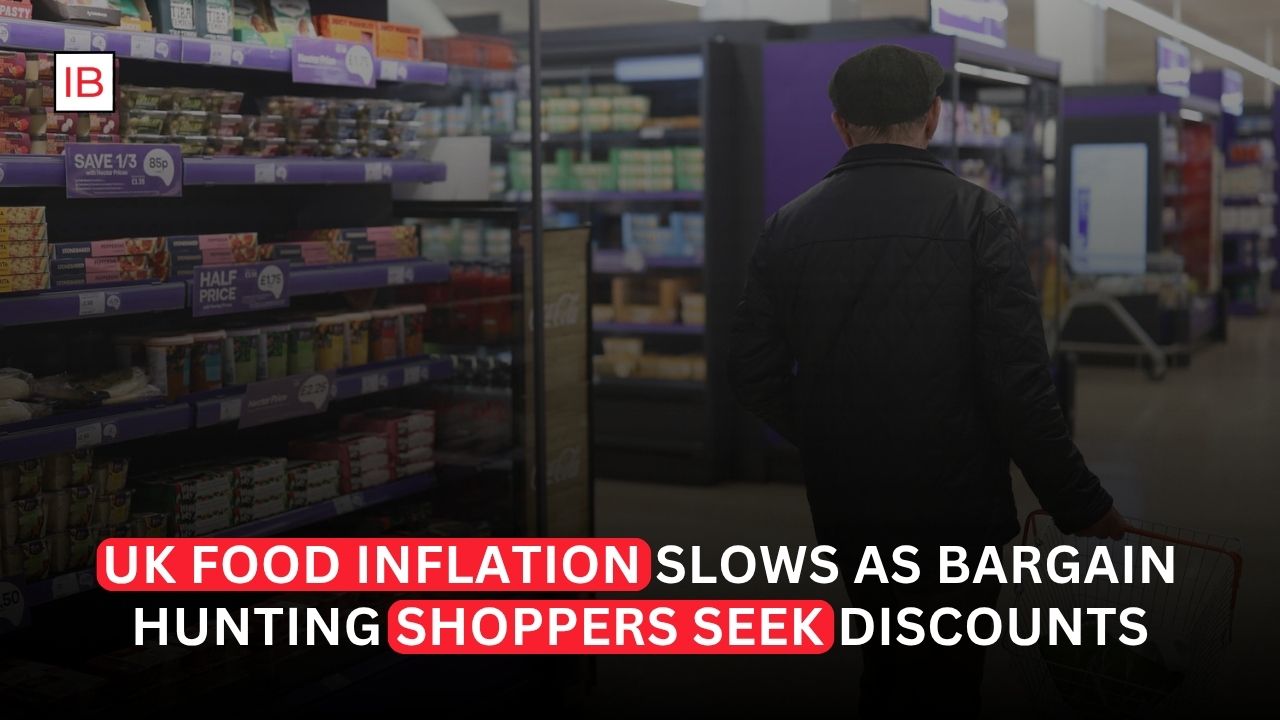
Food price inflation in the UK has eased to its lowest level since October 2024, offering some relief to households that have spent years dealing with elevated grocery costs. But the latest figures also show that British shoppers remain highly focused on discounts, promotions and cheaper alternatives as they continue to manage tight household budgets.
Grocery price inflation slowed to 2.1% in the four weeks to August 9, down from 2.6% in the previous month and 3.0% in the report before that, according to Worldpanel by Numerator. The latest reading marks the lowest rate recorded since October 2024.
The decline represents a significant change from the severe food-price shock experienced by British consumers in recent years. Food inflation surged to exceptionally high levels following the pandemic and the disruption caused by Russia’s invasion of Ukraine, putting pressure on household finances and forcing many consumers to change their shopping habits.
While grocery prices are still rising, the pace of those increases has slowed considerably. That distinction is important. A lower inflation rate does not mean that supermarket prices have returned to their previous levels. Instead, it means prices are increasing more slowly than they were before.
British consumers appear to understand that difference. Rather than abandoning their search for value, shoppers are continuing to look for promotions and cheaper products. Promotions accounted for around 31% of grocery sales during the latest four-week period, showing how important discounts have become to household purchasing decisions.
The behavior is also reshaping competition between Britain’s major supermarkets. Retailers are increasingly using promotions, loyalty schemes and pricing strategies to attract customers who are prepared to switch stores for relatively small savings.
Sainsbury’s recorded grocery sales growth of 3.5% in the latest period, while Marks & Spencer reported a much stronger 15.9% increase. Ocado’s sales rose 13.1%, and Lidl increased sales by 8.5%. Tesco’s grocery sales grew 1.8%, although the retailer continued to lose market share for a third consecutive reporting period. Asda, meanwhile, recorded a 0.2% decline, although that was its strongest performance since March 2024.
The figures underline an important shift in Britain’s grocery market. Consumers are not simply spending less; they are becoming more selective about where and how they spend their money. Discount retailers such as Aldi and Lidl continue to benefit from this behavior, while larger supermarket chains are responding with aggressive promotions and loyalty-program pricing.
Earlier price comparisons have also demonstrated the importance of this competition. Which? found that Aldi was the cheapest supermarket among eight major UK chains in July, with an average basket of 93 commonly purchased items costing £158.05. Lidl followed at £160.70. The difference between the two discount chains and several traditional supermarkets demonstrates why price-sensitive shoppers continue to compare stores.
Weather has also influenced recent grocery sales. Britain’s unusually warm summer boosted demand for seasonal products, with sales of sun cream and ice cream recording particularly strong growth. Worldpanel reported that sun-cream sales increased by 58.4%, while ice-cream sales rose 26.1%.
However, the improvement in food inflation should not be interpreted as the end of Britain’s cost-of-living pressures. Grocery prices remain substantially higher than they were before the inflation shock, and households continue to face expenses across housing, energy, transport and other essentials.
There are also risks that could push food prices higher again. Extreme weather and drought conditions are creating challenges for agricultural production. Food manufacturers have warned that poor harvests, reduced crop yields and higher costs for animal feed could eventually put renewed pressure on supermarket prices.
The broader economic picture is therefore more complicated than the headline food-inflation figure suggests. Consumers are receiving some relief from slower grocery-price increases, but retailers are operating in an environment where shoppers remain extremely sensitive to price.
That sensitivity is likely to keep supermarket competition intense. Retailers that can offer convincing discounts without damaging their margins too heavily may have an advantage, while businesses that fail to demonstrate value could lose customers.
For households, the latest figures provide a welcome change after years of rapidly rising food bills. Yet the continued popularity of promotions shows that shoppers have not stopped worrying about prices. Instead, they have adapted by becoming more strategic, comparing supermarkets, using loyalty offers and waiting for discounts.
The decline in grocery inflation is therefore good news, but it is not the same as a return to cheap food. The immediate pressure from rapidly rising prices has eased, while the higher price level remains. For Britain’s supermarkets and consumers alike, the search for value is likely to remain a defining feature of the grocery market for some time.