Unexpected Job Decline Adds to Signs of a Cooling US Labor Market
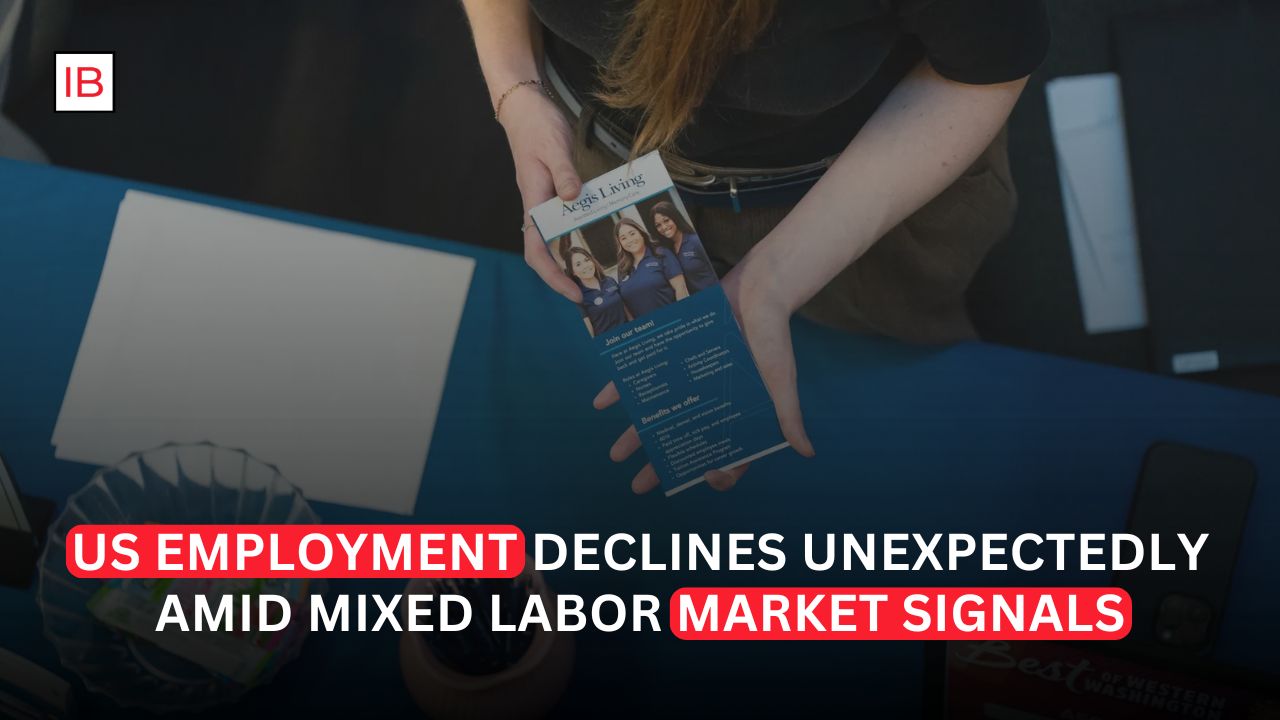
US employment declined unexpectedly, adding to concerns that the world’s largest economy may be losing momentum as businesses become more cautious about hiring.
The unexpected drop in employment has drawn attention from investors, economists and policymakers because the labor market has remained one of the most important sources of resilience for the US economy. A weaker employment reading could influence expectations for consumer spending, economic growth and the future direction of monetary policy.
Labor Market Loses Momentum
The latest data point to a labor market that is becoming less robust than it was during earlier stages of the economic expansion.
Businesses appear to be exercising greater caution when making hiring decisions, particularly as companies face uncertainty around demand, financing costs and broader economic conditions.
A decline in employment is particularly important because the labor market affects the economy through several channels.
When fewer people are employed, income growth can weaken. That can eventually affect household spending, business revenue and overall economic activity.
Consumer Spending Could Face Pressure
The US economy is heavily dependent on consumer spending.
Households use income from employment to pay for housing, food, transportation, services and discretionary purchases.
A sustained slowdown in hiring could therefore eventually reduce spending growth.
Consumers may become more cautious if they believe employment opportunities are becoming less secure.
That could create a feedback loop in which weaker demand encourages businesses to slow hiring even further.
Federal Reserve Faces a Difficult Balance
The employment decline also has implications for the Federal Reserve.
The central bank is responsible for balancing employment and inflation when setting monetary policy.
A weakening labor market could increase pressure for policymakers to consider easier monetary conditions if economic growth slows significantly.
At the same time, policymakers must remain alert to inflation risks.
That creates a difficult balancing act: supporting employment without allowing price pressures to accelerate again.
Markets Watch the Data Closely
Financial markets typically react strongly to employment reports because labor-market data provide important information about the health of the economy.
Investors monitor employment figures for clues about:
- Interest rates.
- Consumer spending.
- Corporate earnings.
- Economic growth.
- Inflation.
- Federal Reserve policy.
A weaker employment report can sometimes support expectations for lower interest rates, potentially benefiting bonds and interest-sensitive assets.
However, if investors interpret the data as evidence of a deeper economic slowdown, stock markets can face pressure from concerns about corporate profits.
One Report Does Not Define the Economy
Economists generally caution against drawing major conclusions from a single monthly employment report.
Employment data can be volatile and subject to revisions.
Seasonal factors, temporary changes in hiring and unusual movements in specific industries can also influence the headline number.
The more important question will be whether employment continues to weaken over the coming months.
Hiring Trends Matter
A prolonged slowdown in hiring would be more concerning than a one-time decline.
Businesses may initially respond to uncertainty by freezing new hiring rather than immediately cutting existing employees.
That can produce a labor market where employment growth slows before unemployment rises significantly.
If the trend continues, however, companies may eventually reduce staff or scale back investment.
Broader Economic Growth
Employment is closely connected to economic growth.
More workers generally mean more household income and greater economic output.
A declining employment trend can therefore become a warning signal for future growth.
The impact will depend on whether productivity gains and other areas of economic activity can offset weaker labor demand.
The US economy has benefited from strong investment in areas such as technology, artificial intelligence and infrastructure.
Those sectors could continue supporting growth even if some traditional industries experience weaker hiring.
Global Implications
Because the United States is the world’s largest economy, changes in its labor market can affect financial markets and economies worldwide.
A weaker US economy can influence:
- Global trade.
- Commodity demand.
- Currency markets.
- Interest-rate expectations.
- International investment flows.
Countries that depend heavily on exports to the US could be particularly sensitive to a slowdown in American consumer demand.
The Dollar and Treasury Market
US economic data can also affect the dollar and Treasury yields.
If investors expect weaker economic growth and lower interest rates, Treasury yields may decline.
Lower yields can reduce the relative attractiveness of US-dollar assets, potentially putting pressure on the currency.
However, the dollar’s response depends on how investors interpret the US economy relative to other major economies.
What Comes Next
Markets will now focus on upcoming employment, inflation and economic-growth data to determine whether the latest decline represents a temporary setback or the beginning of a broader slowdown.
Other indicators, including jobless claims, wage growth, consumer spending and business investment, will help provide a clearer picture.
If employment weakness continues while inflation remains contained, the case for monetary easing could strengthen.
If inflation remains elevated, however, the Federal Reserve could face a much more difficult policy environment.
Looking Ahead
The unexpected decline in US employment is an important warning sign for the American economy, but it does not by itself confirm that a recession is approaching.
The key issue is whether the weakness spreads across the labor market and begins affecting household spending and business investment.
For investors, the latest report reinforces the importance of watching the interaction between employment, inflation and Federal Reserve policy.
If hiring continues to deteriorate, economic growth could slow more sharply than previously expected. But if employment stabilizes in the coming months, the latest decline could prove to be a temporary disruption rather than the start of a major downturn.
The next several economic reports will therefore be critical in determining whether the US labor market is simply cooling or entering a more serious period of weakness.