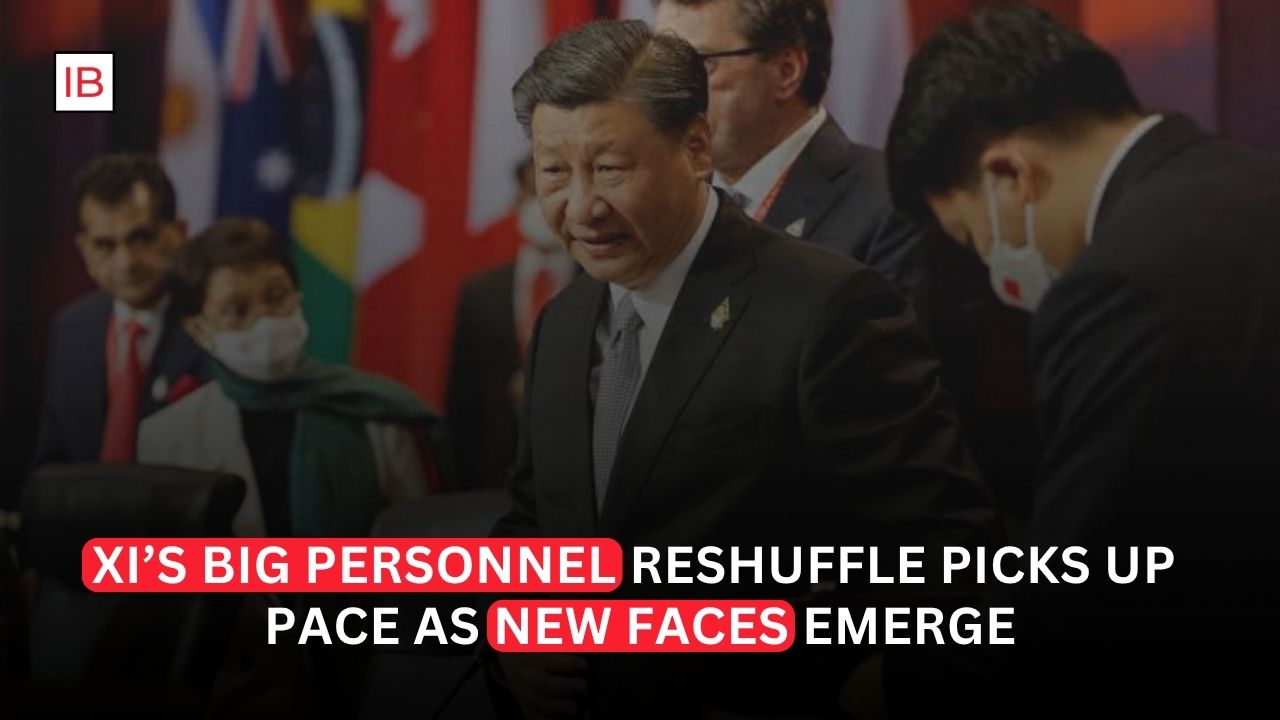
Chinese President Xi Jinping is accelerating a broad personnel reshuffle as Beijing prepares for another important phase of political transition, bringing younger and increasingly trusted officials into prominent positions across the country.
The changes are unfolding ahead of the Chinese Communist Party’s 21st National Congress, scheduled for 2027, when senior leadership positions will again come under intense scrutiny. Analysts expect the period leading up to the congress to involve significant movement among provincial, government and party officials as Xi seeks to strengthen the leadership team around his political priorities.
A New Generation Begins Moving Up
The personnel changes are becoming visible well beyond Beijing.
Recent appointments have brought new officials into important provincial and municipal positions. On September 4, Zhu Zhongming was appointed acting mayor of Shanghai, while Chen Chunjian was elected Communist Party secretary of Luoyang. Other senior government and party appointments have also been announced in recent days.
Such appointments may appear routine, but China’s political system makes personnel decisions particularly significant.
Provincial party chiefs, mayors and senior government officials often become candidates for higher national positions. Their performance, political loyalty and ability to implement central policy can influence their prospects for advancement.
The emerging changes therefore provide clues about the type of officials who could become more prominent in the years ahead.
The 2027 Party Congress Is Driving the Timetable
The next major Communist Party congress is expected to be a crucial moment for China’s political leadership.
Xi is expected to remain the central figure in Chinese politics, while the congress will provide an opportunity to reorganize senior ranks and promote a younger generation of cadres. Research on China’s leadership transition suggests that provincial reshuffling is expected to intensify from the second half of 2026 and continue through 2027.
That creates a relatively long preparation period.
Officials who receive important provincial assignments now could have time to demonstrate their administrative abilities before the congress. Others may be moved aside as the leadership evaluates which cadres are best suited for increasingly important responsibilities.
Loyalty Remains a Central Consideration
Xi’s approach to personnel management has placed political loyalty at the center of China’s leadership structure.
Since taking power, Xi has strengthened his authority over the Communist Party and has promoted officials regarded as reliable supporters of his policy agenda. The 2022 leadership transition illustrated this approach, with Xi surrounded by senior officials who had established political connections with him.
The current reshuffle is occurring in an environment where loyalty is likely to remain important.
Officials are expected to implement Xi’s priorities on national security, technological self reliance, economic restructuring and industrial policy. At the same time, Beijing continues to emphasize political discipline and resistance to corruption.
The result is a leadership system in which career advancement depends not only on economic or administrative performance but also on political reliability.
Military Purges Add Another Layer
The broader personnel shakeup is taking place alongside an unusually extensive purge within China’s military leadership.
On August 28, authorities removed senior generals Zhang Youxia and Liu Zhenli from the state Central Military Commission after citing suspected serious violations of discipline and law. Zhang had been a vice chairman of the commission, while Liu had served as chief of its Joint Staff Department. Their removal left Xi as one of only two active members of the previously seven member commission.
The military changes are particularly significant because the People’s Liberation Army ultimately answers to the Communist Party and Xi personally serves as chairman of the Central Military Commission.
The scale of the military investigations suggests that personnel changes are not limited to civilian government institutions.
Political Stability Is the Main Objective
For Xi, the reshuffle offers a way to prepare the party for the challenges ahead while reducing uncertainty over succession and policy implementation.
China faces difficult economic conditions, demographic pressures, technological competition with the United States and increasing geopolitical tensions. Beijing therefore needs officials capable of executing policies consistently across the country.
At the same time, Xi has shown little willingness to allow rival political networks to regain influence.
The leadership changes can consequently be viewed as part of a broader effort to ensure that the party’s political structure remains closely aligned with the central leadership.
Economic Management Will Matter
The new generation of officials will also face pressure to improve China’s economic performance.
Beijing is attempting to support domestic consumption while maintaining its manufacturing strength and expanding strategic industries such as semiconductors, electric vehicles, artificial intelligence and advanced technologies.
Provincial leaders play a major role in those efforts because they oversee investment, local government finances, industrial policy and relations with businesses.
Their ability to deliver growth without worsening debt problems will be an important measure of their effectiveness.
Xi’s International Agenda Adds Pressure
The reshuffle is also occurring as Xi expands China’s diplomatic activity.
Xi recently returned to Beijing after attending the Shanghai Cooperation Organization summit and making state visits to Kyrgyzstan and Egypt. His recent diplomatic push has focused on strengthening China’s relationships with emerging economies and presenting Beijing as an influential alternative in global affairs.
Meanwhile, China is preparing for further high level engagement with the United States later this month.
That international environment increases the importance of having a disciplined domestic leadership structure capable of implementing foreign policy, trade policy and national security decisions without internal disagreement becoming visible.
More Changes Are Likely
The current appointments are unlikely to represent the end of China’s personnel transformation.
As the 2027 Party Congress approaches, more provincial leaders are expected to move, retire or receive promotions. Officials currently holding regional posts could become increasingly important as Beijing identifies candidates for national leadership.
The process will be closely watched because personnel changes can reveal priorities that are not always publicly stated.
A promotion may signal confidence in an official’s policy record. A sudden removal can indicate dissatisfaction, political concerns or the impact of investigations.
A Leadership Structure Built for the Next Phase
Xi Jinping’s latest personnel reshuffle is therefore about more than replacing individual officials.
It is part of a broader effort to shape China’s political leadership before the next major party congress. Younger officials are emerging, established figures are being reassigned and the military is undergoing its own dramatic transformation.
The central objective appears clear: build a leadership structure capable of carrying Xi’s political, economic and security agenda into the next decade.
As the 2027 congress approaches, the identity of the officials being promoted today will become increasingly important. Their careers could offer some of the clearest clues about who will hold influence in China after the next leadership transition.