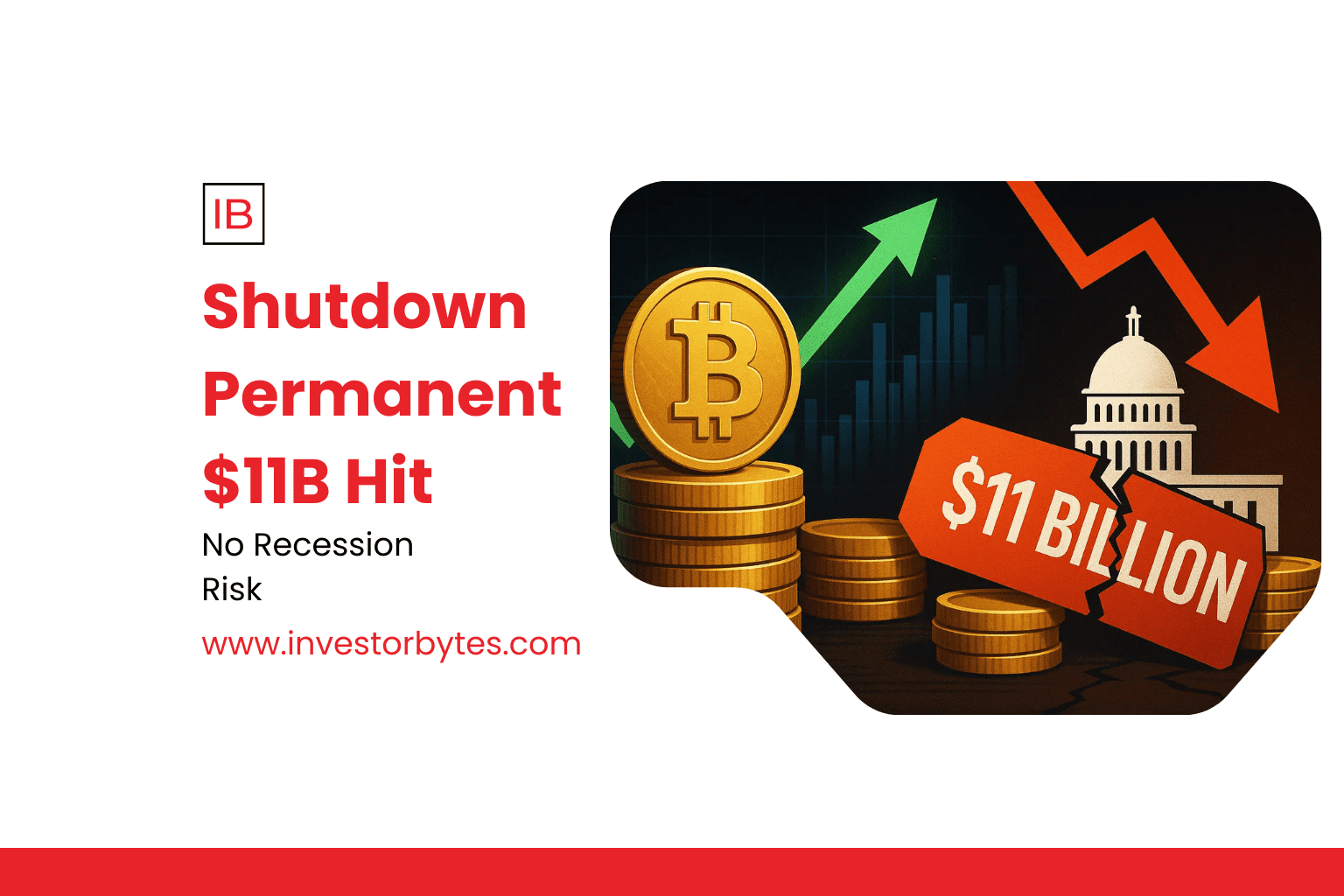
The 2025 U.S. federal government shutdown—history’s longest at 43 days, eclipsing 2019’s 35—inflicted a permanent $11 billion GDP wound, per Congressional Budget Office’s November forecast, as furloughs of 2 million workers, suspended $11 billion in infrastructure projects, and data blackouts distorted benchmarks, leaving policymakers “flying blind” amid inflation’s 2.6% cling and unemployment’s 4.3% creep. Ending November 13 via a stopgap to January 2026—sans Obamacare subsidy extensions costing $400 billion— the impasse stemmed from Democrats’ demands for permanent COVID-era credits against Trump‘s Rescissions Act codifying DOGE cuts, ballooning deficits 6% GDP.
CBO’s tally—equivalent to half of H1 2025’s 1.6% annualized growth—factors irrecoverable losses from delayed SNAP/food stamps, VA benefits, and $984,000 DepEd repairs, with backpay recouping most but not all via consumer lags; tourism hemorrhaged amid inbound travel dips, and land management/environmental agencies eyed permanent staff slashes via reduction-in-force plans. Treasury’s Scott Bessent downplayed recession risks on NBC, citing rate cuts and tax trims for 2026’s “blockbuster,” yet NEC’s Kevin Hassett flagged Q4 hiccups; AP-NORC polls pinned 60% blame on Trump/GOP, 54% on Dems, with Virginia/NJ midterms tilting blue.
Shutdown permanent 11B hit 2025 exposes fissures: OMB’s September RIF prep sparked “intimidation” cries from Schumer/Jeffries, legality untested per Partnership for Public Service; $2.4 billion HRP underfunded leaves veterans’ health/housing in limbo. Long-term? Data voids impair Fed’s rate-setting, distorting trends; Al Jazeera notes unclear infrastructure resumption. For fiscal forensicators in government shutdown economic impact November 2025, $11B isn’t erasure—it’s etching: partisan paralysis perpetuates productivity’s phantom pain, where stopgaps stitch not solutions, but shutdown’s spectral shadow on prosperity’s path.